Inspiration

Rent a Car and Explore the Southern Part of Kyoto! Go on a One-Day Road Trip Around “Kyoto Tea Country”!

2022.03.28

Person driving a car
Kyoto Tea Country

When people think of Kyoto, the first things that come to mind are temples and tea. This time, we invite you to take a drive around the Kyoto Tea Country region in the southern part of Kyoto. We’ll visit Shoujuin, a temple with a lovely heart-shaped window, Iwashimizu Hachimangu, a shrine once worshipped by samurai warriors, and more. The “birthplace” of sencha (one of the most common Japanese teas) is also interesting. We will learn about the local history, and savor flavorful sencha there. Let’s enjoy the wonderful journey at our own pace, driving around “Kyoto Tea Country” together, free from train and bus schedules!

Suggested Route for One-Day Road Trip Around “Kyoto Tea Country”

9:00am: Pick up a car from the car rental company, and depart from the central Kyoto
(For details, please refer to the small guide to renting a car at the end of this article)
→ Take the Daini-Keihan Expressway
→ From Kumiyama Interchange, take the Keiji By-pass
→ From Kasatori Interchange, drive on local roads towards Ujitawara Town
(About 50 min. in total)

1. Shoujuin (9:50am-10:50am)
(December-March: the temple opens at 10:00am)
→ Drive to Soenkoyuan Yantan (about 10 min.)

2. Soenkoyuan Yantan (11:00am-12:00pm)
→ Walk to Birthplace of Nagatani Souen (about 15 min.)

3. Birthplace of Nagatani Souen (12:15pm-12:45pm)
→ Return to Soenkoyuan Yantan for lunch (1:00pm-2:15pm)
→ Drive to Iwashimizu Hachimangu (about 1 hour)

4. Iwashimizu Hachimangu (3:15pm-4:15pm)
→ Hashiriimochi-rouho (from the main shrine buildings, about 20 minutes on foot / arrive around 4:35 by cable car)

5. Hashiriimochi-rouho (4:35pm-5:20pm)
→ Drive back to Kyoto City via the Daini-Keihan Expressway, and return the car (about 50 min.)
  

After picking up a car at Kyoto Station, make your way to the first stop, the Shoujuin temple! It will take about 50 minutes to get there via a toll road. Be careful as the road leading to the temple is relatively narrow. When driving, pay attention to the pedestrians around you and the cars approaching from the other side, and slow down for safety. There are two free parking lots with a total capacity of 70 regular-sized cars.

First Stop: Shoujuin Where Ancient Traditions Meet Modern Fame

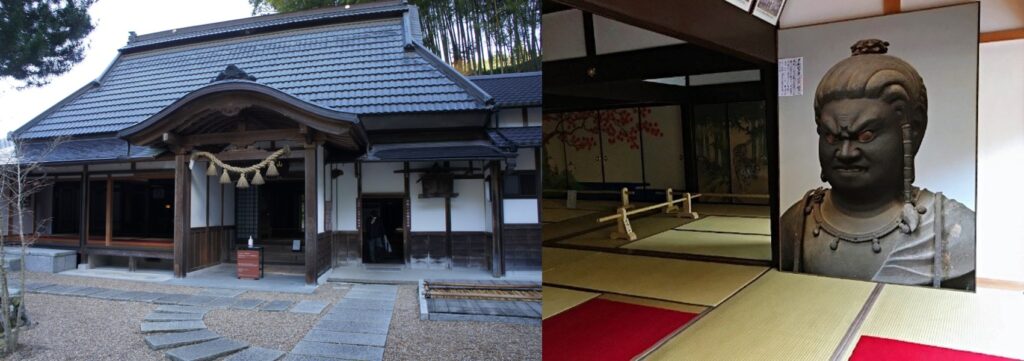
The Shoujuin temple belongs to the Koyasan Shingon sect of Buddhism in Japan. The main hall houses a statue of the eleven-headed Kanzeon (Avalokiteśvara) Bodhisattva, which is designated as a cultural property of Ujitawara Town. The statue is unveiled only once every 50 years. (It is being held as of April 2025!) There is also a statue of Fudo Myo-o (Acala), one of the Buddhist Wisdom Kings. It is the work of Kaikei who is one of the most renowned Japanese sculptors of Buddhist statues. This statue is an Important Cultural Property of Japan.

This temple was founded in 1200. It once served as a terakoya (temple school), providing children with education in arithmetic, ethics and so on. In recent years, its heart-shaped window and ceiling paintings have become a sensation on major social media platforms in Japan, attracting tourists from all over the world.

Shoju-in Temple exterior and interior with tatami mats


◆Popular Photo Spots at Shoujuin
  

1. Heart-Shaped Window

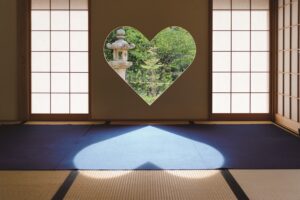
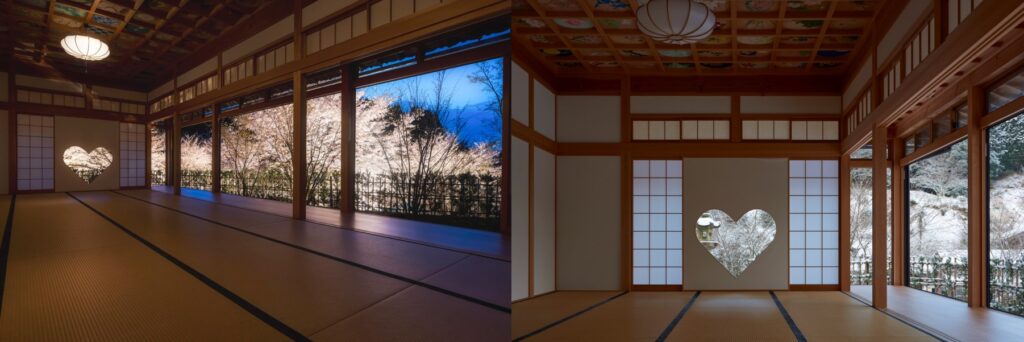
The heart-shaped window in the guest hall, Sokuten no Ma, has been a popular feature of this temple in recent years. The window is officially called Inome-mado, meaning a window shaped like a boar’s eye. In Japan, this design has been believed to have the power to ward off evil spirits and prevent fire since ancient times, so it is often seen in many temples and shrines. Shoujuin’s Inome-mado offers beautiful sights of the garden that transform with the seasons: cherry blossoms in spring, lush greenery in summer, colored leaves in fall, and a tranquil snowscape in winter. When the garden is illuminated at night, you can also enjoy a fantastical atmosphere. Moreover, if the season and time are just right, you might encounter a miraculous moment when the sunlight streams through the window, creating another heart shape in the shadow. This sight is called Shiawase no Okage, which means a blessing of happiness. (Awase means something put together, and kage means shadow in Japanese.) These unique features make this place popular particularly among the younger generation.

A heart-shaped window at the end of a tatami room


2. Ceiling Paintings

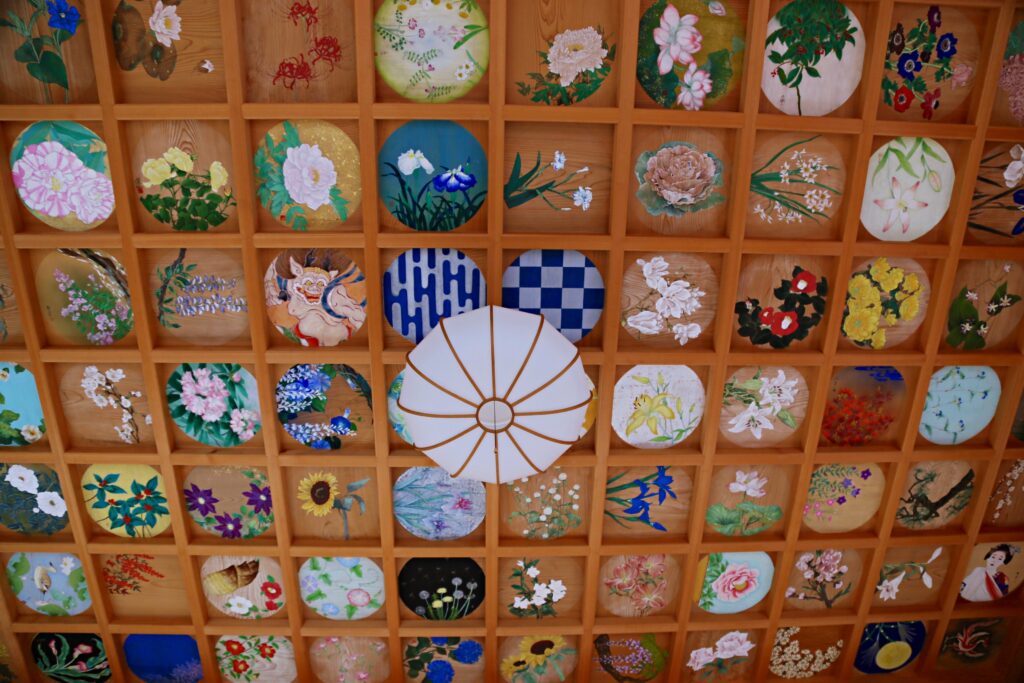
In addition to the Inome-mado, the 160 colorful and magnificent paintings on the ceiling of the guest hall are also very eye-catching. These artworks mainly depict seasonal flowers, plants and landscapes of Japan. Among them, you can find beautiful maiko (young female apprentices learning various traditional Japanese performing arts), too. Also, the four corners are adorned with four guardian deities: Seiryu (Azure Dragon) in the east, Byakko (White Tiger) in the west, Genbu (Black Tortoise) in the north, and Suzaku (Vermilion Bird) in the south. The temple’s ingenious pamphlet has four different covers depending on the season, each introducing five of the paintings. When admiring the ceiling art, it’s a good idea to have the pamphlet in hand and try to find where the paintings on its cover are located on the ceiling. This will add a little extra enjoyment to your visit to Shoujuin.

Various colorful ceiling paintings
Shoujuin

Shoujuin

Shoujuin, a Buddhist temple of the Koyasan Shingon sect, is located in Ujitawara Town in southern Kyoto. It was founded in 1200, more than 800 years ago. Two fires between the 15th and 19th centuries …

Second Stop: Soenkoyuan Yantan, Where Fun Tea Experiences Await

It takes about 10 minutes to drive from Shoujuin to Soenkoyuan Yantan. The road is narrow, so remember to slow down and drive carefully!

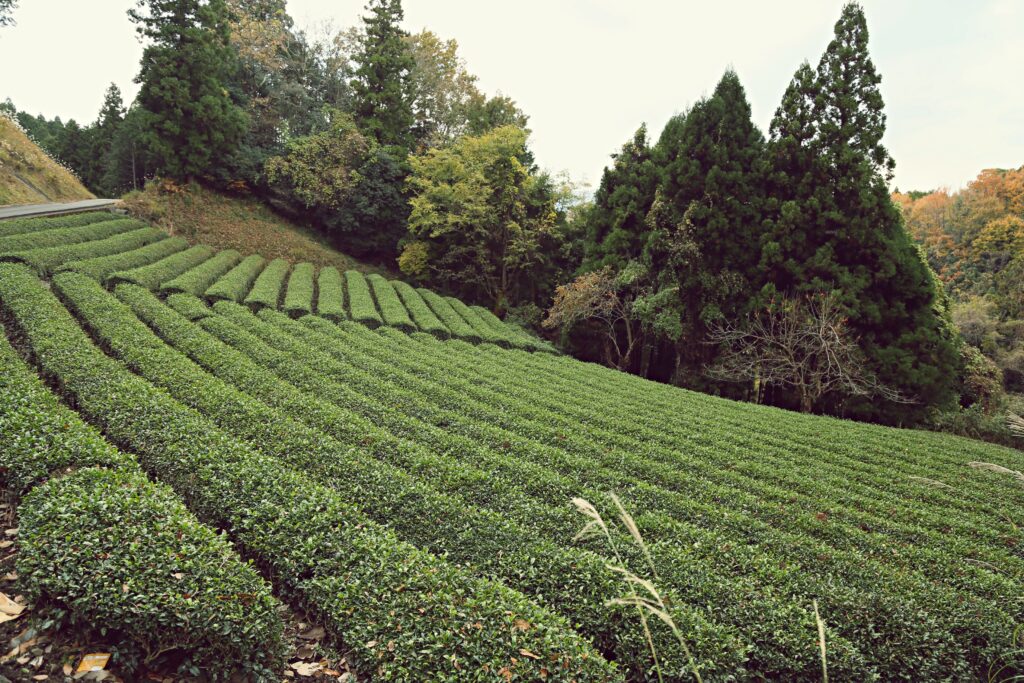
Tea fields

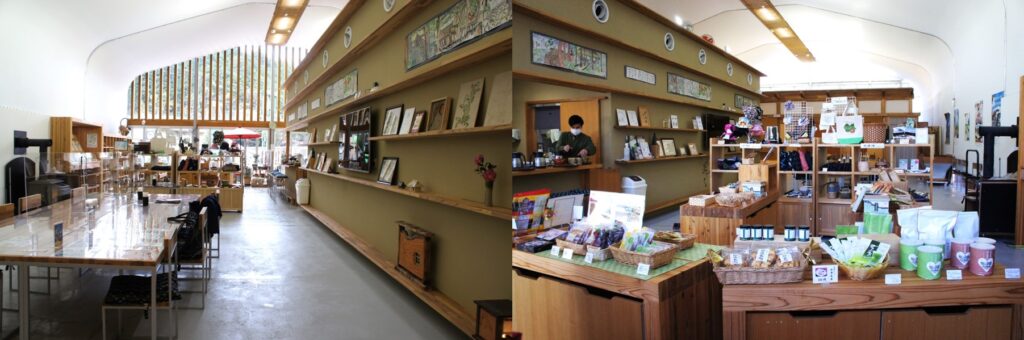
Soenkoyuan Yantan is a facility that is operated jointly by local residents and tea farmers. Renovated from a communal tea factory, it offers a spacious and bright environment with a high ceiling. It has a free parking lot for up to 12 cars, and clean restrooms. (You can park your car here and explore the surrounding area, too.)

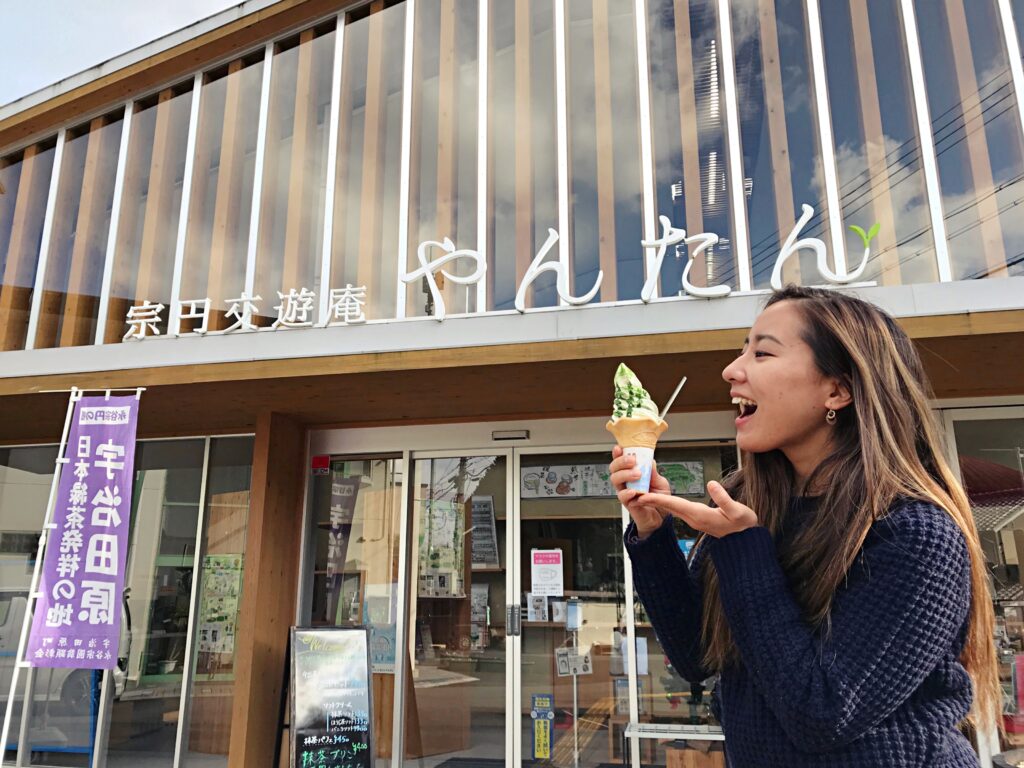
A person eating vanilla ice cream covered with matcha sauce in front of a building


Various goods on display in a store

This facility provides various tea-related activities (reservations required). If you have time to spare, you can experience the traditional matcha green tea making process from grinding the tea leaves with a stone mill. Here, an experienced local tea farmer gives a demonstration, sharing the history and making process of matcha. Following this, you will grind some tencha (tea leaves that become matcha) into fine powder (matcha), whisk it with chasen (a tea whisk), and enjoy your own matcha.


◆Making Matcha With a Stone Mill (About 1 Hour)
  

1. Pour the Tencha Leaves Into the Stone Mill
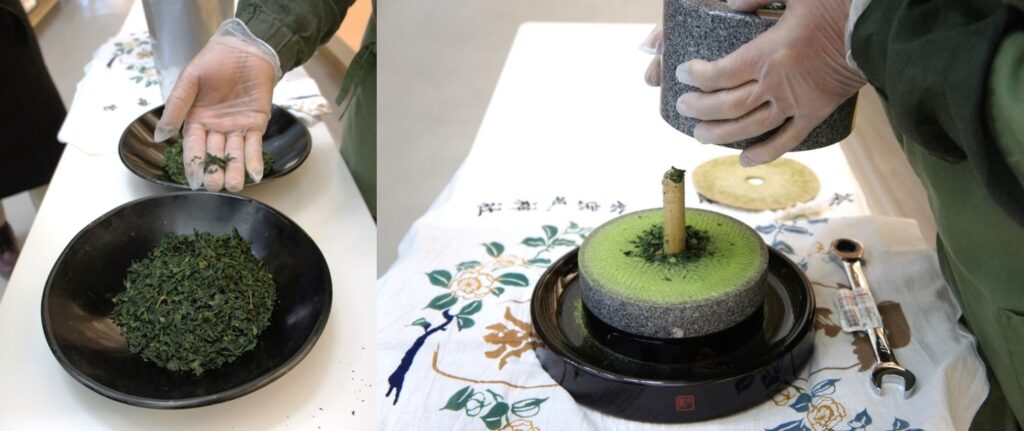
Put the tencha leaves into the hole on the top of the stone mill. Tencha leaves are processed by steaming, drying, sorting and so forth (without kneading), immediately after being harvested from tea plantations.

Picking up tencha by hand before grinding it in a stone mortar


2. Grind the Leaves
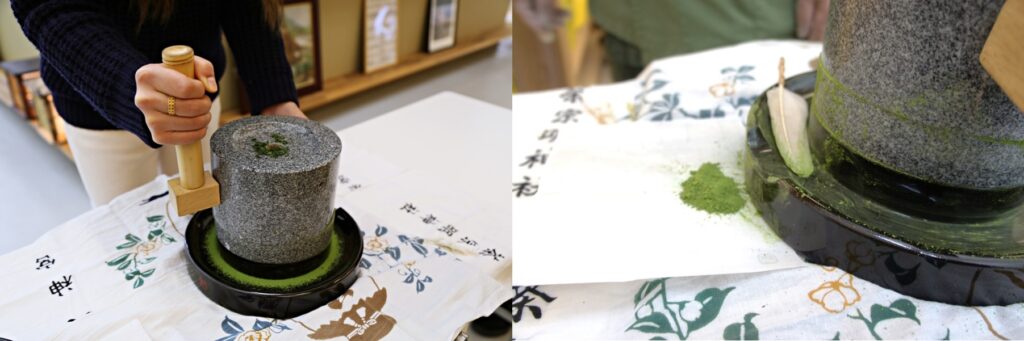
The millstones have fine grooves carved into them. As you turn the handle, the tea leaves are ground into bright green matcha powder and fall out from the mill. The ideal speed for turning the handle is 50-60 rotations per minute. Even after grinding for an hour, you can only make about 40 grams of matcha, which allows you to appreciate the depth of hospitality in serving tea.

Stone mortar close-up and ground tea


3. Make a Bowl of Matcha
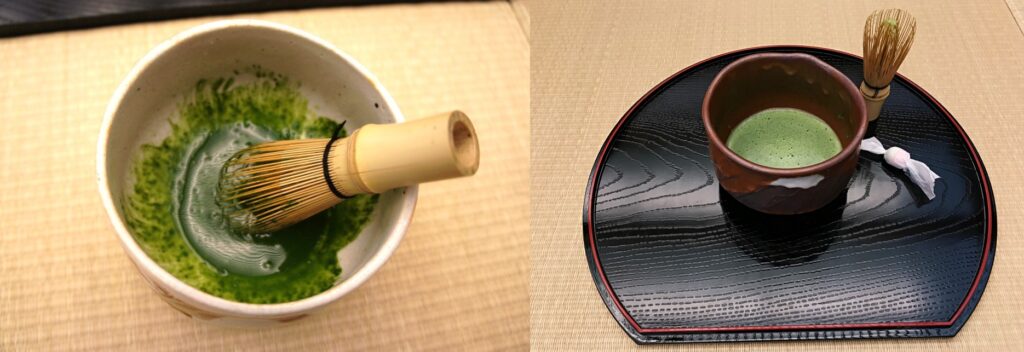
Learn how to whisk your own matcha and savor the taste of your own creation! Drinking matcha you prepared yourself in a tea-producing region will surely be an exceptional experience.

Whisking tea powder with water into matcha


(Click here to view/book more experience activities at Soenkoyuan Yantan)

Chakabuki, a Tea-Guessing Game (at Soenkoyuan Yantan)

Chakabuki is a fun tea-guessing game where you try to remember the flavor of the tea you drank at first, and identify it from among several different teas. Soenkoyuan Yantan, in Ujitawara Town, offers a program of chakabuki, which is easy to understand even for beginners.
Soenkoyuan Yantan is a facility renovated from a large tea factory in the Yuyadani area, the “birthplace” of sencha (one of the most common Japanese teas). The hospitality of the local community makes it a heartwarming gathering place. Here, you can discover the region’s charm more through the tourist information they offer, local specialties including tea at the shop, various interesting tea-related experiences, and so on. In the cafe space, you can enjoy delicious tea and sweets. On weekends, lunch made with local ingredients is available as well, which offers a taste of a different side of the culture in this region.
(From Soenkoyuan Yantan, you can walk to the Birthplace of Nagatani Souen. He developed the Aosei Sencha Seihou method in 1738, which laid the foundation for the processing method of some of today’s Japanese green teas including sencha.)

Third Stop: Birthplace of Nagatani Souen, a Key Location of Japanese Tea Culture

After learning about the matcha-making process through experience, let’s visit the birthplace of the innovator of sencha tea, Nagatani Souen! It’s about a 15-minute walk from Soenkoyuan Yantan. This area was once submerged beneath the ocean and is thought to have risen and become land about 15 million years ago. So you might find some ancient seashell fossils along the way. The path will also lead you through a part of the charming place designated as Japan Heritage (Japanese Tea: Eight Centuries of Tradition), where you can see a traditional streetscape. There are buildings of tea merchants and farmers in this Yuyadani area. (Local people call the area Yantan.) The street is narrow and is daily used by local residents, so please be considerate of others and refrain from walking side by side or causing any disturbance.

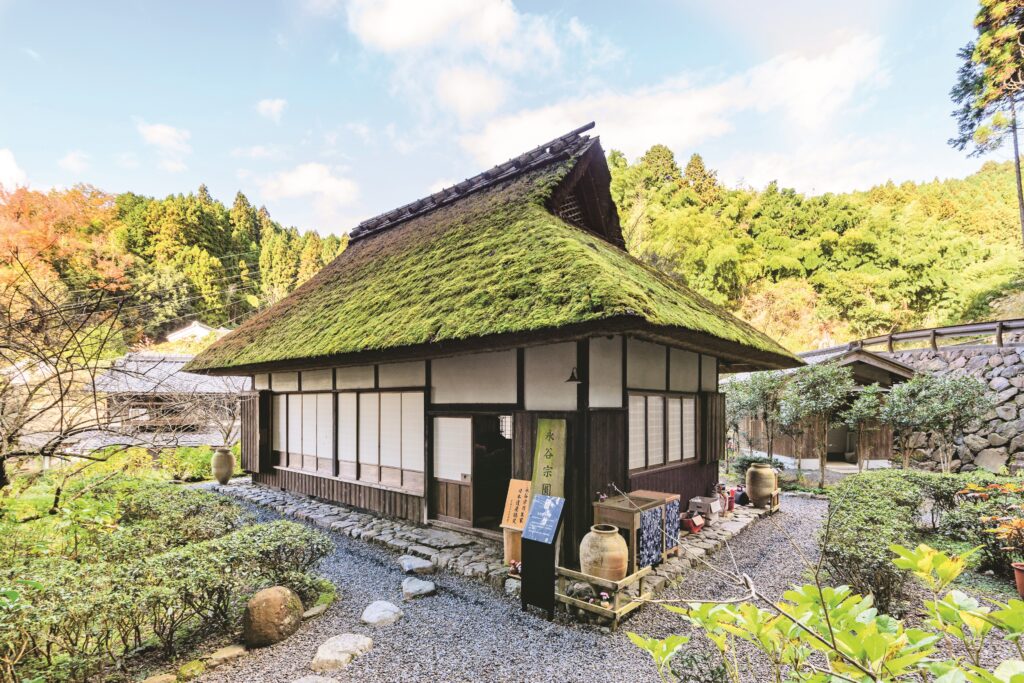
The Birthplace of Nagatani Souen is where he lived in the 17th and 18th centuries. The current building was rebuilt in 1960. Inside the house, you can find the spot where Souen actually used a hoiro (a heater to dry things such as tea leaves and food in processing). He developed and popularized the Aosei Sencha Seihou method in 1738, which laid the foundation for the processing method of some of today’s Japanese green teas including sencha tea. Additionally, there is a video that provides a glimpse into this method and Souen’s history. You can even enjoy a cup of sencha tea there, too. Located in an area designated as a part of the Japan Heritage, this place is a historical landmark. While the exterior can always be viewed, the interior is open to the public only on Saturdays, Sundays and national holidays.

House with a straw roof covered in moss

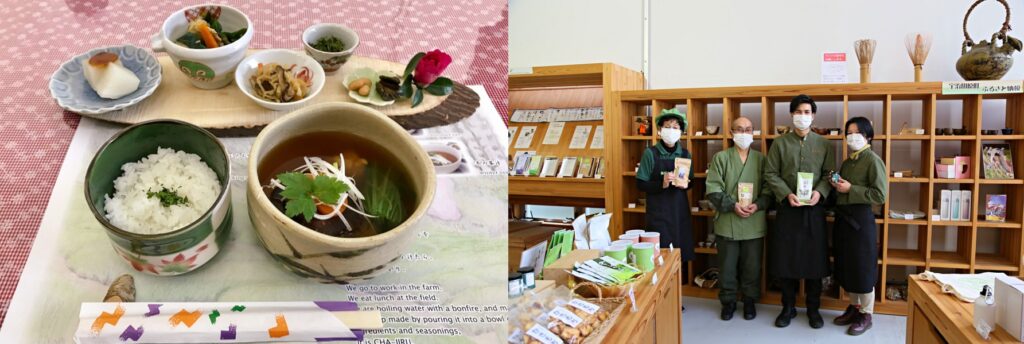
If you are hungry after strolling around, you can go back to Soenkoyuan Yantan to enjoy their specialty, the cha-jiru lunch combo. Cha-jiru was originally an easy-to-make soup using hojicha (roasted tea) that local farmers ate outdoors during breaks from work. This unique local dish is selected as one of the 100-Year Food by the Agency for Cultural Affairs of Japan. After your meal, it’s a good idea to enjoy some gift shopping. There are tea leaves from local tea farmers, and you can’t miss out on sencha. Matcha powder is popular as well, and they also have tea-related products, handcrafted items by local people, and more.

A traditional Japanese lunch set and shop staff posing with tea products
Birthplace of Nagatani Souen

Birthplace of Nagatani Souen

This is the birthplace of Nagatani Souen, rebuilt in 1960. He developed and popularized the Aosei Sencha Seihou method in 1738, which laid the foundation for the processing method of some of today’s J …

After enjoying the wonderful meal and shopping, let’s head to our next attraction, the Iwashimizu Hachimangu shrine! It’s about an hour’s drive from here. We’ll see tea plantations along the way. Let’s enjoy the beautiful scenery and drive safely. Upon arriving, park your car in the shrine’s east parking lot located at the foot of Mt. Otokoyama. The maximum fee is 500 yen. (The fee may vary on certain days in January and the cherry blossom season.) After parking your car, take the Iwashimizu-hachimangu-sando-cable up the mountain. (There’s another paid parking lot next to the cable car station.) A one-way ticket costs 300 yen. It takes about 3 minutes from Cable-hachimangu-guchi Station (at the foot of the mountain) to Cable-hachimangu-sanjo Station (on the mountain). Then walk for about 5 minutes, and you’ll see the main shrine complex.

Fourth stop: Iwashimizu Hachimangu, the Sacred Guardian of Kyoto and the Nation

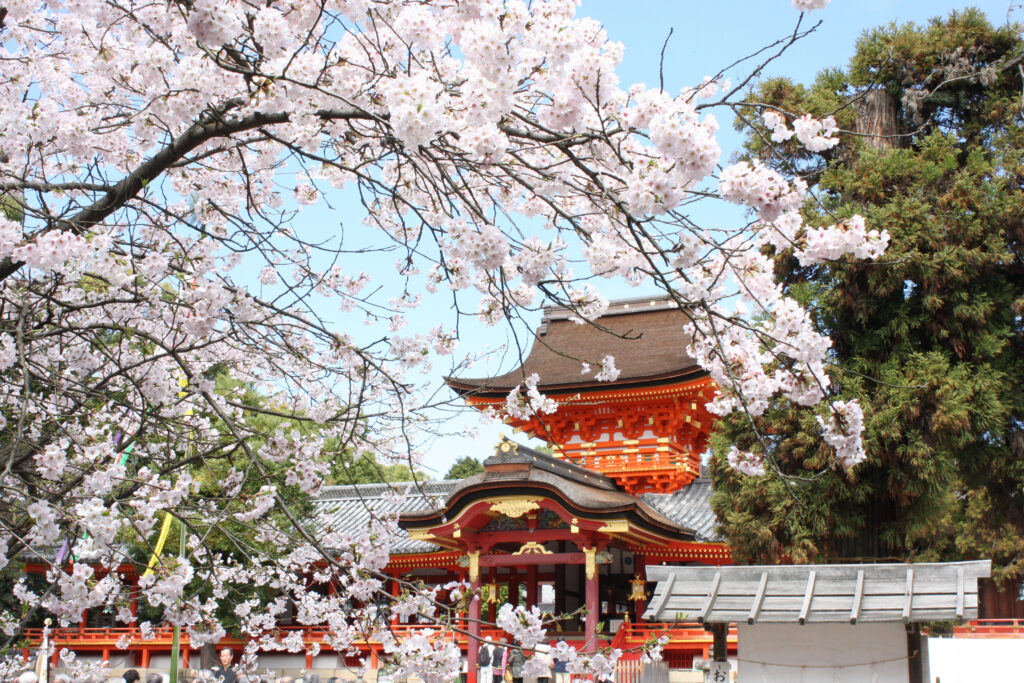
Iwashimizu Hachimangu, one of the three major Hachimangu shrines, is located southwest of Kyoto where the ancient capital Heian-kyo once stood. The shrine boasts a history of approximately 1200 years. Located at the place of the ura-kimon (demons’ back gate)* of Heian-kyo, it has long protected Kyoto. It is dedicated to Hachiman Okami, believed to be ancestors of the emperors of Japan. This prestigious shrine has a distinguished history, renowned for its blessings of warding off evil spirits and granting victory in battle. It was revered by many famous warlords, including the three great heroes of the Sengoku Period: Oda Nobunaga, Toyotomi Hideyoshi, and Tokugawa Ieyasu.

Cherry blossoms covering the view of Iwashimizu Hachimangu Shrine

* Ura kimon: In onmyodo (the art of divination using knowledge of astronomy and calendars), it refers to the southwest direction, which, along with the northeast kimon (demons’ gate), is considered to be demons’ entrance and exit. Since ancient times, it has been regarded as an unlucky direction, and people have tried to prevent disasters in some ways including enshrining deities.

◆Must-see attractions of Iwashimizu Hachimangu
  

1. The Main Shrine Complex

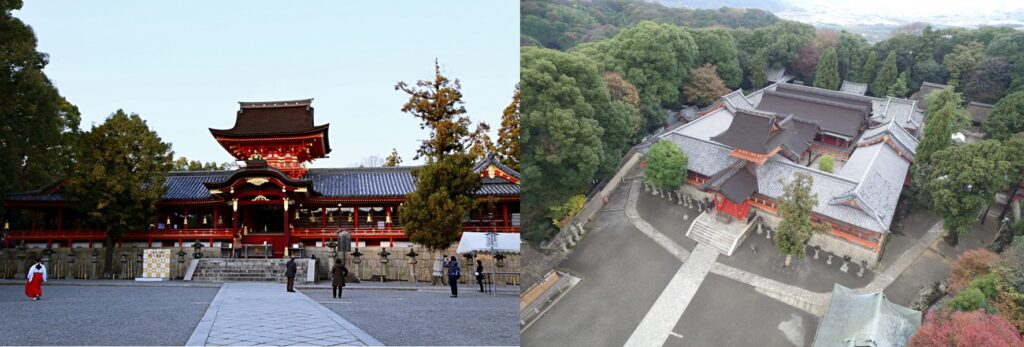
As you walk from the south gate to the main shrine complex (a National Treasure), you will notice that the approach is not facing straight towards the complex, but is angled slightly to the left. This design shows respect to the deities by avoiding showing one’s back to them when leaving after worship. The buildings have been rebuilt many times, and the current complex was reconstructed by Tokugawa Iemitsu, the third shogun (military ruler) of the Tokugawa shogunate (also known as the Edo shogunate, around 1603-1867). It is the oldest and one of the largest surviving Hachiman-zukuri (a traditional architectural style seen at Hachimangu shrines) examples in Japan, characterized by two buildings connected at the front and rear. Enshrined in the center is one of the principal deities (collectively called Hachiman Okami), Emperor Ojin, who was the 15th emperor of Japan.

Iwashimizu Hachimangu Shrine from the front and from the sky
Right image: aerial photograph of Iwashimizu Hachimangu


2. Pigeons at the Torii Gate and the Tower Gate

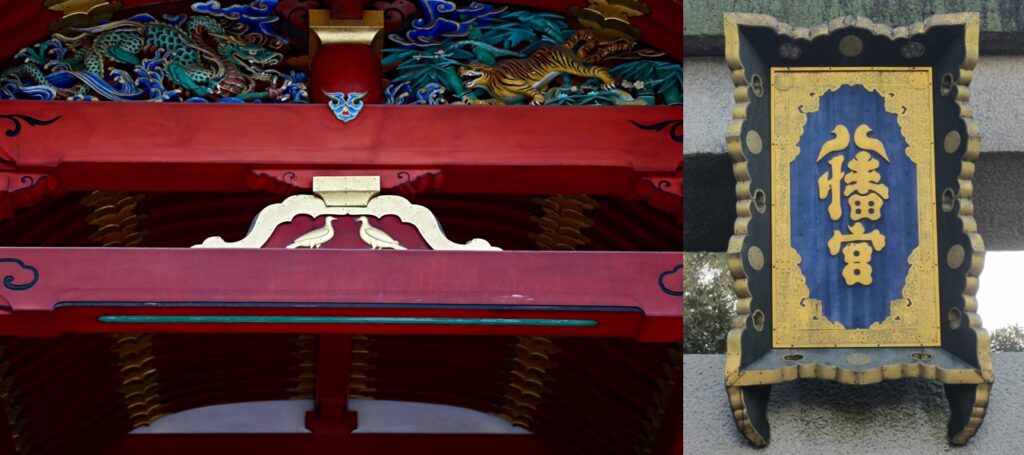
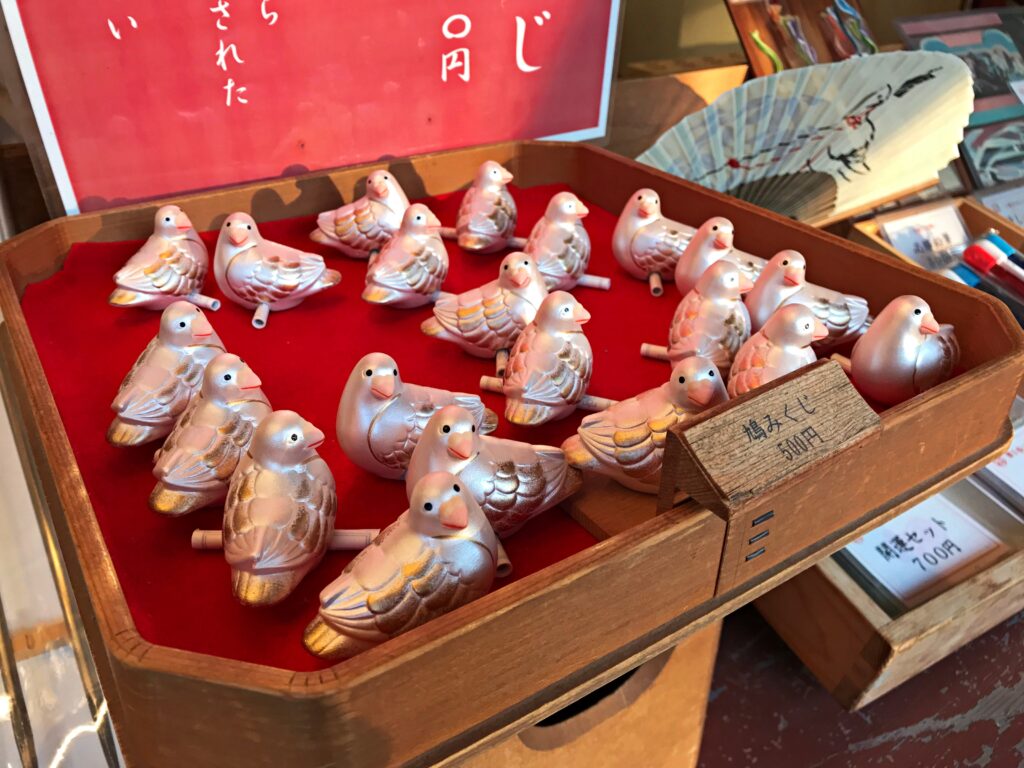
Pigeons are the messengers of Hachiman Okami, so they are found as sacred motifs throughout the shrine. At the entrance at the foot of the mountain, there is a 9-meter-tall stone gate called Ichi-no-Torii. On its upper part, you’ll find a tablet with kanji (a Chinese character) of “hachi (八)”, in “Hachimangu (八幡宮)”, written in the shape of two pigeons. Interestingly, the three golden characters were written by a famous Buddhist monk, Shokado Shojo (1584-1639). At the tower gate of the main shrine complex, there are a pair of golden pigeons with different beak shapes. They represent the form of “a” and “un,” just like komainu (a pair of guardian creatures called lion-dogs in colloquial English) often seen at Japanese shrines.

Close-up of Iwashimizu Hachimangu Shrine's beam details


Dove mikuji
Iwashimizu Hachimangu

Iwashimizu Hachimangu

Iwashimizu Hachimangu is one of the three major Hachimangu shrines. This majestic shrine, with a nearly 1,200-year history, is considered Japan’s second most important shrine after Ise Jingu (Ise Shri …

Fifth stop: Hashiriimochi-rouho, Offering a Traditional Sweet by the Shrine Gate

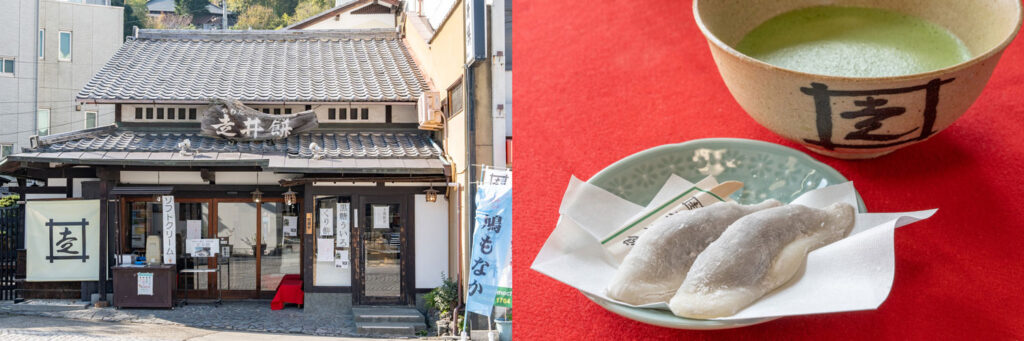
After visiting Iwashimizu Hachimangu, if you descend by cable car, you’ll find the long-established Japanese confectionery store, Hashiriimochi-rouho on your way back to the parking lot. It is located in front of the Ichi-no-Torii gate. Don’t forget to visit it to try their Hashiriimochi rice cake, a delightful local specialty.

The current Hashiriimochi-rouho, which has been passed down for ten generations, was founded in Otsu, Shiga in 1764. In 1910, it inherited the tradition and was born in its current location in Yawata, Kyoto. The Hashiriimochi originates from a rice cake with anko (sweet red bean paste) in it, which was created by the founder. He used a renowned spring water Hashirii that was even used for Emperor Seimu’s first bath when he was born.

They use high-quality rice from Shiga to make their soft habutaemochi (silky, tender rice cake), and wrap elegant, gently sweet anko filling with it. The delicious treat will greatly satisfy your taste buds. Enjoying it with tea from Yawata will give you a deeper understanding of the charm of this area.

Especially on days with many visitors to Iwashimizu Hachimangu, such as New Year’s Day, Hashiriimochi-rouho bustles with activity as it marks one of its peak days. On that day, local people, from children to adults, often stop by this relaxing place after praying for blessings in the year to come at the shrine. They start a wonderful new year with renewed spirits while soothed by the tasty, traditional Hashiriimochi.

Let’s have a perfect end to the brilliant day with Hashiriimochi that has long been loved by numerous people. Then, carefully drive back to Kyoto Station to return your car!

Right image: Inspired by the story that Sanjo Kokaji Munechika, a swordsmith in the Heian Period (794-1185), forged his fine sword using the Hashirii, Hashiriimochi is shaped like a sword.
Hashiriimochi-rouho

Hashiriimochi-rouho

Established in 1764, Hashiriimochi-rouho boasts a rich history spanning over 250 years. It’s famous for its Hashiriimochi, a soft habutaemochi (silky, tender rice cake) filled with anko (sweet red bea …

This time, we introduced you to the Kyoto Tea Country region in the southern part of Kyoto. Embrace the joy of the relaxing road trip. Enjoy the beautiful scenery of tea plantations and natural landscapes. Try the local cuisine, feel the culture, and learn about the tradition. There is always joy in discovery. The historical temple and shrine whisper tales of centuries past. Let’s go experience the beauty and majesty that has captivated people throughout the ages. Open your heart and indulge in a wonderful trip where you can enjoy every moment. You will also encounter nice and friendly people there!

  
>> Read about another rental car adventure in Kyoto: [Rent a Car and Explore the Southern Part of Kyoto! 2] Find Hidden Kyoto Spots: a Temple, Shrine, Nature, and Delicious Food! <<

Small guide to renting a car

Close-up shot of a person holding a steering wheel

Here is a brief introduction to the Japanese car-renting process (this article uses “Times Car Rental” and holders of the Republic of China, Taiwan passports for a model example)

Step 1. Enter the homepage of the car rental website, and select a booking time and store
Step 2. Check the car model, price and extra rental items (such as whether you need to rent a baby seat or other items as extra)
Step 3. Lastly, fill in your personal information such as your name and email address, along with your payment method
Step 4. Go to your inbox to receive the booking confirmation email (if you want to cancel the booking due to changes in your itinerary, please remember to cancel it six days before the booking time. If you cancel less than six days before, a handling fee will be charged)
This completes the online car rental booking!
For details, please refer to the official website of “Times Car Rental

★Friendly reminders:
1. Please prepare the relevant documents such as your passport and driver’s license when picking up the car. For details, please click here.
2. There are car rental companies near airports and train stations in major cities of Japan. Also, it is very convenient to rent a car when you arrive on site. However, since bookings fill up easily on weekends or consecutive holidays, we recommend you to make an advance online booking as early as possible!

*For more info on rental cars, see Rental Cars & Bicycles.


Japanese traffic rules

Please read the relevant traffic rules in Japan before departing, and be a law-abiding traveler!

Another Kyoto Partners