Why Amanohashidate Is a Hot Spring Destination
For most of its history, the sandbar drew sightseers rather than bathers. Its role as an onsen destination came much later.
As the nationwide hot spring boom of the late twentieth century pulled travelers toward bath-equipped resorts, the area drilled for a source of its own, and Amanohashidate Onsen opened in 1999.
The water is a sodium-bicarbonate spring with a faint amber tint, piped to around ten ryokan and hotels around the bay and known locally as a beauty bath for the soft, skin-smoothing feel it leaves behind. A public day-use bathhouse by the station followed in 2003. Today, it’s a compact resort area with one unifying thread: the most memorable stays here are built around how the bath, the bay, and the sandbar view come together.
Each side of the bay does this differently. The Monju side is the one to choose for the sandbar view straight from your ryokan window. The JR-station side is the practical base for day trips to Maizuru and the wider Tango region, and it sits closest to the onsen source and the public bathhouse. The stays on the rise just above the station are intimately connected to the hot spring experience itself.
Monju Side: The Iconic View

The southern end of the sandbar, around the cable-car station at Monju, is where most of the photos are taken. Properties here face the sandbar directly across the canal, and from these inns, the in-room window or terrace view rivals anything in Japan.
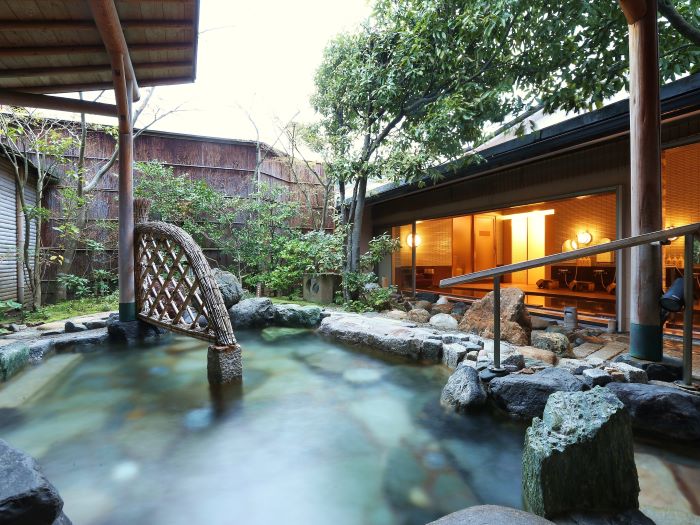
Monjusou is the destination ryokan on this side, founded in 1690 and run by the same family for thirteen generations. The 1960s main building was designed by the modernist architect Junzo Yoshimura, who paired the Sukiya tradition (a refined, teahouse-derived style of Japanese architecture) with restrained, almost domestic proportions, and every room faces the sandbar. Dinner draws on Tango sea catches (konoshiro, a medium-sized spotted herring; snow crab in winter; amadai, a tilefish, in spring), and the public bath includes an open-air rotenburo (outdoor hot-spring bath) on the canal where, on calm mornings, the bath water and the bay sit at almost the same level.
Monjusou
Get up close and personal with Amanohashidate at Monjusou, where all the guest rooms are designed for the best view possible overlooking the Amanohashidate sandbar with its pine trees. The story of th …
Genmyoan is the high-perched alternative, set above Monju with sandbar views from the bath floor and the upper guestrooms. The kaiseki (a multi-course traditional dinner) leans coastal and seasonal, and the elevation means the matanozoki perspective (the famous upside-down view, taken bending over to look between your legs) opens up straight from the property’s own terrace.
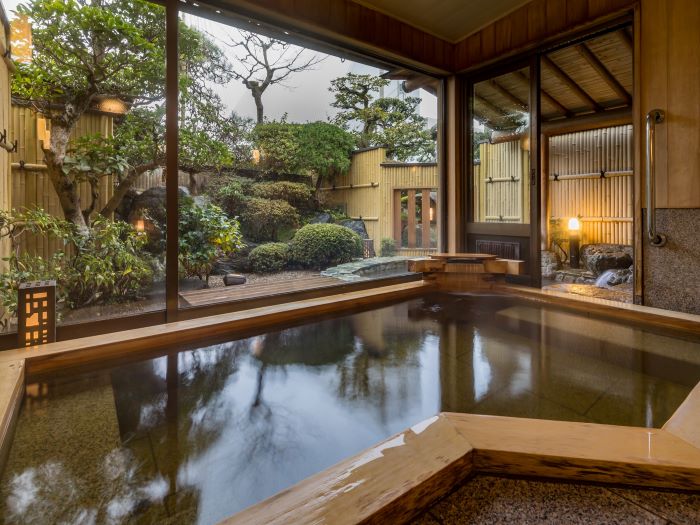
Charoku Bekkan, a few minutes from Miyazu Station, is the more accessible traditional choice in this neighborhood. Founded in the Kyoho era of the early 1700s, it keeps a sukiya-style main building, underwent a full renovation in 2023, and serves the same Tango-led kaiseki at a comfortable step below Monjusou and Genmyoan in price.

Charoku Bekkan
Charoku Bekkan is situated in front of Shimazaki Park, near Amanohashidate, one of Japan’s three great scenic views. Surrounded by hedges, it is a small inn with 11 rooms and beautiful gardens. Built …
JR Amanohashidate Station Side: Transit-Convenient
If you plan to run day trips to Maizuru or the wider Tango Peninsula, the cluster of properties within walking distance of the JR station is the sensible base.
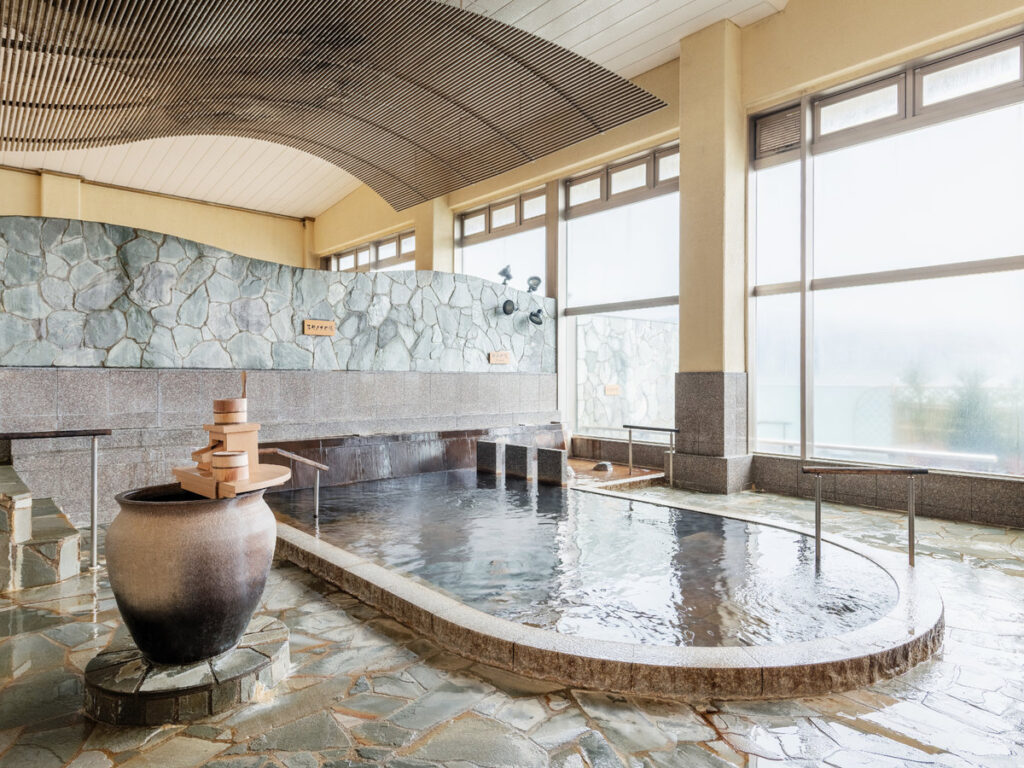
Amanohashidate Hotel is a one-minute walk from the station and houses 13 onsen baths under its roof, including an open-air bath with a sandbar view that few station-front hotels offer. The building is a 1970s mid-century survivor with a faintly retro feel that some guests return for, and reviews consistently praise the bath floor and the seasonal kaiseki.

Amanohashidate Hotel
From our natural hot spring bath, named “The Waters of the Deities,” to the seasonal flavors of Amanohashidate nurtured by the rich nature of Tango, you can enjoy the finest local experiences alongsid …
The Soaker’s Side: Bath-Focused Stays North of the Station
A little north of the station, where the rail line gives way to quieter slopes, sit the stays built around the bath itself. This is where the area leans most fully into its onsen culture, with pine and salt in the air.
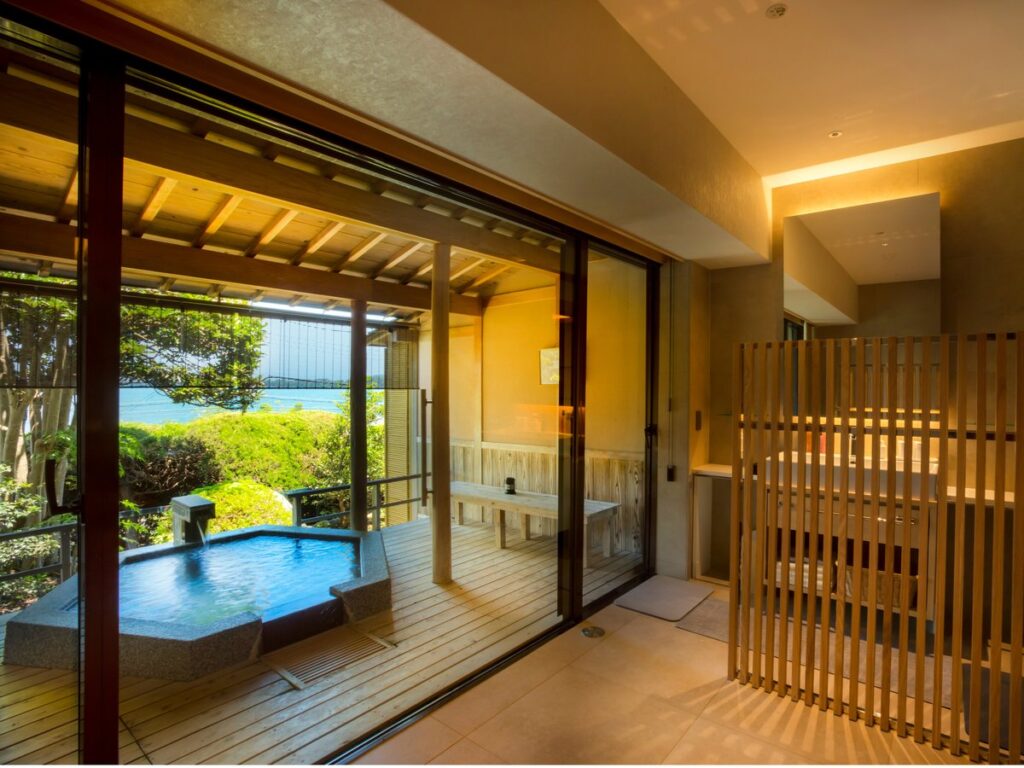
HOTEL KITANOYA sits on the rise just north of Amanohashidate Station, with every guest room facing the sandbar. The bath is the whole point. The property offers private indoor and rotenburo experiences. Its waters proudly carry the Amanohashidate Onsen name, earning a special place on Japan’s list of notable hot springs. The long-stay rates are thoughtfully designed for those looking to relax and unwind, rather than hurried visitors. Walking down toward the shore at sunset is about the quietest moment the resort area offers.

HOTEL KITANOYA
Amanohashidate Onsen and every guest room offer serene views of the sea and Amanohashidate. …
Practical Notes Before You Book
The JR Hashidate Limited Express runs from Kyoto Station to Amanohashidate in just under two hours. It’s covered by the JR Kansai Wide Area Pass, though not by the standard JR Pass. Reserve ahead on weekends and through the autumn foliage and winter crab seasons. The traditional ryokan tier (Monjusou, Genmyoan, Charoku Bekkan, HOTEL KITANOYA) operates on a one-night, two-meals model, with a kaiseki dinner and Japanese breakfast included, and rates are quoted per person rather than per room.
The bay photographs well all year, but the sweet spots are early April for the cherry blossoms along the cable-car path, June for green sandbar reflections, late November for the Nariai-ji maple illumination above the bay, and the snow crab months from December to February for the kaiseki tables.
Pick the side that matches your travel style, whether the sandbar view, the station base, or the deepest soak, and Amanohashidate will deliver one of Japan’s most rewarding coastal stays!
Related in this series : Day Trips from Kyoto. For a broader introduction to the area, see the existing Amanohashidate overview on the site.