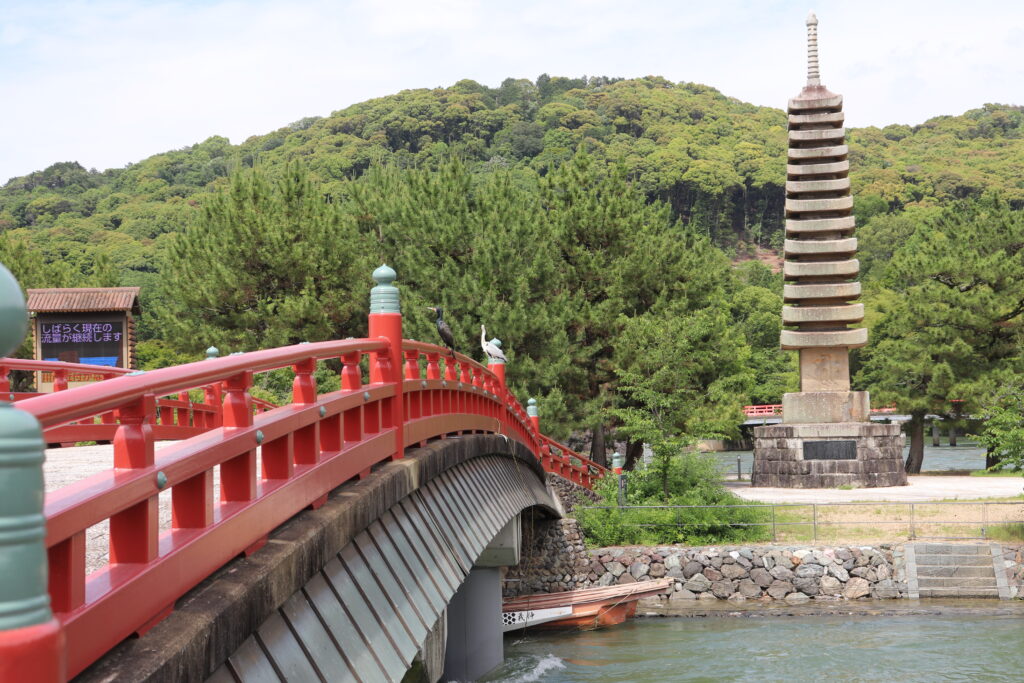

Uji-bashi Bridge
From Tsuen-chaya Teahouse, we’ll cross the Uji-bashi Bridge and head back towards JR Uji Station. The current Uji-bashi Bridge was constructed in 1996. It has rows of small tea bushes, in keeping with the character of Uji, home of tea. Looking upstream, you can view the amazing natural scenery that has been here for centuries. A little to the west of the middle of the bridge is a square platform called San-no-ma. It is said that Toyotomi Hideyoshi came to San-no-ma of Uji-bashi Bridge, and drew water for his tea ceremony. (We saw the wooden bucket at the teahouse!) Nowadays, the river water is drawn from San-no-ma at the annual Uji Tea Festival in October.
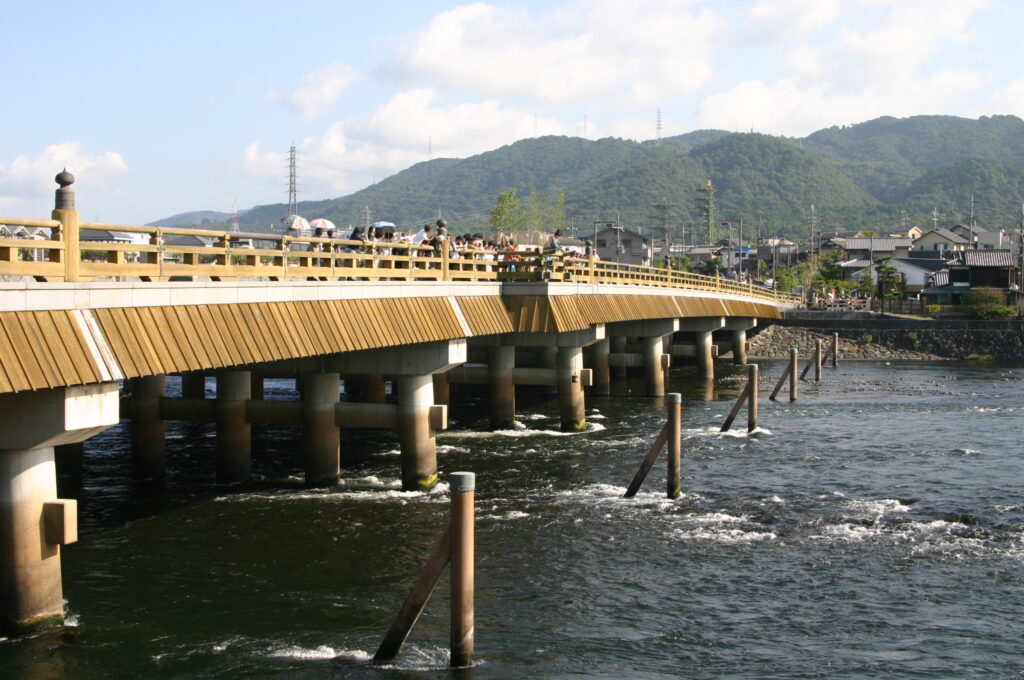
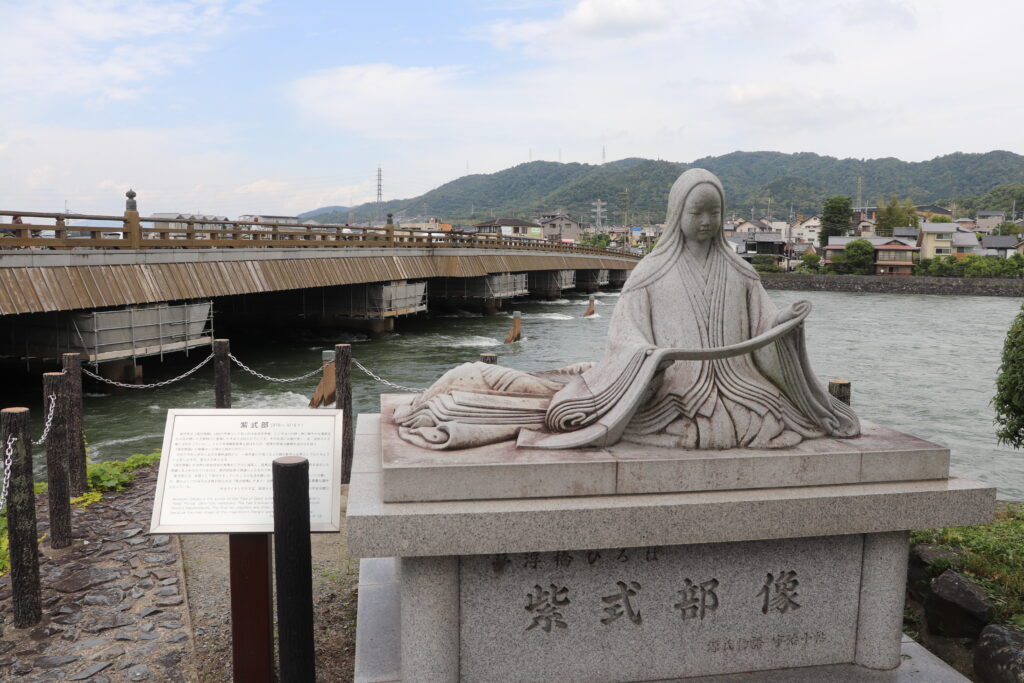
Uji-bashi Bridge is rich in history. One of the nearby temples, Hashidera Hojoin, has one of Japan’s oldest fragments of stone monuments, which says that a Buddhist monk Doto erected the bridge in 646. Furthermore, the bridge appears in many pieces of literature, including The Tale of Genji written by Murasaki Shikibu. On the southwest side of the bridge, you’ll find the stone statue of her.
The bridge also became a battleground in the 12th and 13th centuries. In the battle of 1180, the Minamoto clan and the Taira clan fought against each other. The above-mentioned Taikeian Tsuen Masahisa, who was a retainer of Minamoto no Yorimasa, took sides with the Minamoto clan’s forces and fought against the vastly outnumbered forces of the Taira clan. The Minamoto forces removed the bridge planks to prevent the enemies from crossing, but after volleys of arrows were exchanged over the river, the Taira clan forces eventually crossed the river on horseback. Yorimasa, hit in the knee by an arrow, and realizing that defeat was inevitable, committed suicide by seppuku (cutting one’s own abdomen) in the garden of Byodoin Temple. Tsuen Masahisa perished in this battle as well. Legend has it that Yorimasa’s head was sunk in the river by one of his subordinates to prevent it from falling into enemy hands.
Another battle at the bridge took place in 1184. When Minamoto no Yoshinaka confined Emperor Goshirakawa and captured power, one of his relatives, the famed samurai Minamoto no Yoshitsune, chased after him to attack. He finally came to Uji, confronted Yoshinaka’s forces, and defeated them.
In 1221, the Jōkyū War occurred between the forces of Retired Emperor Gotoba and the Kamakura shogunate. Uji was one of the strategic gateways into Kyoto, and the Uji-bashi Bridge was thought of as a key defensive point. The imperial forces held out for many hours, but the shogunate forces eventually broke through and routed them.
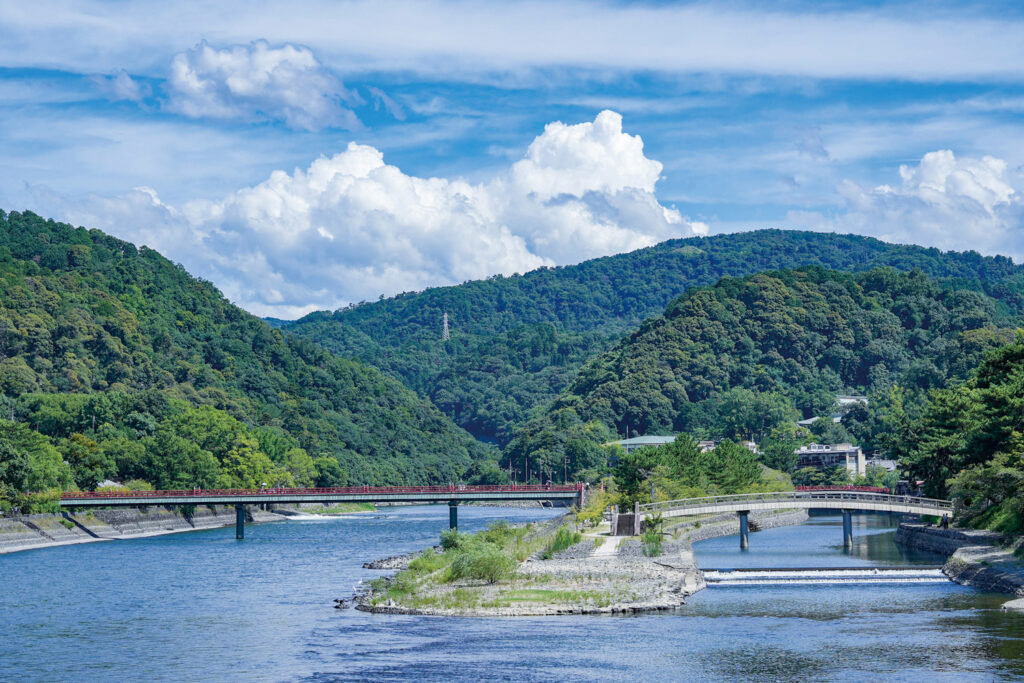
Now, let’s get back to the modern world. As you cross the bridge, take in the scenery of the flowing river and the serene, beautiful mountains, then you’ll find it hard to believe that such turbulent historical events played out here in centuries past. It makes for an interesting experience.
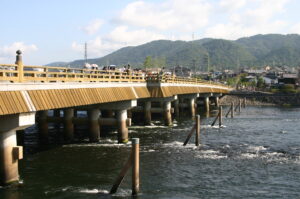
Uji-bashi Bridge
In Hashidera Hojoin temple, there remains one of Japan’s oldest fragments of stone monuments. It states that Doto, a monk from Gango-ji temple in Nara, built the Uji-bashi Bridge in 646. The bridge i …