If you want to experience the fiery magic of Kyoto’s autumn, head to Kyoto’s Nishiyama Area and start Goshuin hunting. This often-overlooked area in the western hills offers spectacular foliage and deep history that most guidebooks miss. But more importantly, collecting Goshuin gives you a tangible connection to your journey that a simple smartphone photo just can’t match. This guide is your ticket to those hidden spots. We’re going to help you chase the true colors of autumn and create a lasting memory of your journey by collecting Goshuin.
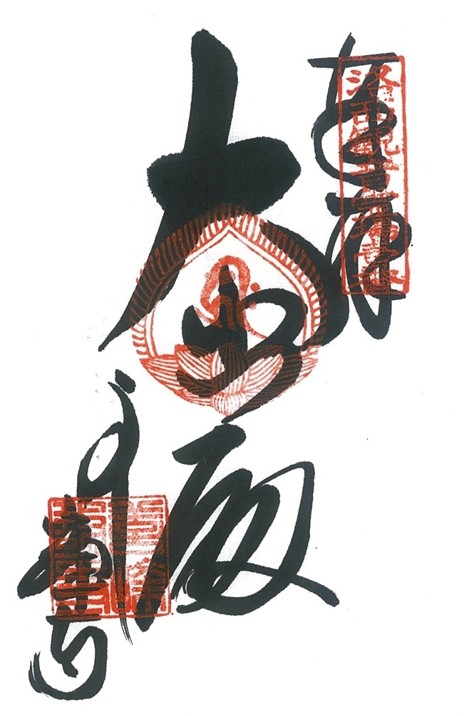
One of the Autumn-edition Goshuin offered by Otokuni-dera Temple.
For those unfamiliar, a Goshuin is a special seal granted by temples and shrines. They are often collected in a dedicated book, the Goshuincho. Combining vibrant vermilion stamps with elegant calligraphy, it’s a unique spiritual record of your visits to shrines and temples. Autumn is a particularly popular time for collectors. Goshuin available during the autumn season frequently feature limited-time designs.
5 Essential Fall Destinations for Red Maples and Temple Seals
Ready to fill your book? Here are the five spots in Nishiyama that offer the perfect blend of breathtaking views and unique Goshuin.
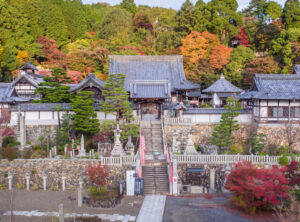
Yoshimine-dera Temple
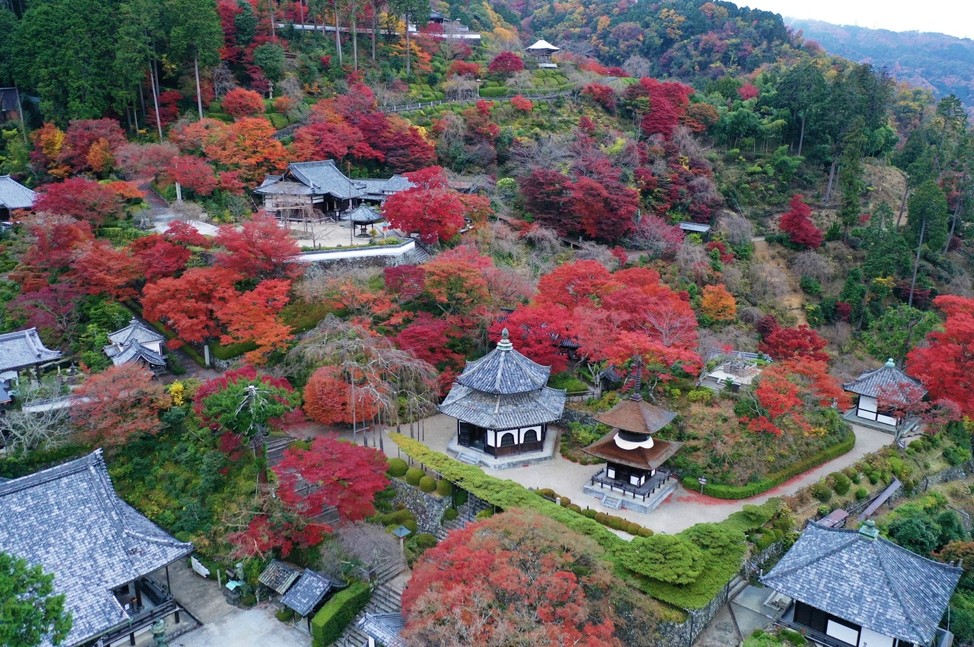
Tucked away high in the mountains, Yoshimine-dera offers a sense of escape. Entering the vast 30,000-tsubo (about 24.7 acres) garden, you’re immediately struck by its size.
The Dragon Pine is unmissable. This 600-year-old tree doesn’t grow upwards, but outwards, sprawling horizontally over 37 meters, resembling a sleeping green dragon along a wooden trellis. It’s a gravity-defying botanical wonder.
However, the real highlight is the view. From the upper areas, a panoramic vista of the Kyoto basin unfolds, framed by vibrant autumn colors. On a clear day, you can see the Higashiyama mountains across the city. It’s a view that invites you to pause and simply breathe.
To commemorate the climb, pick up their Daihiden Goshuin (500 yen). This seasonal seal is unmistakable, featuring a vibrant crimson maple leaf stamp that accents the bold calligraphy.
Yoshimine-dera Temple
Yoshimine-dera Temple, located in Nishikyo-ku, Kyoto, is a Tendai Buddhist Temple and is the 20th temple of the Saigoku Kannon Pilgrimage. The Temple is said to have been built by the famous monk Gens …
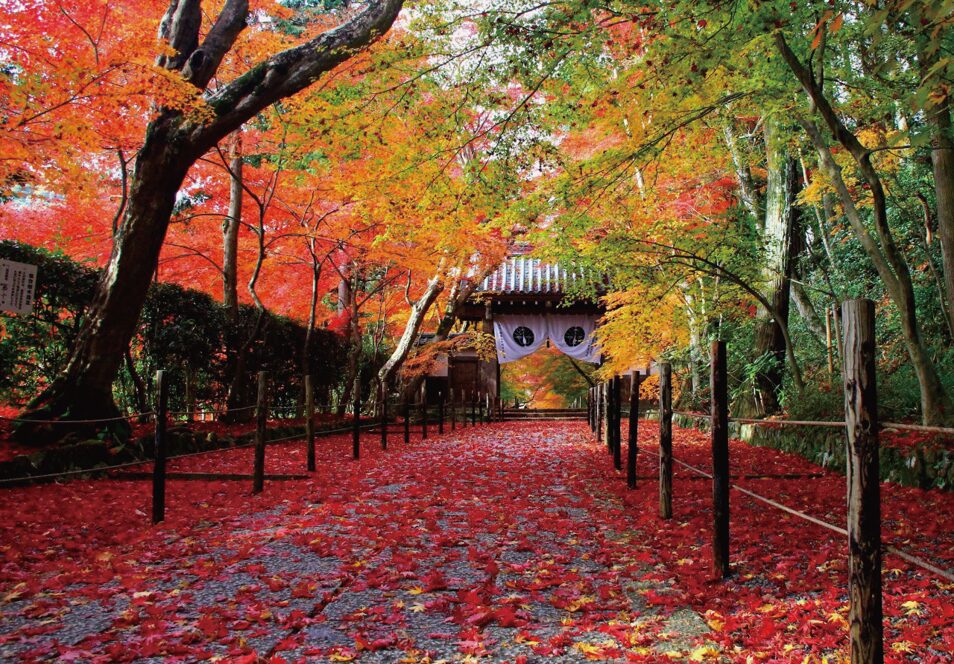
The temple’s Momiji Sando, or Maple Approach, is truly remarkable; photographs fail to capture its full splendor. This path, which extends 200 meters from the Chokushimon Gate, transforms into a red tunnel during the fall.
Maple trees on either side of the gentle slope have grown together to form a tunnel of red and gold. As the season progresses and leaves fall, the stone path is transformed into a crimson carpet.
During the autumn, look for the special Kirie Goeika Goshuin (800 yen). This delicate paper cutout often features poems or hymns and the temple’s iconic gate, creating a layered 3D effect that is simply stunning.
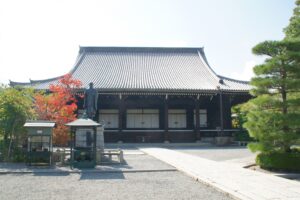
Komyo-ji Temple
Komyo-ji Temple was first built in 1198 by the soldier Kumagai Naozane in an area favored by his master Honen. Today, it the head temple of the Seizan sect of Pure Land Buddhism. Visitors can tour the …
Yanagidani Kannon is where tradition meets serious artistic flair. This temple has exploded in popularity recently thanks to its Hanachozu, the practice of filling stone water basins with floating flowers. It’s incredibly photogenic and adds a splash of curated color to the rustic temple grounds.
But in autumn, eyes turn to the Kamishoin. This upper drawing room is normally closed to the public but opens for special viewings. The temple’s traditional windows beautifully frame the garden, offering a masterclass in Japanese aesthetics. From the veranda, you can look down on the garden and admire the crimson foliage.
The temple’s limited-edition autumn Hana Chozu Kirie Goshuin (1,200 yen) are incredibly intricate, often incorporating pressed flowers or detailed cuttings that depict the seasonal foliage. They are fragile, beautiful, and absolutely worth the trek.
Yanagidani Kannon (Yokoku-ji Temple)
Yanagidani Kannon (Yokokuji Temple) is located in Nagaokakyo City, not far from Kyoto City and close to the famous Otokuni Bamboo Grove, where the main attraction is the eleven-faced, thousand-armed s …
Nagaoka Tenmangu sits in Nagaokakyo City, close to the spectacular Otokuni Bamboo Grove. Locals know it as “Mikaeri-tenjin”—the shrine that is hard to leave.
While many flock here in April for the famous tunnel of 150-year-old Kirishima azaleas, the autumn offers a deeper, quieter beauty. During the fall, the shrine hosts spectacular light-up events. The illuminated maples casting their fiery reflections onto the dark water create a scene that is hauntingly beautiful.
Nagaoka Tenmangu often offers colorful or special Irodori Goshuin (500 yen) during the season. The calligraphy here is bold and elegant, often accented with maple stamps in the fall.
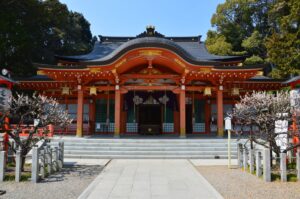
Nagaoka Tenmangu Shrine
Nagaoka Tenmangu is a shrine in Nagaokakyo City, Kyoto Prefecture, not far from Kyoto City and close to Uji—the region of Kyoto famous for matcha green tea—and the famous Otokuni Bamboo grove. Nagaoka …
Muko Jinja offers a different flavor of autumn. The main approach is a long, stone-paved path that stretches straight from the torii gate to the main hall. In November, the trees lining this path create a canopy of color that filters the sunlight into a warm, golden glow.
The main hall is an Important Cultural Property and is said to be the model for the main sanctuary of Meiji Jingu in Tokyo. It has a dignified, majestic atmosphere that demands respect.
Look for the limited edition autumn Goshuin (500 yen). Simple, dignified, and deeply connected to the shrine’s long history, it’s a classic addition to any collection.
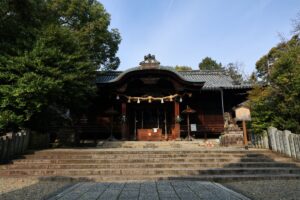
Mukojinja Shrine
Located in Muko City in the Otokuni Bamboo Grove area of Kyoto Prefecture, Muko shrine is an ancient shrine founded in 718 and is said to be a shrine for good harvest, academic achievement, and traffi …
When to visit
Peak season is usually from the end of October to early December depending on the climate trends of the year. See our Autumn foliage calendar for the latest updates each year. To avoid the crowds, plan your visit for the early morning as soon as the temples and shrines open.
How to get around
While the Nishiyama area is reachable by Hankyu and JR lines, note that significant walking is required between the various destinations. Consider looking into shared taxi options, as they can greatly simplify transportation. Services like those offered seasonally by MK Taxi often provide fixed-fare transport to popular spots such as Komyo-ji, Yoshimine-dera, and Yanagidani Kannon. Utilizing such a service can save you time and energy, allowing you to focus on exploring the temples.
Friendly Reminders
Please remember that these locations are active religious sites. Photography is frequently restricted within the main halls. Visitors should always observe posted signage regarding photography. If you’re unsure, play it safe.
Conclusion
Escape the usual tourist crowds and find serenity in Kyoto Nishiyama. Pursuing the autumn colors here offers a deep, tangible connection to the season, whether you are a seasoned traveler or a first-time visitor. Ready to fill your book with the colors of autumn? Plan your trip to Kyoto Nishiyama this fall and take home a piece of history.
FAQ
Q: Do I need to book in advance for these locations?
A: No, but some temples and shrines may require entrance fees. However, special viewing areas like the Kamishoin at Yanagidani Kannon or specific taxi tour plans will absolutely require reservations and may have additional fees.
Q: How much should I budget for Goshuin?
A: A standard hand-written Goshuin is usually 300–500 yen. However, Goshuin with elaborate designs or limited-edition autumn versions are generally pricier, ranging from 800 yen up to 1,200 yen. Be sure to bring some cash.
Q: Is this area accessible by train?
A: You can use the Hankyu Line (Nagaoka-Tenjin, Nishi-Muko stations) and JR Line (Nagaokakyo station) to reach the area. From there, you’ll usually need a short bus ride or taxi to reach the specific mountain temples and shrines.