Kyoto and Osaka are both wonderful destinations you can’t miss in Japan. Osaka offers a unique blend of traditional culture and modern excitement, with its bustling streets and friendly people. Kyoto boasts numerous beautiful temples and shrines, where you can feel the history of this old capital. Both cities are located in the Kansai region. They are linked by several train lines, which make it easy to see many sightseeing spots in a short period of time. In fact, there are other amazing places between those two locations that you shouldn’t miss. One of them is Yawata City!
After the vibrant energy of Osaka, unwind and immerse yourself in the history and culture of Yawata City, before heading to the tourist spots in Kyoto city. Yawata is located in the southern part of Kyoto. The Keihan Main Line running between Yodoyabashi Station in Osaka and Demachiyanagi Station in Kyoto will take you there. Explore Yawata, and have a good time! There are amazing shrines, serene Japanese gardens, authentic Japanese food, and more. Discover the unique charm of this cozy city before continuing your adventure.
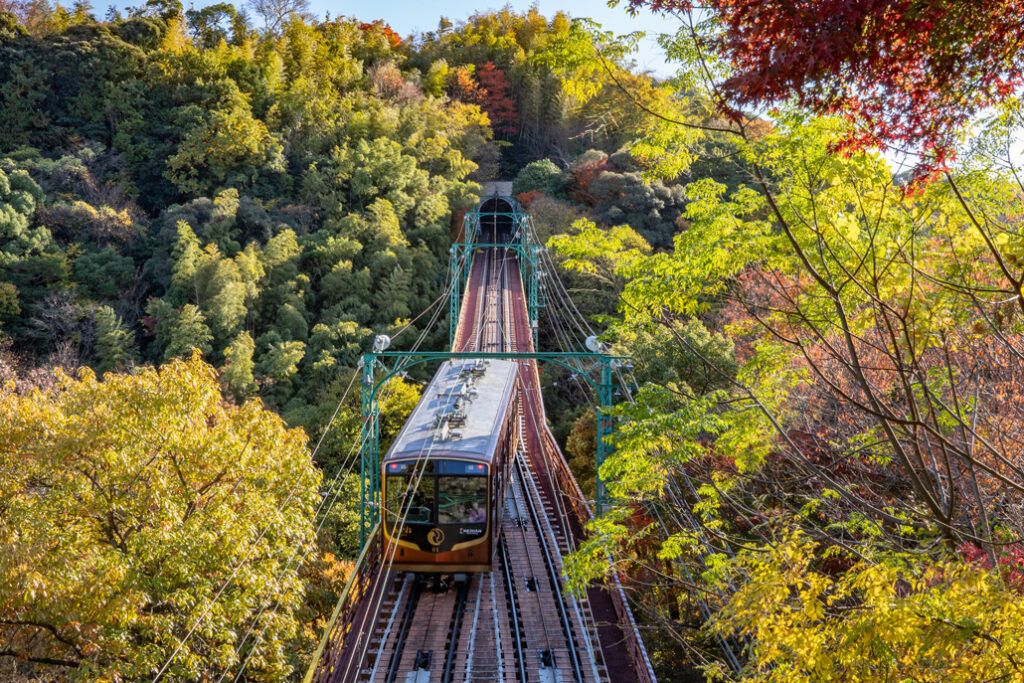
Get off at Iwashimizu-hachimangu Station on the Keihan Main Line. The shrine that gave this station its name is a great place to begin your trip in Yawata. You can enjoy walking to the upper part of the mountain. If you prefer not to climb the hill, take Iwashimizu-hachimangu-sando Cable.
The ride up takes only about 3 minutes. It’s also a good idea to check out Keihan Railway’s discounted sightseeing passes for visitors to Japan. These ideas will enhance your travel experience.
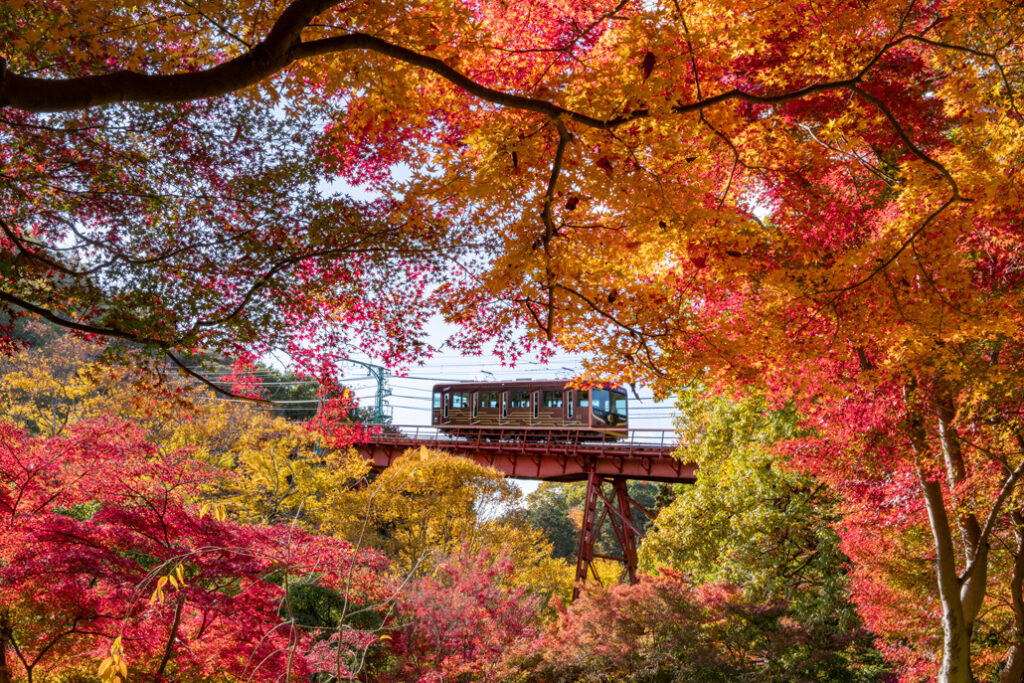
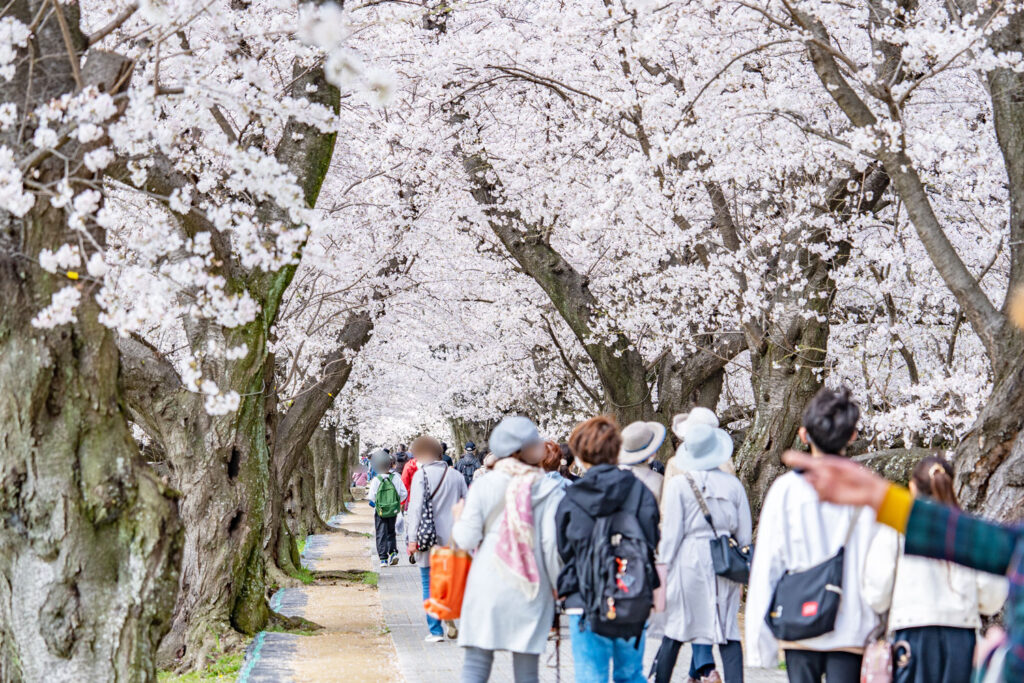
The cable car ascends the mountain, passes through the tunnel, and eventually reaches the station on the mountain. Then, you’ll be treated to a spectacular view that you can’t find anywhere else: the Katsura River, Uji River, and Kizu River! These three rivers meet near the Sewaritei bank to become the Yodo River, which flows through Osaka. If you’re visiting Yawata in spring, don’t miss the Sewaritei, a very famous hanami (cherry-blossom viewing) spot. It’s a narrow bank sandwiched between the Uji River and Kizu River, and known for its breathtaking tunnel of cherry trees.
The Sewaritei Area in Yodogawa Riverside Park
The Sewaritei area is located north of Iwashimizu-hachimangu Station (Keihan Main Line), immediately after crossing Goko-bashi Bridge. The cherry blossom tunnel stretches for approximately 1.4 kilomet …
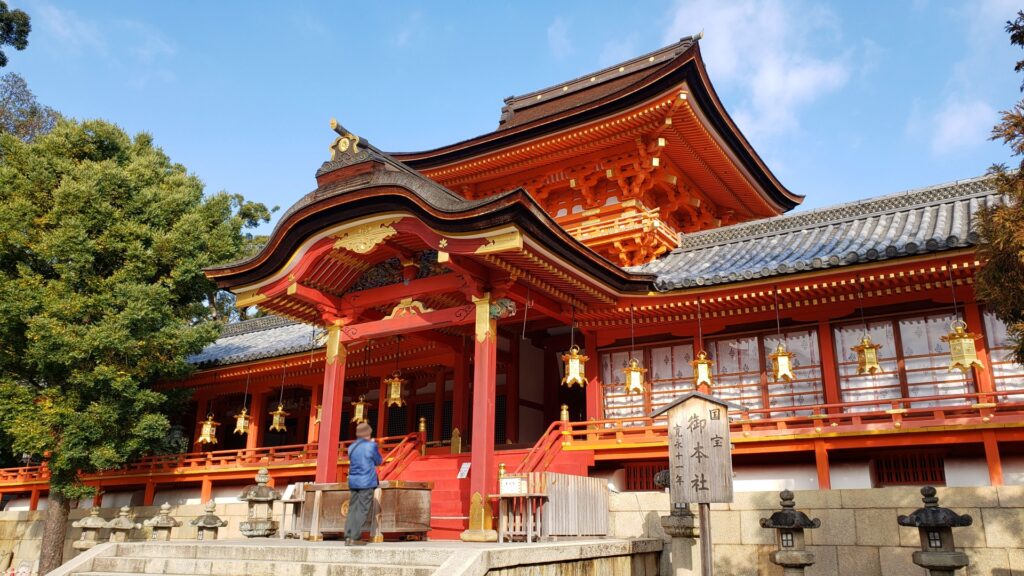
Iwashimizu Hachimangu is one of the three major Hachimangu shrines. This majestic shrine, with a nearly 1,200-year history, is considered Japan’s second most important shrine after Ise Jingu (Ise Shrine). The shrine is dedicated to Hachiman Okami, believed to be ancestors of the emperors of Japan. Since ancient times, Hachiman Okami have been deeply revered as guardian deities of Kyoto and the nation in this shrine. This profound reverence has been passed down through generations of emperors as well.
It was also a sacred place of worship for some of the most famous samurai warriors in history. The Minamoto clan (Genji), who established the Kamakura shogunate (1185-1333), highly respected Hachiman Okami as their tutelary deities. Even after the fall of the Minamoto clan, Iwashimizu Hachimangu has remained one of Japan’s most important shrines to this day.
The shrine holds a special place in Japanese history, and is also a visually stunning place. It offers amazing views of cherry blossoms in spring, and a beautiful contrast of fall foliage and evergreen trees in fall.
Moreover, it has National Treasure including the main building that is adorned with intricate, colorful carvings. The historical building complex is the oldest and one of the largest surviving Hachiman-zukuri (a traditional Japanese architectural style seen at Hachimangu shrines) in Japan.
For those interested, exploring hidden motifs of animals, nature and so on within the architecture is like a treasure hunt.
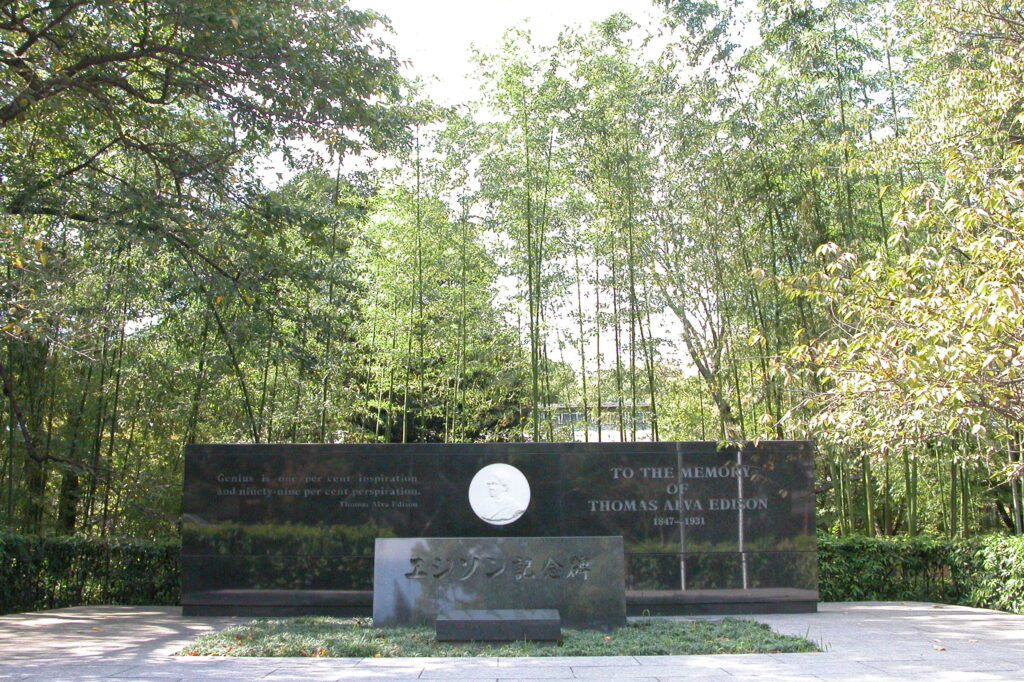
And there’s another interesting element that might light up your curiosity. Next to the shrine, you’ll find a large stone monument dedicated to Thomas Edison.
To find the perfect bamboo for his light bulb filaments, Edison sent researchers all over the world. It turned out that madake (a giant timber bamboo) from this area was the most durable one. Light bulbs made with it were said to have shone for an average of over 1,000 hours. Today, the Iwashimizu Hachimangu shrine holds annual festivals to honor his birth and death.
Iwashimizu Hachimangu
Iwashimizu Hachimangu is one of the three major Hachimangu shrines. This majestic shrine, with a nearly 1,200-year history, is considered Japan’s second most important shrine after Ise Jingu (Ise Shri …
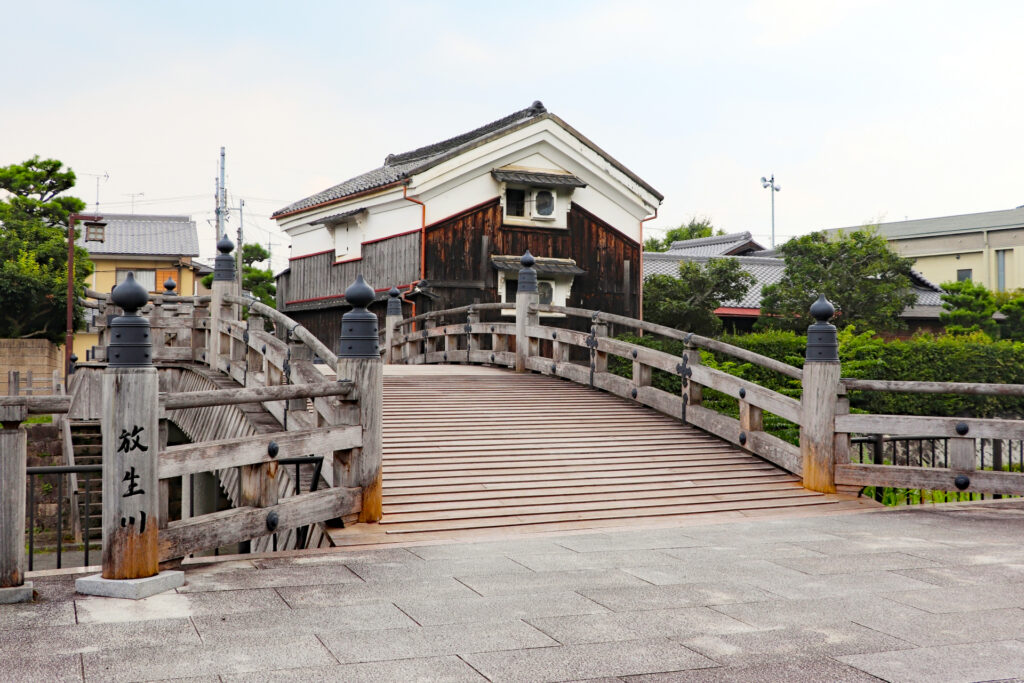
There are several routes, including the cable car, which you can take to descend from the shrine. Some routes take you down to where the precincts meet the surrounding residential area, and you can also find surprisingly quaint scenery along the way. A charming arched bridge crossing a small river. Its semicircular structure resembles the arched shape of taiko (a Japanese drum), and it’s also called “Taiko-Bashi”. Originally a flat bridge, it was rebuilt in this arched style after a fire in 1868. Today, in an annual festival of the Iwashimizu Hachimangu shrine, Iwashimizu Festival, Hojo Ritual (a life-releasing ritual) is performed at this bridge. The view of a hazy moon and Ango Bridge is included in the famous eight picturesque views of Yawata. Both banks of the Hojo River are lined with walking paths. This area and the Iwashimizu Hachimangu shrine serve not only as a relaxing spot for local residents but also as a charming destination for tourists. It’s a great spot to take photos.
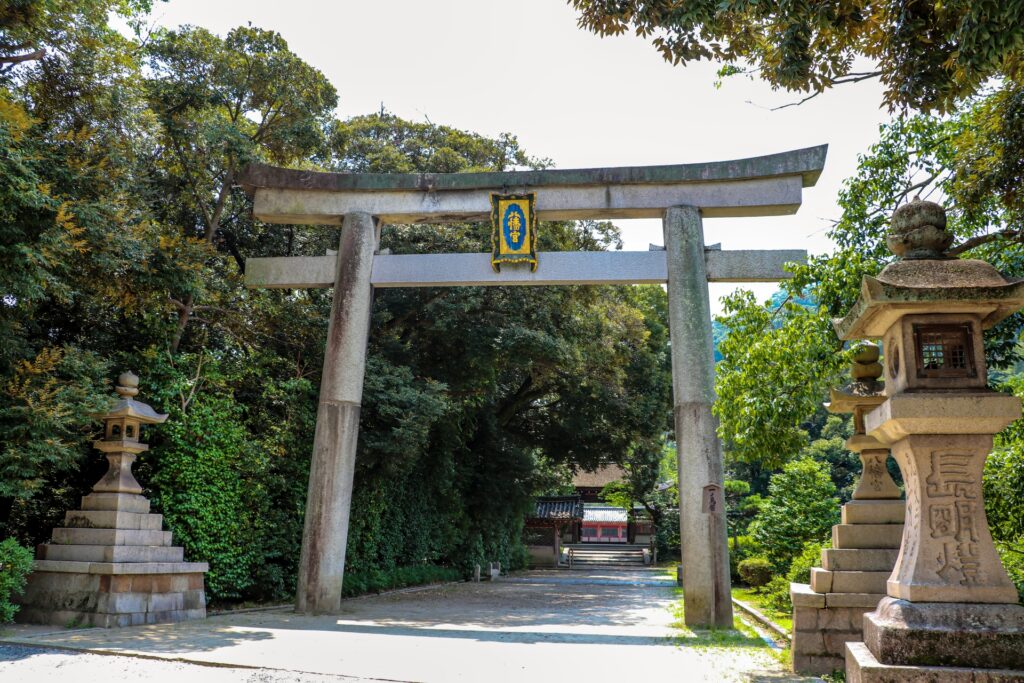
Proceed along the path from Ango Bridge towards Iwashimizu-hachimangu Station, and you’ll encounter a 9-meter-tall stone gate called Ichi-no-Torii. It marks an entrance to Iwashimizu Hachimangu. On the upper part of the torii gate, you’ll find a tablet with kanji (a Chinese character) of “hachi (八)”, in “Hachimangu (八幡宮)”, written in the shape of two pigeons. Actually, pigeons are considered as messengers of the deities, Hachiman Okami. Pigeons can be found hidden as motifs throughout the shrine. You can even find adorable pigeon-shaped omikuji (small items containing fortune-telling slips) and omamori (Japanese amulets).
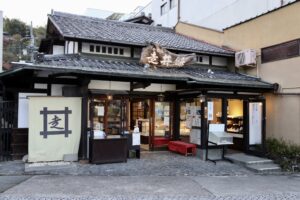
In front of the Ichi-no-Torii gate, you’ll also find a historic teahouse with Japanese sweets, Hashiriimochi-rouho. It’s famous for its Hashiriimochi rice cake, a unique and sweet traditional treat shaped like a sword. It’s one of Yawata’s local specialties.
Hashiriimochi-rouho
Established in 1764, Hashiriimochi-rouho boasts a rich history spanning over 250 years. It’s famous for its Hashiriimochi, a soft habutaemochi (silky, tender rice cake) filled with anko (sweet red bea …
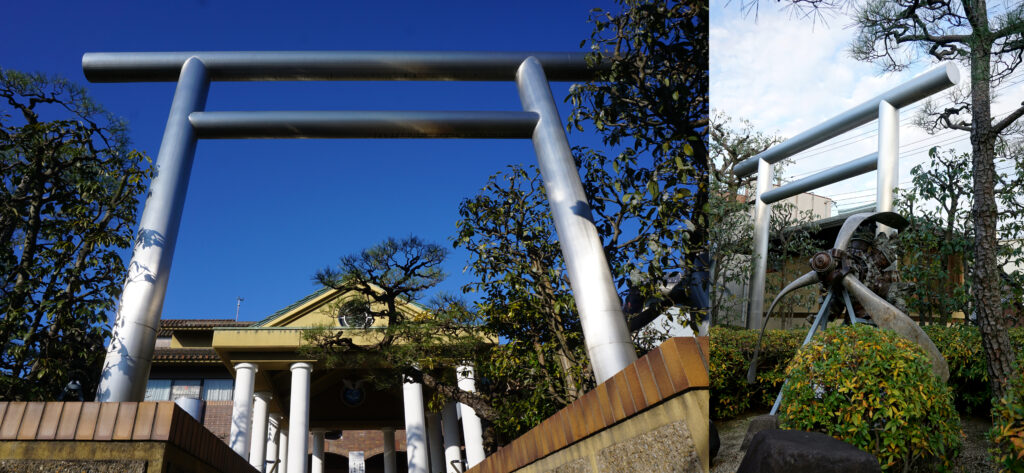
Just across the river, in the station area, there is another unique shrine called Hiko-jinja Shrine It has an amazing history. It was founded in 1915 by Chuhachi Ninomiya who achieved the first successful flight of a rubber-powered, crow-type model aircraft in Japan. Dedicated to safety in flight and the advancement of the aviation industry, this shrine has been visited by various people including those working in the airline industry. It looks very different from other traditional shrines, with its architectural style reminiscent of ancient Greek buildings, and metal torii gate. You can find some of the shrine’s essence as you get closer: a great, twisted metal propeller on display, and a cluster of small airplanes floating in a washbasin that visitors use to wash and purify their hands before entering the shrine.
You can continue your adventure in Yawata from around Iwashimizu-hachimangu Station. Head east to the Nagarebashi bridge (officially known as Kouzuyabashi) or south to Shokado Garden and Art Museum.
You can get to both places by taxi or bus from the station, and renting a bike in this area is a good idea, too. To rent a bike, visit Iwashimizu-hachimangu Station Tourist Information Center, Shikisai-kan that is near Nagarebashi, or Shokado Garden and Art Museum. For more details on locations, opening hours and so on, check the website of Yawata City Tourism Association.
The Nagarebashi Bridge
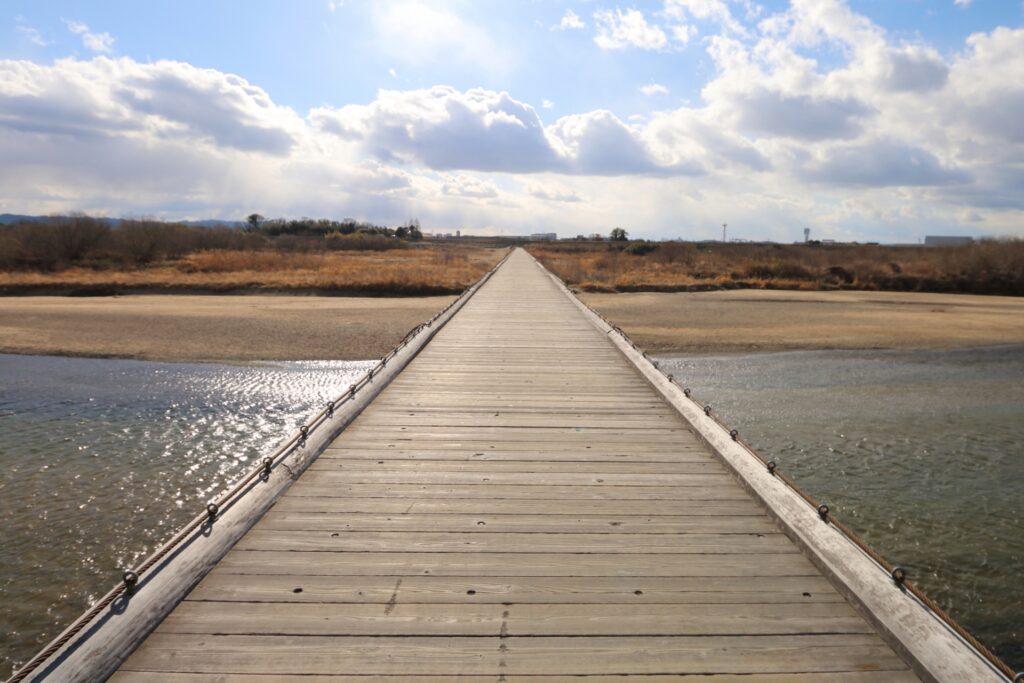
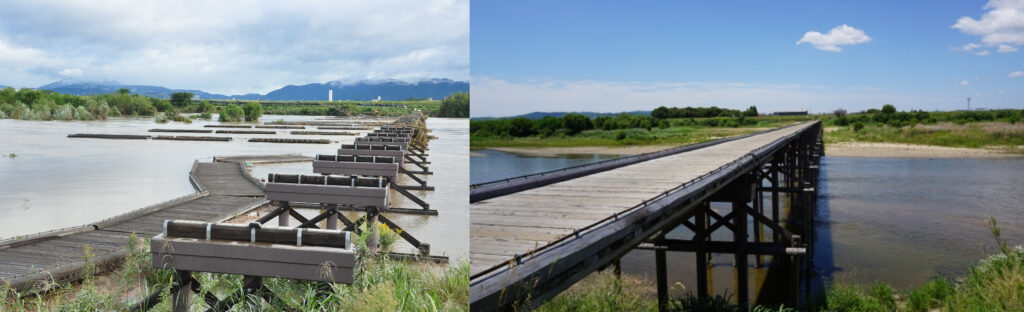
To reach the Nagarebashi bridge from around Iwashimizu-hachimangu Station, you can ride a bike along the Kizu River, or take a bus and walk. The bridge spans over the Kizu River, and is known as one of the longest wooden bridges in Japan. The name “Nagarebashi” means “a flowing bridge” in English. Sometimes the river experiences a significant water level rise by heavy rain, especially in a typhoon season. Instead of resisting the water flow, the bridge is designed to flow along with it. Of course, it’s not completely washed away. Its walkway naturally gets separated into several parts, and they drift apart from the bridge and float on water, but they’re connected to the bridge piers by wire ropes, actually. To return the washed-away parts to their original positions on the piers, you only have to pull up the ropes. This bridge is designed to adapt to the natural conditions around the river.
The wooden bridge has a charming and nostalgic atmosphere. It’s been used as a filming location for many historical films and TV shows.
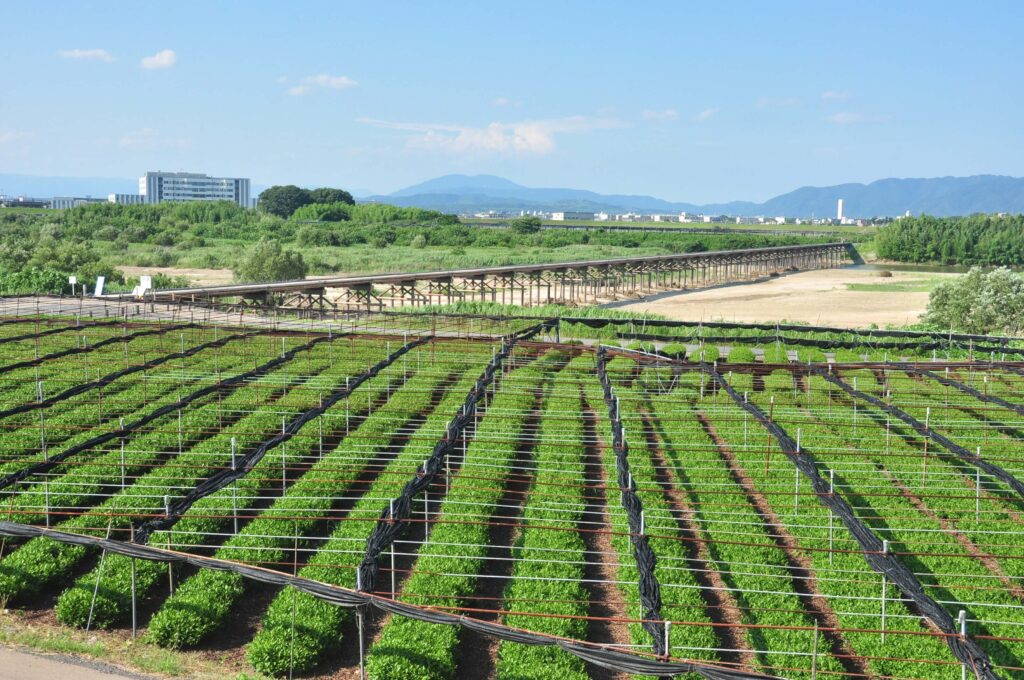
Right beside the bridge, you can see tea plantations. It’s a great place where fertile soil is naturally carried by the river. This area is famous for producing high-quality tea. To ensure the safety of residents, the embankment was strategically constructed to circumvent the tea plantations.
From the tea plantations, head to the Japanese garden with chashitsu (houses for tea ceremony) and beautiful nature. To get to Shokado Garden and Art Museum from the bridge, you can take a taxi or rent a bike from Shikisai-kan near the bridge. From Iwashimizu-hachimangu Station, you can go there by bus or rental bike. Cycling around the city will allow you to see various views and enrich your journey.
A Beautiful Garden, Perfect for Strolling and Snapshots
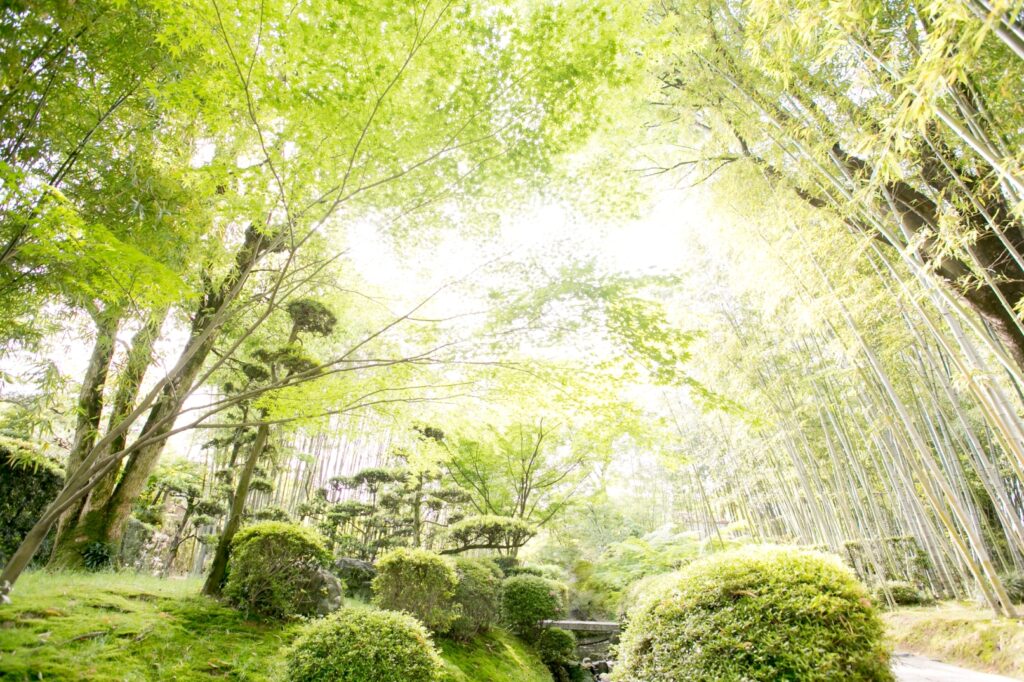
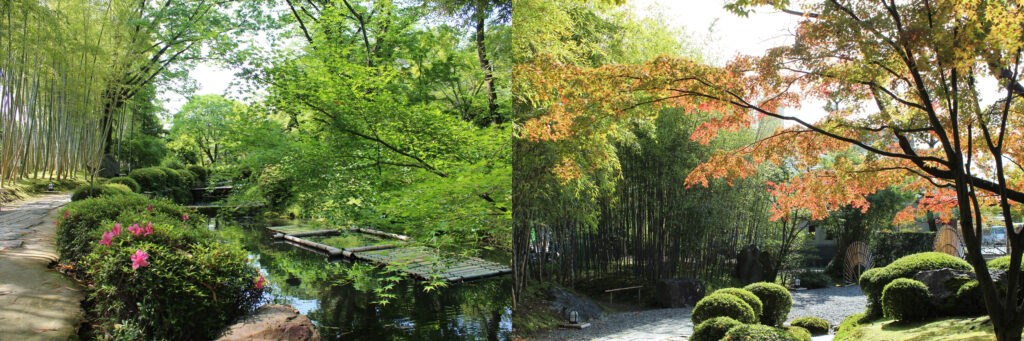
Spanning over 20,000 square meters, Shokado Garden is the perfect place to experience the traditional Japanese beauty throughout four seasons. Enjoy a tranquil walk through exquisite landscapes with elegant, towering bamboo trees, plum and cherry trees and a pond. You can also see three chashitsu houses and a small, peaceful hermitage called Shokado where Shokado Shojo lived after retiring later in life. (Please note that as of February 2025, the hermitage is generally not open to the public except on special opening days.) He was a Buddhist monk who dedicated himself to spiritual training and acquired valuable experience at Iwashimizu Hachimangu. His talents extended beyond his primary pursuits, encompassing the refined arts of tea ceremony, painting, calligraphy, and so on. The garden is named in his honor. In the museum, you can even enjoy wonderful exhibits that include his artworks.
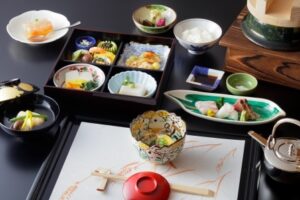
Between the garden and the museum, there is a prestigious restaurant, Kyoto Kitcho Shokado. You can savor their famous seasonal Shokado Bento. Luxurious traditional dishes are beautifully presented in the box, which looks exquisite. The name Shokado originates from a four-compartment box that Shokado Shojo loved.
Kyoto Kitcho Shokado
Their Shokado boxed lunch features seasonal delicacies arranged in a lacquered wooden box.
The box is divided into four compartments, which looks like the Japanese character for rice paddy field, “田. …
Discover Culture Through Saba-Zushi (Mackerel Sushi)
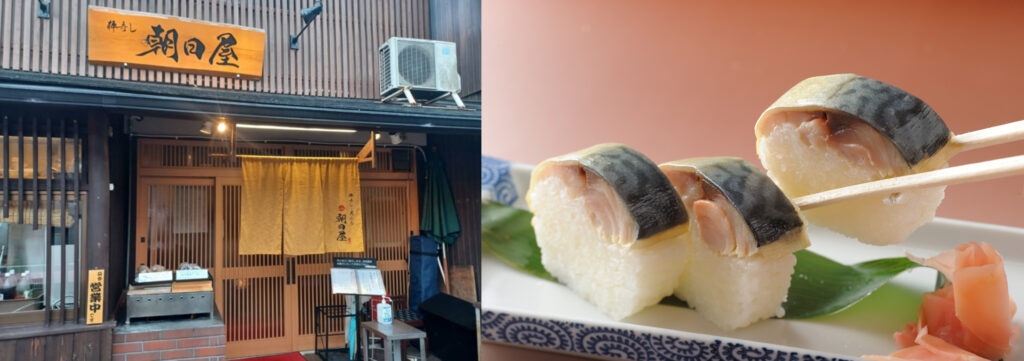
If you prefer a more casual lunch before you carry on your journey in Osaka and Kyoto, visit Asahiya, a traditional saba-zushi (mackerel sushi) restaurant located in front of Iwashimizu-hachimangu Station. With its history of over 100 years, you can enjoy the local atmosphere. Indulge in their signature saba-zushi, which is also one of Kyoto’s specialties, with udon (thick, white noodles) or soba (noodles made with buckwheat flour). It might taste slightly different from the sushi you’ve had before. The delicious flavor of their sushi is a product of their tradition. The history of saba-zushi is rooted in the necessity of preserving mackerel through salting or pickling for the long journey from Kyoto’s northern coast to southern Kyoto. (Asahiya uses premium mackerel from northeastern Japan.) Learning culture and history like this can enrich your Kyoto experience.
When you visit the cities of Osaka and Kyoto, it’s easy to rush straight toward your next destination. However, you’re missing out if you don’t explore Yawata in southern Kyoto, including shrines, history, culture, nature, and cuisine. You can find wonderful places that are less touristy than Kyoto and Osaka, so it’s a great city to make special memories.