Kyoto Prefecture’s year is full of traditional events, celebrations, and festivals. Whether secular or sacred, each one uniquely reflects the culture and customs of the region. Here is a selection of fourteen unforgettable experiences to help you plan your next itinerary.
At the beginning of the new year religious rituals and services are held around the prefecture to pray for peace and bountiful harvests in the coming year. There are also events where you can admire snow scenes or, as spring edges nearer, plum blossoms. Bundle up and enjoy the crisp winter air.
◆Snow Lantern Festival in Miyama Thatched Village (Nantan City)
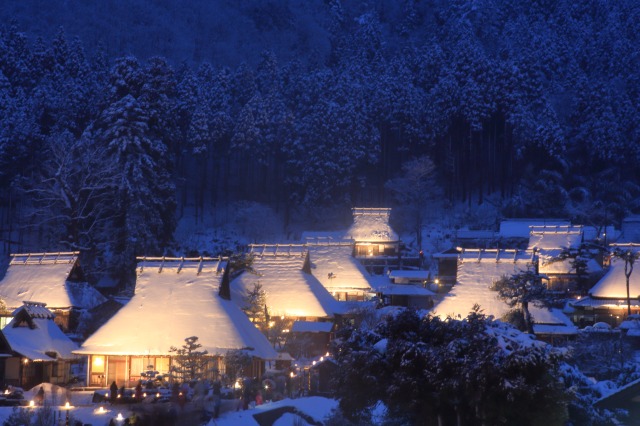
The Thatched Village in the Miyama district of Nantan City in the mountains of Kyoto Prefecture is a rustic hamlet of now-rare thatched-roof houses ranging from about 150 to 220 years in age. During the depths of winter in late January and early February, the snow-covered village is illuminated by hundreds of lanterns as part of its Snow Lantern Festival. The silvery glow of the lantern-lit houses shimmering in the night sky is nothing short of magical. Some years there are also fireworks and stalls selling hot food. Bus tours run directly from Kyoto Station. Details can be found on the festival’s official website.
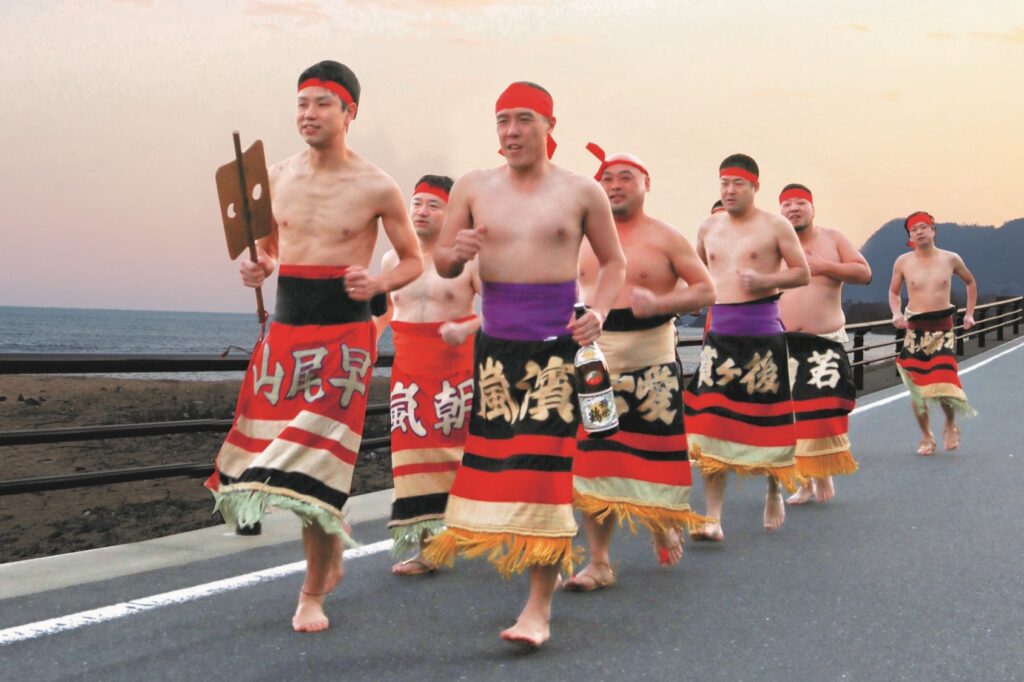
New Year on the old lunar calendar falls in February, so many shrines, temples and villages around the prefecture hold their annual rituals to pray for good health at this time of year. One of these is the district of Oganari in the port town of Taiza on the Tango Peninsula where the Hyakudo-uchi ceremony has been a fixture since the Edo Period (1603-1867). Men clad in ceremonial apron-style belts run through the icy-cold early morning streets visiting three different shrines where they offer stones from the local beach as symbols of wishes.
When: early morning on the first Sunday of February
Where: Taiza, Kyotango-cho, Kyotango City
Further information is available from Kyoto by the Sea DMO (visit@uminokyoto.jp).
◆Plum Blossom Festival (Joyo City)
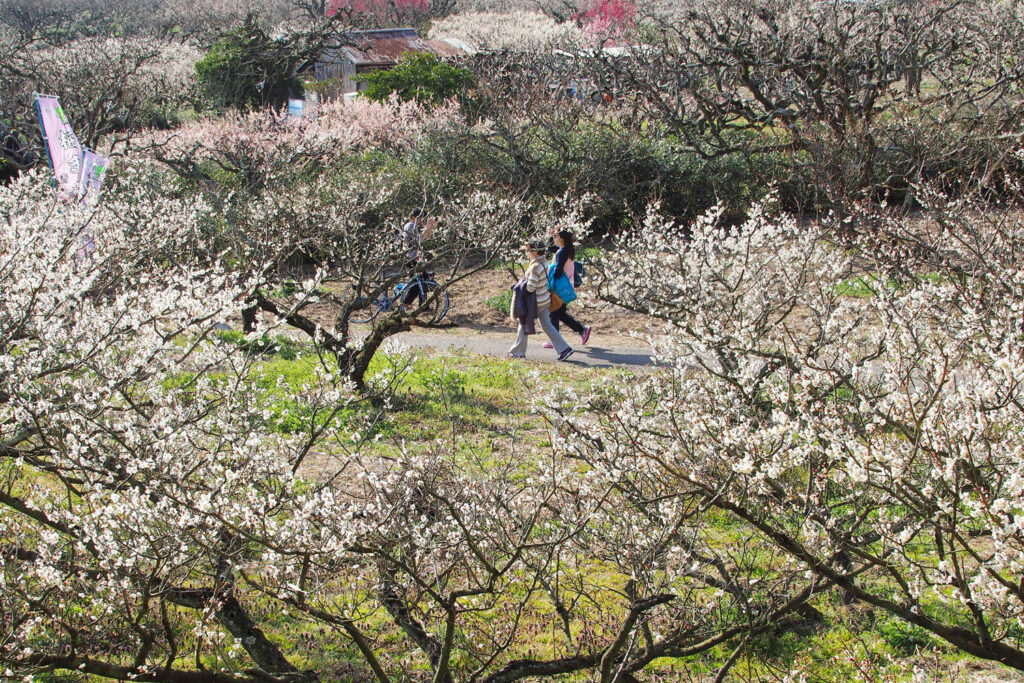
Covering approximately 20 hectares, Aodani-Bairin Plum Grove in Joyo City is one of the largest ume (Japanese plum) groves in Kyoto Prefecture. Around late February to mid-March, there is an annual festival to admire the blooming of the flowers and the arrival of spring around here. In this area, you can find pretty white and pink ume blossoms with a delicate scent of early spring. Though we associate flower viewing with sakura (cherry blossoms) today, until about the eighth century, ume blossoms were favored. Enjoy them like the ancients did. If you’re interested in Japanese food culture, try traditional umeboshi (pickled ume fruit that is very sour and salty, often enjoyed with rice), too.
Further information is available at Joyo Tourist Association located just near Kintetsu Terada Station.
April to June
During this season when nature is vibrant with fresh, new greenery, many temples and shrines hold their biggest festivals of the year. June brings the onset of the rainy season, but colorful hydrangeas brighten even the gloomiest day.
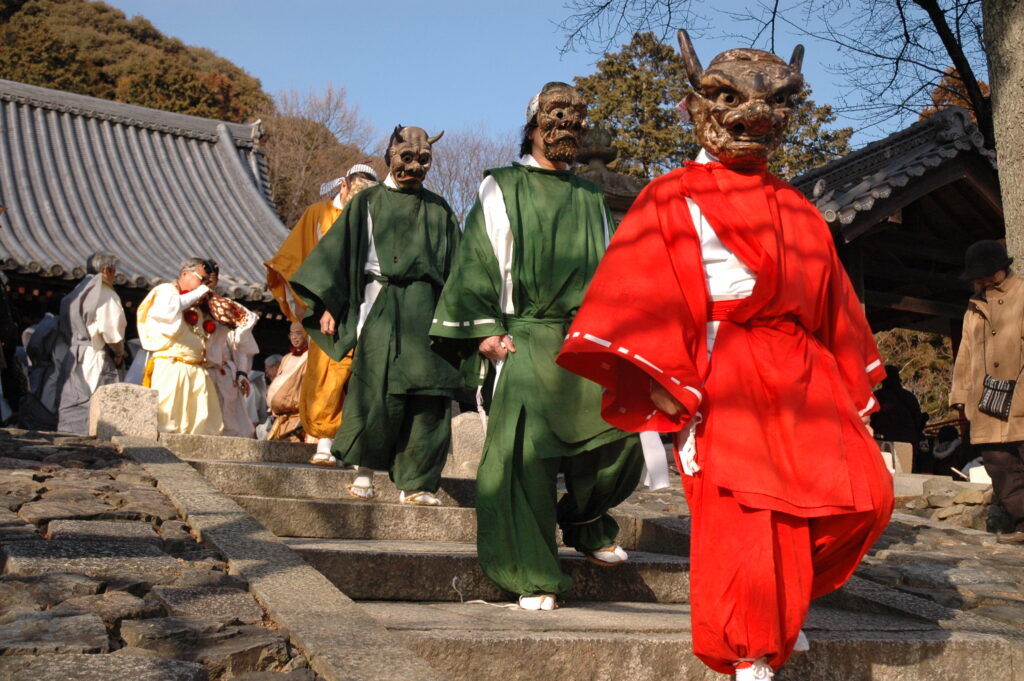
◆Smoking Out of Demons at Hoshakuji Temple (Oyamazaki-cho)
Oni, or demons, are ubiquitous in Japanese culture, and the annual Onikusube spring festival at Hoshakuji temple is a unique chance to encounter some of these notorious creatures in the flesh. Located at the foot of Mt. Tennozan in Oyamazaki-cho, the temple has held this festival to dispel misfortune and pray for good luck since its founding in 724. Oni appearing as symbols of misfortune are smoked out and driven off with sacred mugwort arrows and peachwood bows. The picture shows defeated red, green and yellow oni.
Amanohashidate Aoi Festival at the 1300-year-old Motoise Kono Shrine in Miyazu City is thought to be the oldest festival in the Tango region. Festivities include a procession of a mikoshi (divine palanquin) carrying the deity of the main shrine through the neighborhood, as well as prayers for bountiful harvests, fishing hauls and good health, and performances of various traditional arts. Particularly worth catching is the tachifuri (sword dance), which is over 1000 years old and an exciting spectacle of dancers executing daring acrobatic moves with swords in hand.
When: April 24th
Where: Motoise Kono Shrine
◆Fresh Tea Festival at the Birthplace of Nagatani Souen (Ujitawara Town)
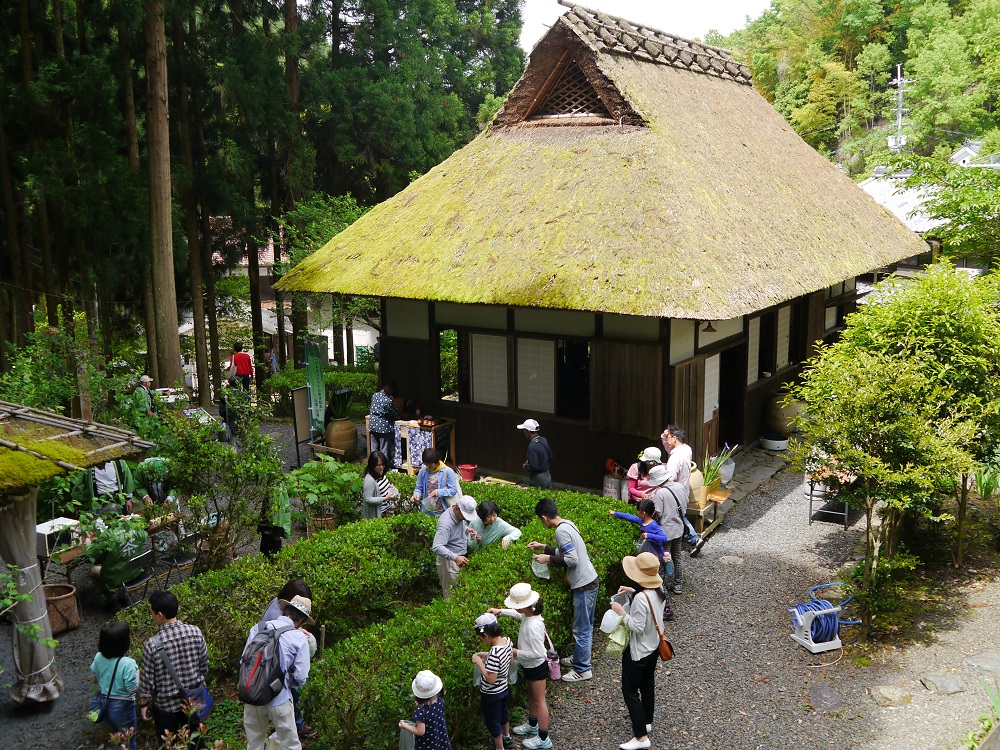
The Kyoto Tea Country region, located in southern Kyoto, is famous for producing the Uji tea, one of Japan’s highest quality teas. In this region, you can enjoy various events around early May to celebrate the first tea leaf harvest of the year. One of these is the Fresh Tea Festival held at the Birthplace of Nagatani Souen. He developed and popularized the Aosei Sencha Seihou method, which laid the foundation for the processing method of some of today’s Japanese green teas including sencha (one of the most popular Japanese teas). Savor delicious tea brewed from the new leaves, participate in the tea picking experience, and steep yourself in the fresh aroma of the “Beaujolais Nouveau” of Japanese tea.
Further information is available at Soenkoyuan Yantan tourist information center.
◆Ayabe Hydrangea and Wind Chime Festival (Ayabe City)
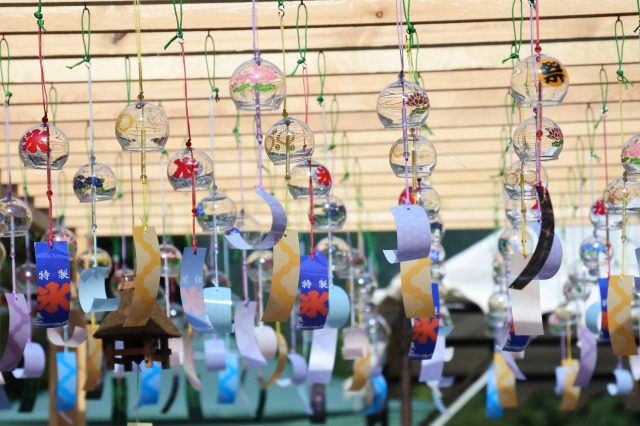
June is when the rain-loving hydrangeas bloom. A great place to see these cheery flowers is Horyuji Tokoin temple in Ayabe City, which boasts some 2,500 hydrangea plants in its gardens. During hydrangea season, the temple grounds are decorated with about 1,000 tinkling windchimes. There are also about six hundred pin wheels on display from mid-July when hydrangea season finishes. The decorations are a cooling treat for the ears and the eyes in the hot summer.
When: The Hydrangea and Wind Chime Festival is held in June and early July. Pinwheels are displayed from mid-July together with the wind chimes until the end of August.
Where: Horyuji Tokoin Temple
Access: a seven-minute taxi ride from JR Ayabe station
In summer, festivals focus on warding off hot weather disease and praying for protection of crops from typhoon damage and pests. There are also spectacular fireworks displays around the prefecture. Get into the spirit by donning a yukata.
◆Yawata Taiko Festival (Yawata City)
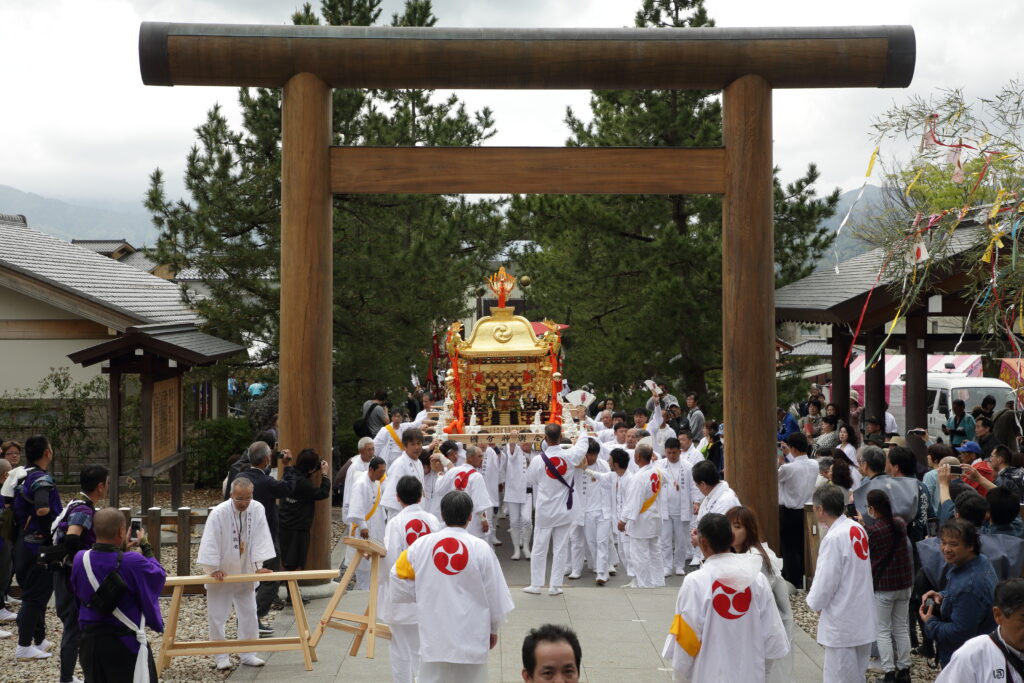
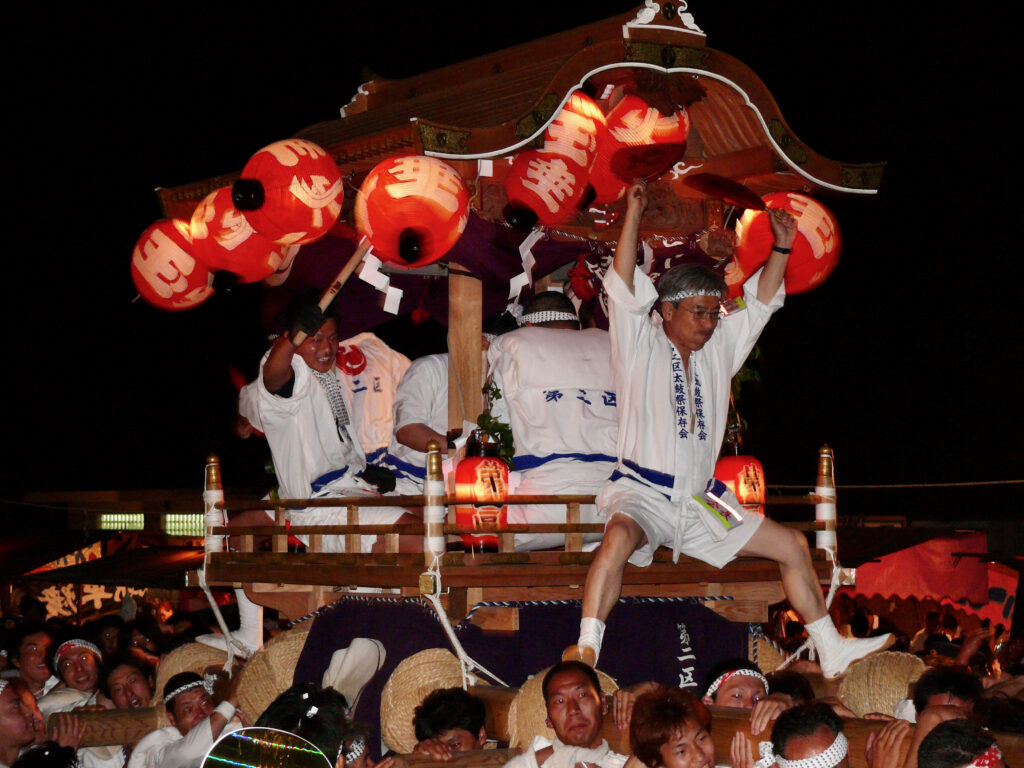
The energetic Yawata Taiko Festival, which has been a summer tradition for about 200 years, is held around Kora-jinja Shrine at the foot of Mt. Otokoyama. Drummers ride on four mikoshi (portable shrines carried by people, housing the spirit of deities). Playing the taiko (Japanese percussion instruments), they are carried around this area. People’s chanting to the rhythm of the taiko while proceeding creates a lively atmosphere, and a crowd gathers to see it. Each mikoshi, which weighs about two tons, has a sturdy and imposing look. The festival reaches a climax with the mikoshi joining smaller children’s mikoshi to form a procession to the main shrine.
When: in July
Where: around Kora-jinja Shrine, an auxiliary shrine of Iwashimizu Hachimangu
Access: about 4 min. on foot from Iwashimizu-hachimangu Station (Keihan Main Line)
◆Hozu River Fireworks (Kameoka City)
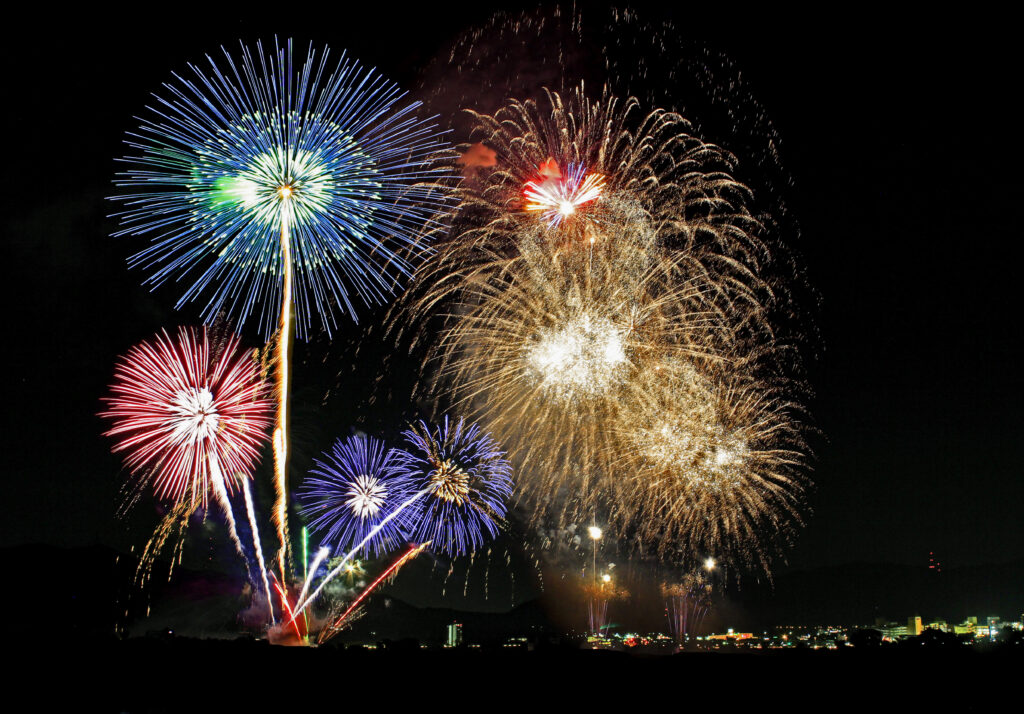
Part of summer in Kyoto for 70 years, the Hozu River Fireworks is held annually on August 11th at the Hozu River in Kameoka City to pray for peace. About 8,000 fireworks color the night sky, building to a dazzling finale of quick successive fireworks. There are several paid viewing areas— those in front of JR Kameoka Station and on the bridge are especially popular. Grab refreshments or a bite to eat before the show at the food stalls on the grassy area by the river.
When: 7:30 pm on August 11th
Where: Hozu River right bank
Access: viewing areas are within five to twenty minutes’ walk from JR Kameoka Station
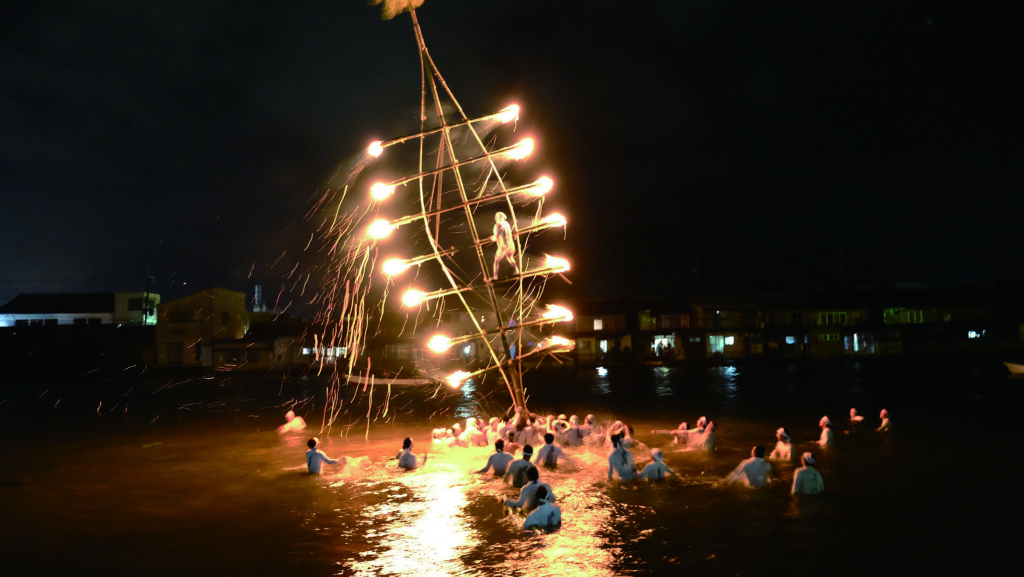
Yoshihara Mandoro Festival is held annually on August 16th in the Yoshihara fishing district of the port town of Maizuru. The festival began about three centuries ago by local fishermen tormented by a plague of jellyfish to appease the sea deity and pray for plentiful hauls. The giant fish-shaped bamboo mast set alight and rotated in the bed of the Isazu River is an impressive spectacle.
When: about 7:30 pm on August 16th
Where: Isazu River
Access: a twenty-minute walk from JR Nishi Maizuru Station
Further information is available from Kyoto by the Sea DMO (visit@uminokyoto.jp).
October and November
Autumn is harvest season and festivals take place around the prefecture to give thanks for the year’s bounty. There are also illumination events to enjoy the colorful autumn foliage and long nights.
◆Uji Tea Festival
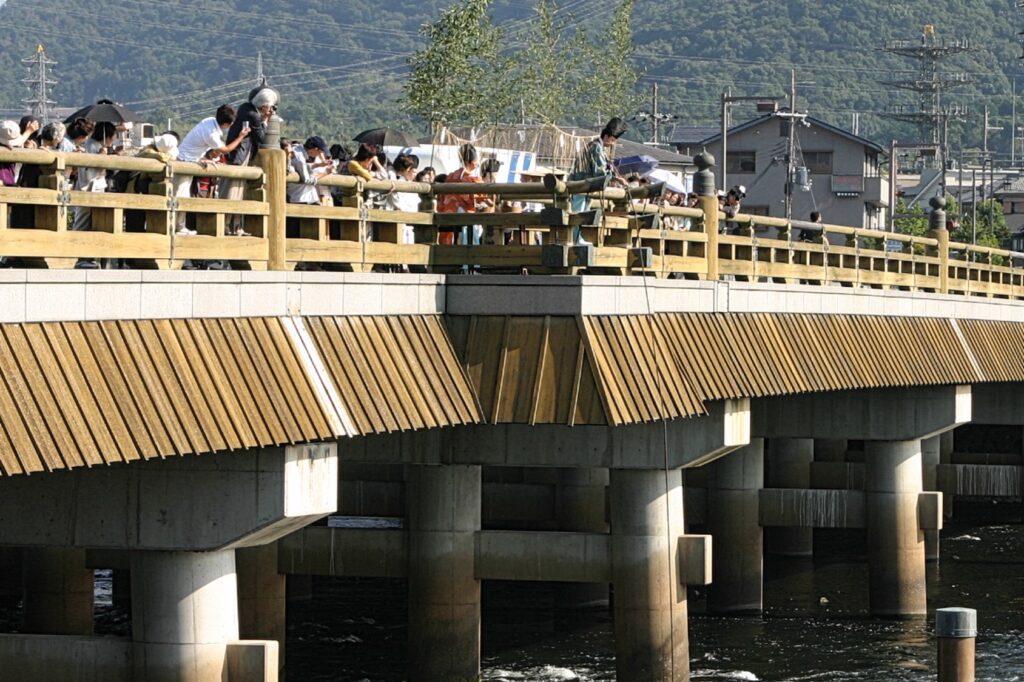
This festival features the ceremonial opening of a chatsubo (a traditional jar to store tea leaves), containing the year’s first tea harvested in the spring. The tea leaves are ground and whisked with hot water into matcha. This water is drawn from the Uji River at Uji-bashi Bridge, in the style of Toyotomi Hideyoshi’s tea ceremony. The festival honors three tea luminaries: Buddhist priests Eisai and Myōe, and Sen no Rikyū, known as a tea master. The festival honors the achievements of those who contributed to the tea industry, as well. People also pray for the continued prosperity of the Uji tea. Visitors can relax and enjoy various types of tea, including authentic matcha, as well as food and drinks at stalls.
When: early October
Where: around Uji-bashi Bridge, Koshoji temple and Prefectural Uji Park
Access: within walking distance of Uji Station (JR Nara Line) and Uji Station (Keihan Uji Line)
◆Princess Kaguya Nights at the Bamboo Path (Muko City)
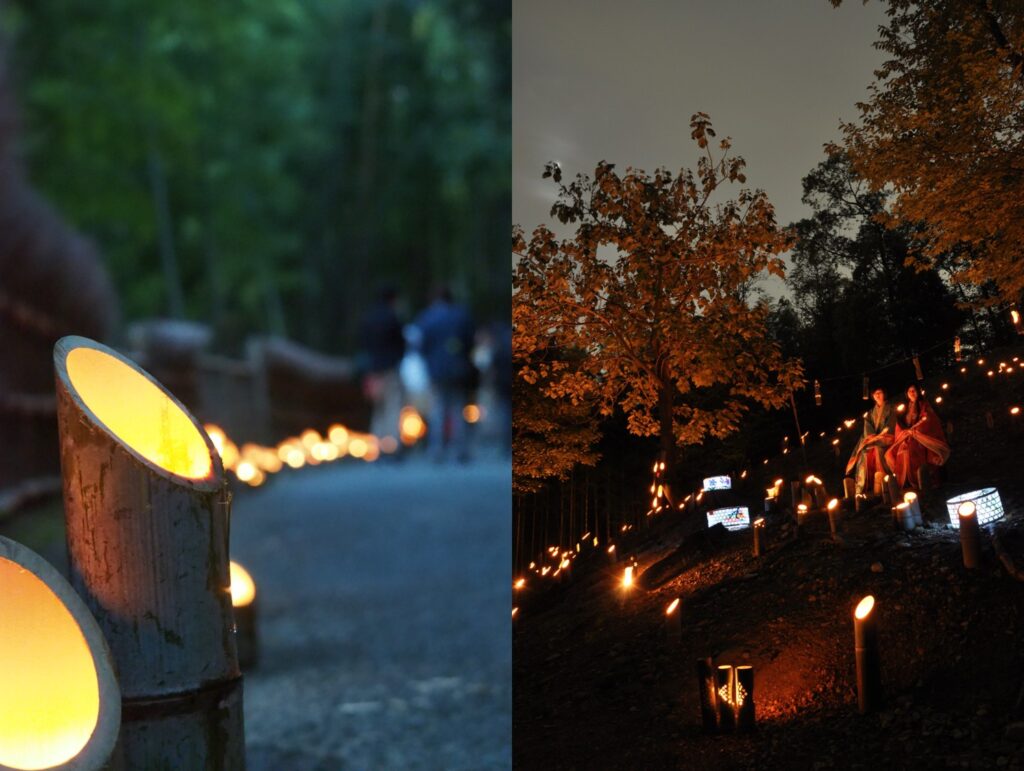
The hills of Muko City produce some of Japan’s best bamboo shoots. They’re also considered to be the potential setting of the Tale of the Bamboo Cutter, a popular ancient story of a princess called Kaguya who was born from a glowing stalk of bamboo. An illumination event is held here each October, with about 5,000 candles floating in water-filled bamboo tubes lighting a 1.8km-long walking path through the bamboo grove. In the dreamy light it feels like stepping into the fairy tale world of Princess Kaguya.
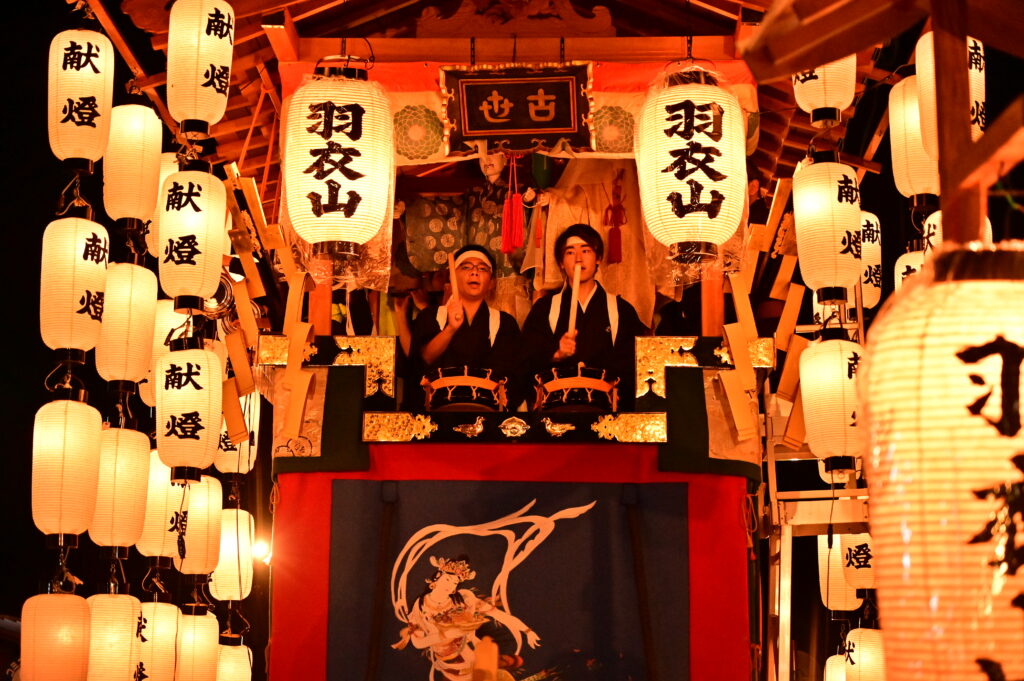
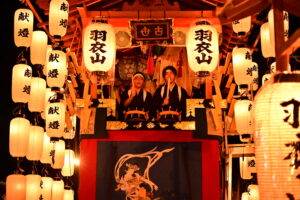
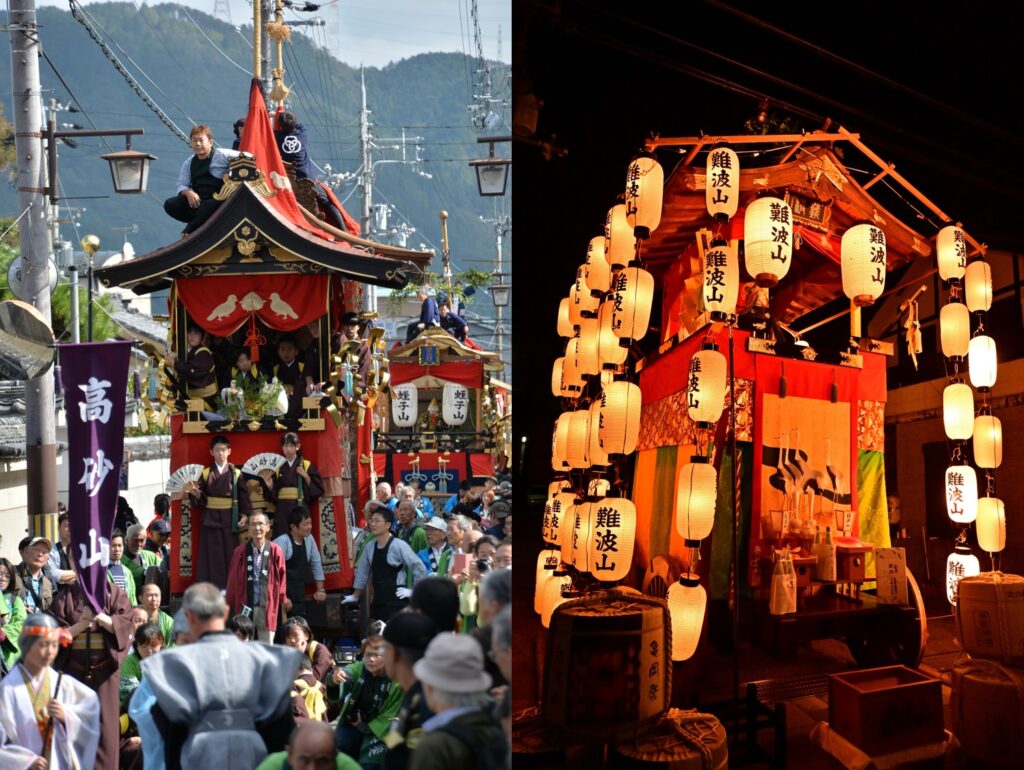
Kuwayama Shrine in the former castle city of Kameoka hosts an autumn festival throughout the month of October. The highlight is an impressive parade held annually on the 25th. Eleven colorfully decorated giant floats make their way through the town with bands of musicians riding atop playing traditional music. If it reminds you of a certain famous event in Kyoto, you’d be right—this celebration is nicknamed “Tamba Gion Festival”. Festival “eve” (which is actually the two nights before the main festival) is also a big occasion. Many people flock to join in the fun and see the floats illuminated by lanterns.
When: festival eve is on October 23rd and 24th and the procession takes place on October 25th
Where: old castle precinct of Kameoka City
Access: a 15-minute walk from JR Kameoka Station
◆Nagaokakyo Garasha Festival (Nagaokakyo City)
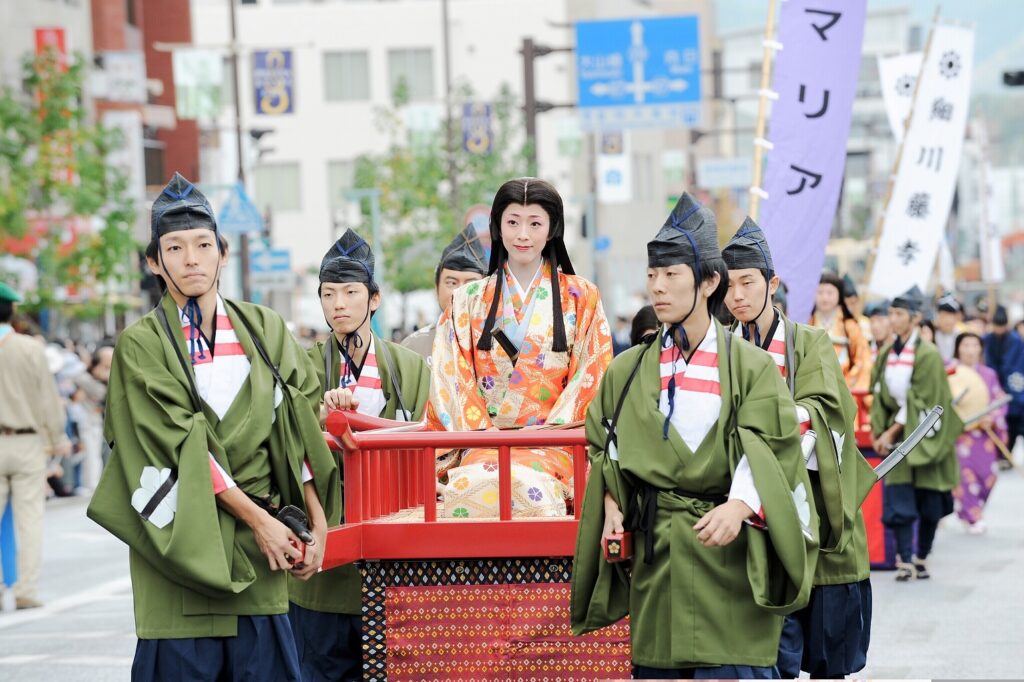
Nagaokakyo City is a historical area that has twice been the location of the capital and was often embroiled in the wars of the Middle Ages. In 1587, Garasha, the daughter of feudal lord Akechi Mitsuhide, married into the Hosokawa clan here at Shoryuji Castle. The Nagaokakyo Garasha Festival was first held in 1992 to celebrate the completion of reconstruction of the castle. The main event is a lively reenactment of Grasha’s wedding procession involving some 1000 people walking a route of about 3km in period costume.
When: starts at 12:45 pm on the second Sunday of November
Where: Nagaokakyo City (the main venues are Shoryuji Castle Park and the Central Community Center)
Access: within walking distance from JR Nagaokakyo Station and Hankyu Nagaoka-tenjin Station.