Inspiration

Discover Uji: Half-Day Tour of Tea and History, Between Kyoto and Nara

2021.12.16

A bridge over water with a pagoda in the background
Kyoto Tea Country

Kyoto and Nara are undoubtedly among the most popular destinations in the Kansai region. Both cities are renowned for their rich cultural heritage and centuries-old history. Traveling between these two cities is especially convenient for those with a JR-West Rail Pass. And nestled between these two places is another gem you shouldn’t miss: Uji, a beautiful city in southern Kyoto Prefecture. It’s about 20 minutes from Kyoto Station, and about 30 minutes from Nara Station on the JR Nara Line.
“So, what can you experience during a half-day visit to scenic Uji?”

・JR Uji Station
・Byodo-in Buddhist Temple & Museum
・ Uji Park and crossing of Asagiri Bridge
・ Mounts Asahi & Daikichi Hike*
・Tsuen Historical Tea House and Shop
・ Uji Bridge
・ JR Uji Station

JR Uji Station

The first stop on our journey is JR Uji Station, for both local and rapid trains, on the JR Nara Line that connects Kyoto to Nara. (It’s different from Keihan Uji Station, which is another nearby station.) The JR Nara Line started in 1879, and this station opened 17 years later in 1896. The current station building was completed in 2000. It is designed to resemble the famous Phoenix Hall (Hou-ou-do) of Byodoin Temple, the World Heritage site we will visit later on this route.

As you descend the station stairs, you will find a mailbox shaped like a large chatsubo (a traditional jar to store tea leaves), which was installed in 2001 to commemorate the 50th anniversary of Uji City (founded in 1951). There is Uji City Tourist Information Center right next to it, too. Now, let’s explore Uji, which has a very long history with settlements formed during the Jomon and Yayoi Periods (around 14,000 BC – mid-3rd century AD)!

Byodoin Temple & Its Museum “Hoshokan”

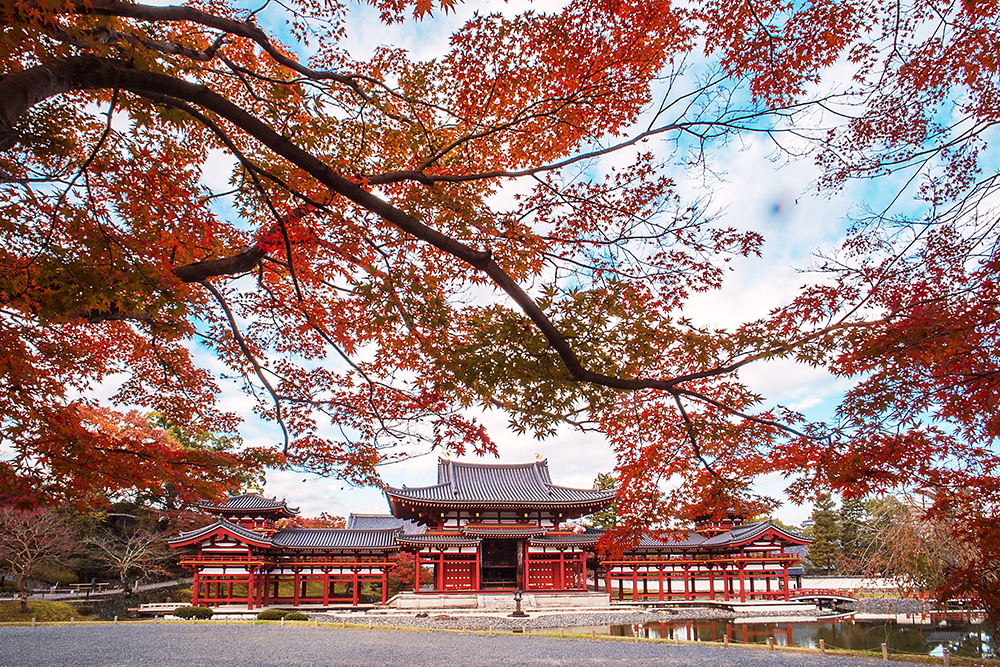
Maple leaves in front of a temple

World Heritage sites attract many tourists. Byodoin Temple is one of the seventeen parts of “The Historic Monuments of Ancient Kyoto (Kyoto, Uji and Otsu Cities)” of the World Heritage. This Buddhist temple is located on the west bank of the Uji River. The Heian Period (794-1185) courtier Minamoto no Toru once owned it as his villa, and after he passed away, it had changed ownership several times before coming into the possession of Fujiwara no Michinaga, a prominent aristocrat in the imperial court. After that, the estate was converted into this temple by Michinaga’s son Yorimichi in 1052. Interestingly, Minamoto no Toru and Fujiwara no Michinaga are among the various figures who are said to have been the model for Hikaru Genji, the protagonist of the famous novel written by Murasaki Shikibu, The Tale of Genji.

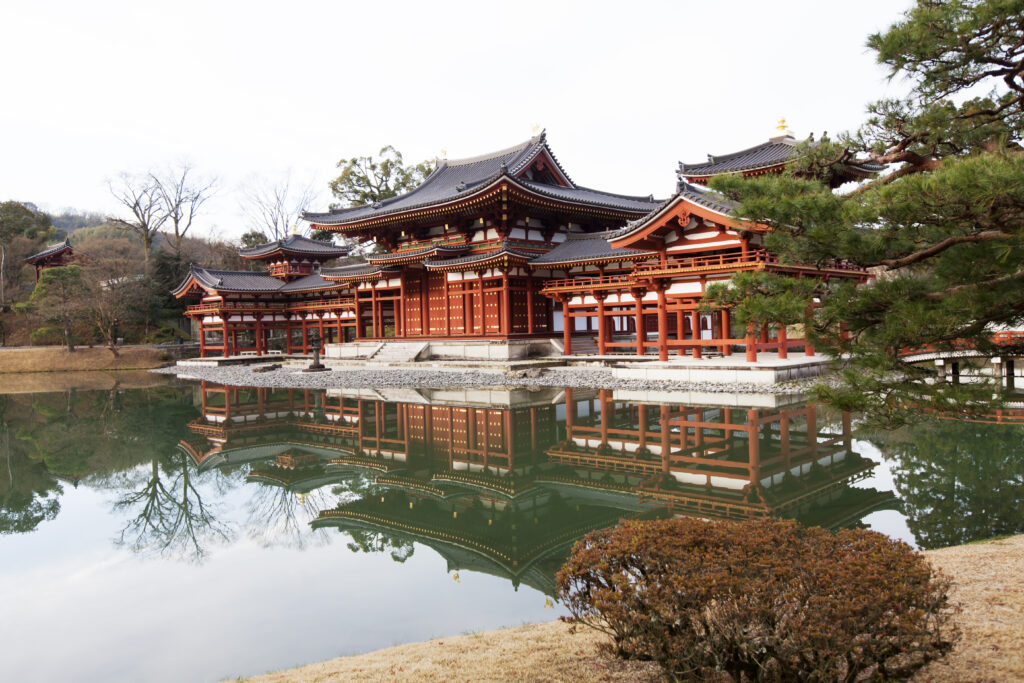
A temple being reflected in a pond

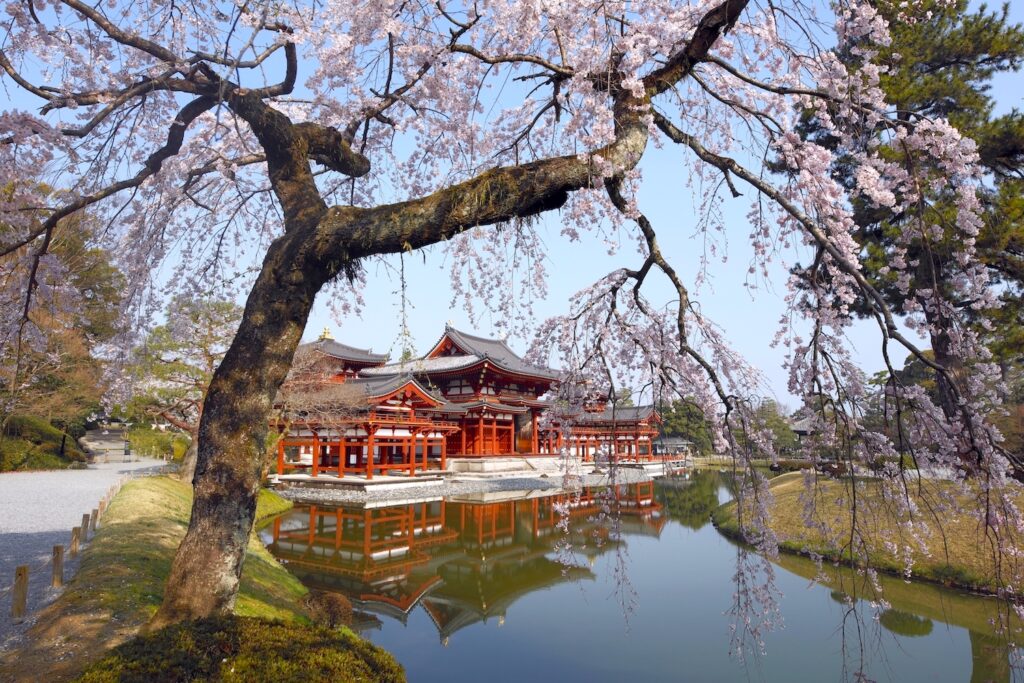
The most famous building of the temple, the Phoenix Hall (Hou-ou-do), was built as an amida-do (a hall enshrining Amida Buddha) in 1053. Today, it is featured on one side of the 10 yen coin. Having undergone numerous renovations over the centuries, the hall remains as the only existing building dating from the time of its original construction, offering a glimpse into the splendor of the Fujiwara clan’s dominance. Its name derives from the building’s resemblance to a bird, and from the two bronze phoenix statues adorning its roof. The main rectangular structure is flanked by two L-shaped Yokuro (Wing Corridors), and has Biro (Tail Corridor). It came to be called “Phoenix Hall (Hou-ou-do)” around the early Edo Period (around 1603-1868).

The temple also houses Byodoin Temple Museum “Hoshokan”, which opened in 2001. It exhibits 26 Statues of the Praying Bodhisattva (Buddhist Saint) on Clouds, a pair of phoenixes that once adorned the roof of the Phoenix Hall, and more. The museum was built mostly underground so as to harmonize with the garden, which is designated as a Historic Site and Place of Scenic Beauty, surrounding the Phoenix Hall.

With its beautifully landscaped and scenic garden, Byodoin Temple is a must-see for any visitor to Uji.

A cherry blossom tree with a temple behind it
Byodoin Temple

Byodoin Temple

Byodoin Temple, located on the west bank of the Uji River, shows the historical glory of the Fujiwara clan’s prosperity. Originally Minamoto no Toru’s villa, it was later acquired by Fujiwara no Michi …

Uji Park with Bridges

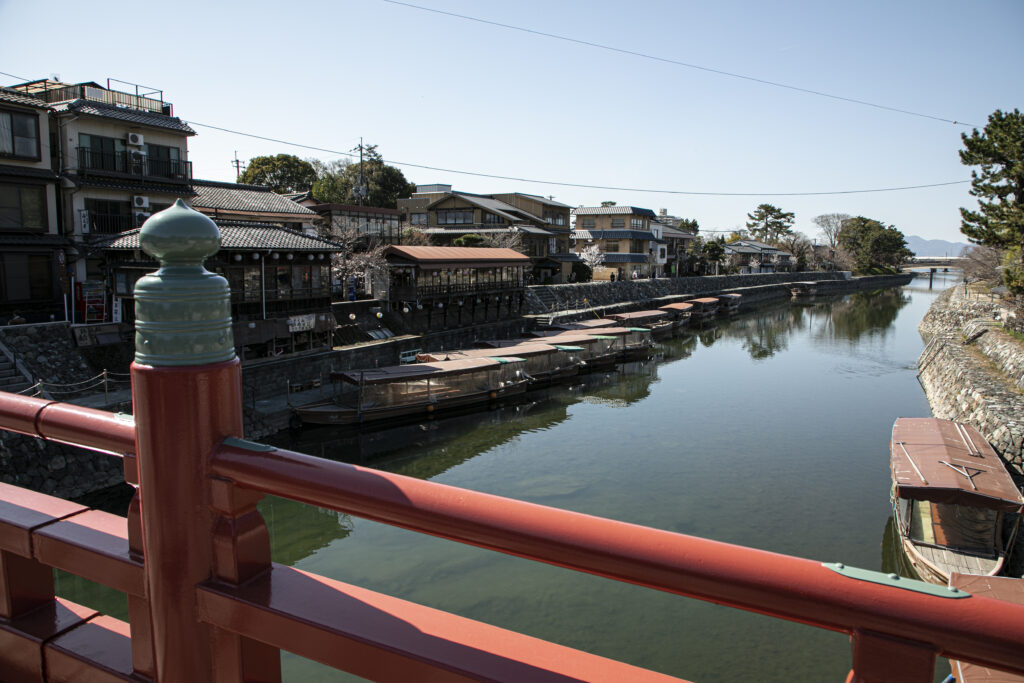
Soon after leaving Byodoin Temple through the gate near the museum, you’ll find a main road. Walk east along it, turn left, and cross Kisen Bridge. Then you’ll come to two small islands connected by a bridge in the middle. The smaller island is Tonoshima Island, and the longer one extending north is Tachibanajima Island. They are collectively called Nakanoshima Island, and Nakanoshima Island and Yorimichi Park on the left bank are collectively called Uji Park.

A bridge over water with covered boats near it

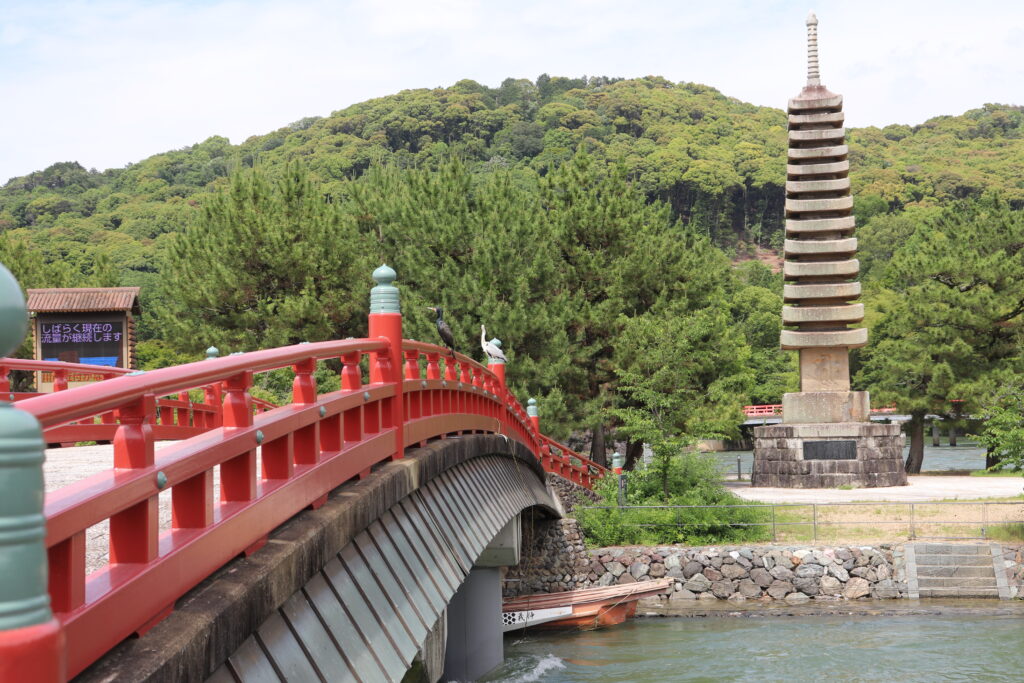
On Tonoshima Island stands Jusanju-Sekito, a magnificent 13-storied stone pagoda. It was erected in 1286 by Eison who was a monk from Saidaiji Temple in Nara. At that time, Uji-bashi Bridge was frequently washed away. With a belief that this was caused by the vengeful spirits of the fish caught in this river, fishing gear was buried on the island, and the stone pagoda was built on it to quell the spirits and pray for the safety of the bridge. Then, a fishing method using ajiro (a traditional fish trap) was prohibited here. The pagoda was washed away in a flood in 1756, but around the end of the Meiji Period (1868-1912), a large part of it was excavated, and the entire pagoda was rebuilt in 1908. Soaring to a height of 15 meters, this is the tallest among the existing stone pagodas in Japan.

A bridge over water with a stone pagoda in the background

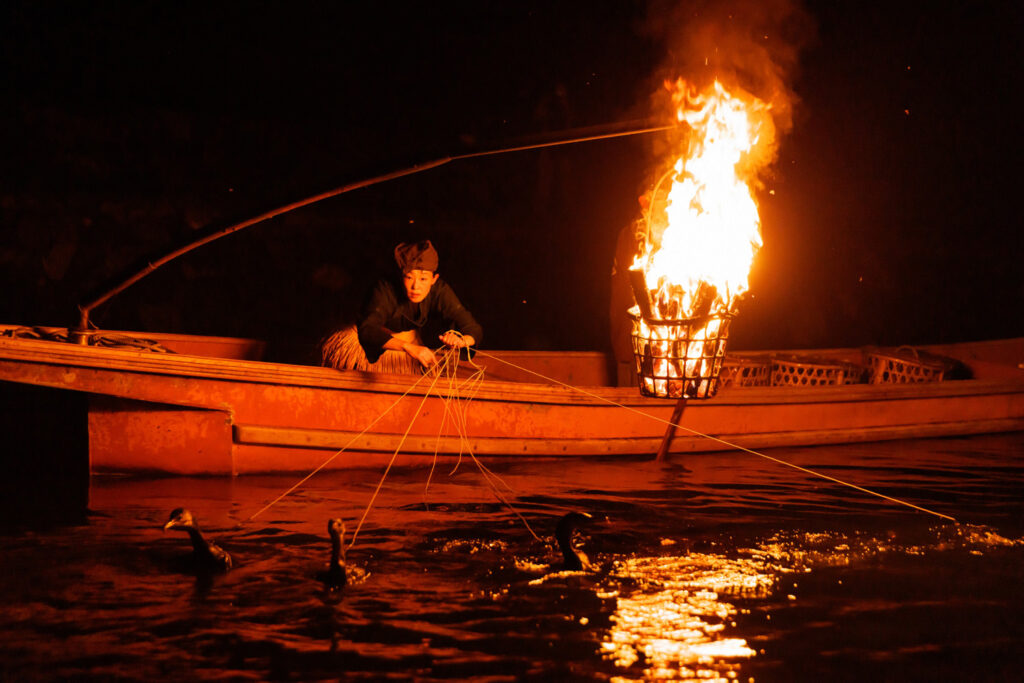
This area is also known for another fishing method, ukai (cormorant fishing). The cormorants, birds with long necks, dive into the river, catch fish, and hold them in their throats. Upon returning to the boat, the fish are retrieved by a cormorant manipulator called usho. Though the famous “Cormorant Fishing on the Uji River” is mainly a summer night activity, you can find cute cormorants in the shed on Tonoshima Island.

A bridge over a river
@Uji City

Our route continues on the east side of the river, so we will cross Asagiri Bridge.

Tonoshima Island & Tachibanajima Island on Uji River

Tonoshima Island & Tachibanajima Island on Uji River

On Uji River, there are Tonoshima Island and Tachibanajima Island. They are collectively called Nakanoshima Island. Nakanoshima Island and Yorimichi Park on the left bank are collectively called Uji P …

Hike on Mt. Asahi and Mt. Daikichiyama

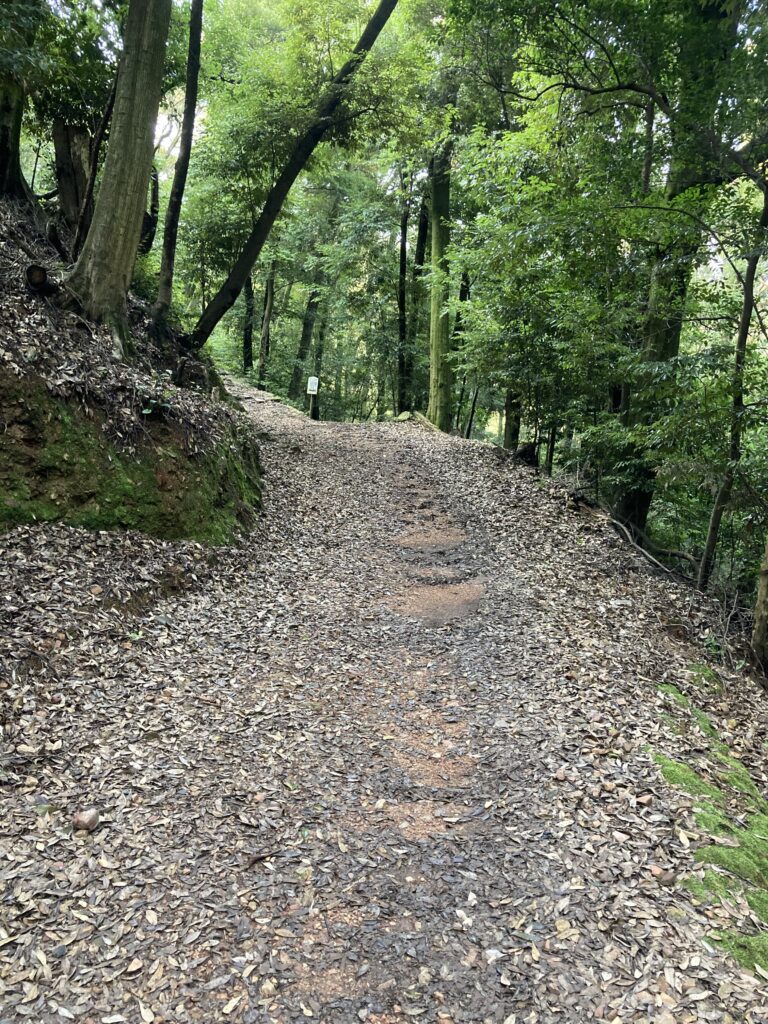
The hiking route to Mount Asahi begins at the Koshoji temple. The temple was founded in Fushimi in 1233, and rebuilt here in 1645 by Nagai Naomasa, the lord of Yodo Castle at that time. There is a small path at the white-walled temple building, extending to the right, leading to the hiking trail.

Dirt paths in a forest

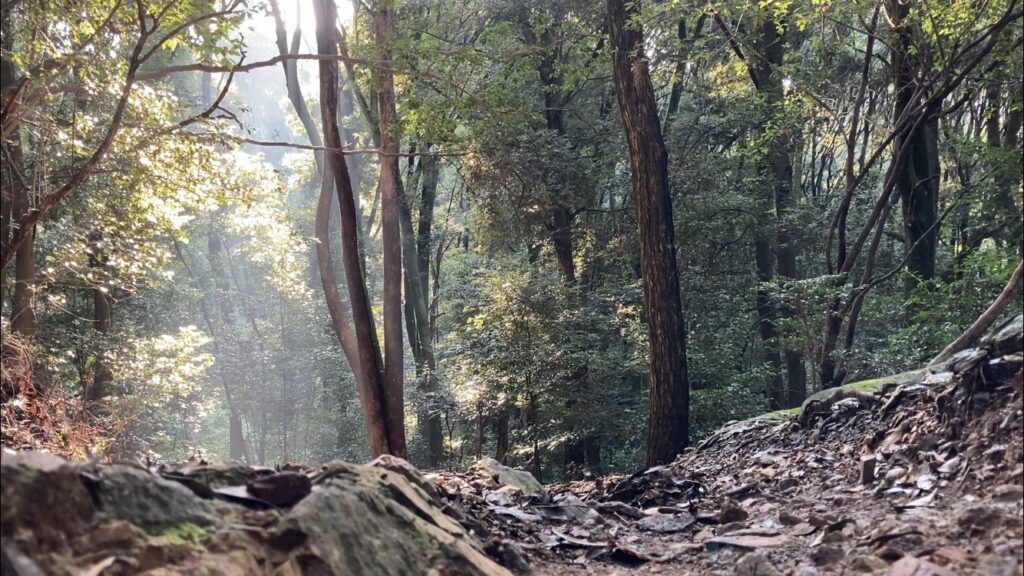
Though known by the locals, this trail is uncrowded and offers a peaceful nature experience. It’s a short climb of about 15 minutes from the temple, before you find yourself climbing a narrow, winding, rocky route up to the scenic viewpoint.

Trees in a forest

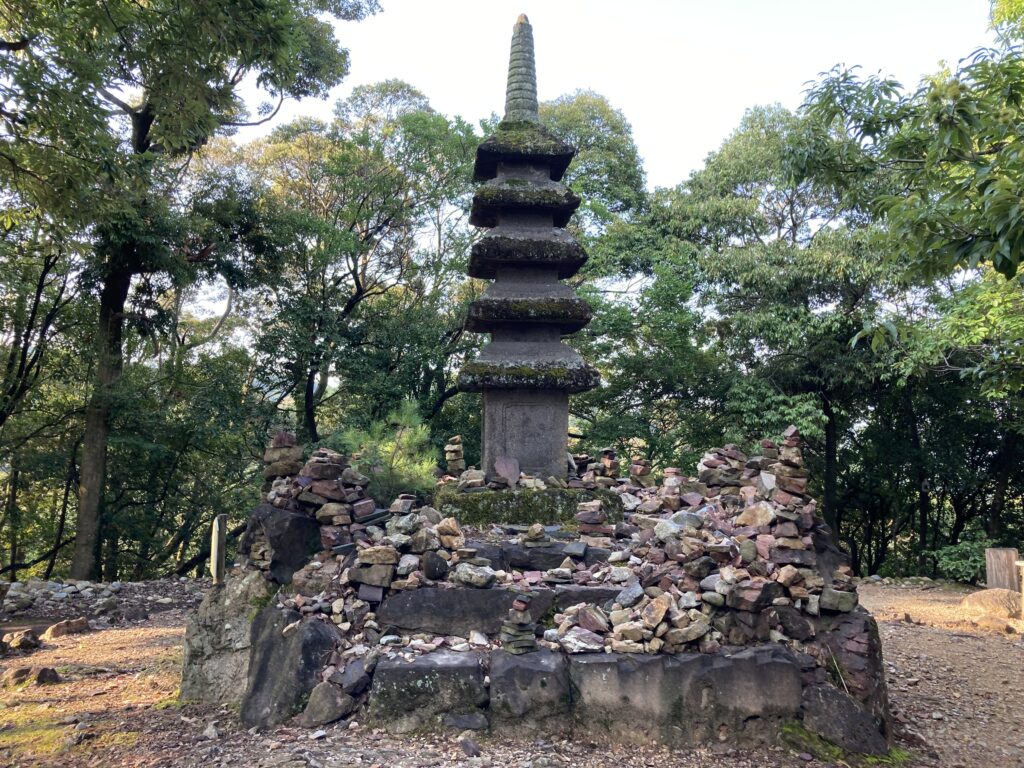
It is spacious and well-maintained, featuring many piles of stones, a stone pagoda believed to have been erected by Nagai Naomasa, and a wooden hall enshrining a statue of Asahiyama Kannon (Bodhisattva), the goddess of mercy and compassion.

A stone pagoda in a forest

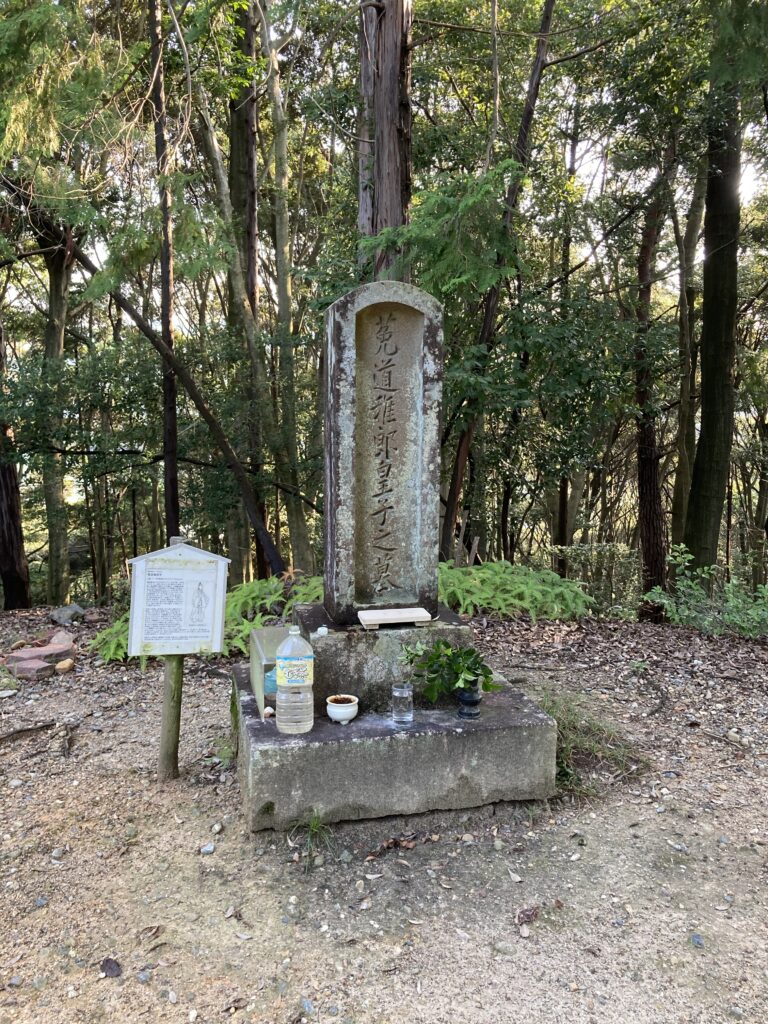
Furthermore, you can see a tombstone believed to be of Crown Prince Uji no Wakiiratsuko, which adds a touch of timeless charm. Legend says he drowned himself in the Uji River so that his half-brother, Prince Nintoku, could become the 16th emperor of Japan instead of him. Another folktale tells of him being guided by a rabbit when he was lost. The rabbit repeatedly looked back to make sure he was following. Rabbit motifs are seen at many places in Uji, including Ujikami Shrine at the base of Mount Daikichiyama (Mount Buttoku), appearing on omikuji (small items containing fortune-telling slips), omamori (traditional amulets) and many more. In the city, you may find a design of a rabbit turning its head back, too.

A stone marker in a forest

From Mount Asahi, retrace your steps a little, and then take the northwest path to reach the observation deck on Mount Daikichiyama. As well as Mount Asahi, the view from there is fantastic, stretching across the cityscape and beyond, and includes the Phoenix Hall of Byodoin Temple. This observation deck is also known as a location of the Kyoto Animation film “Sound! Euphonium.”

The descent from here is a gentle but winding path, popular with local seniors for their morning exercise. It takes about twenty minutes to reach the foot of the mountain and the path leading to Ujikami Shrine, Uji-Shrine, and Uji-bashi Bridge in the northwest.

Historical Tsuen-chaya Teahouse

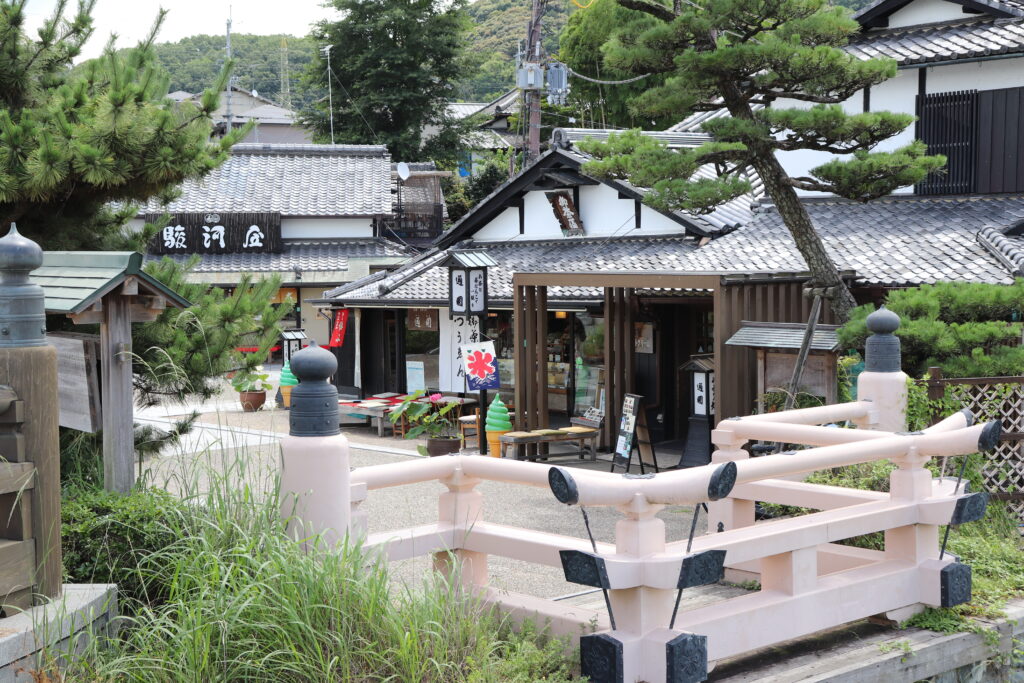
Japanese shops

Tsuen-chaya Teahouse is the oldest existing teahouse in Japan, built in 1160 by Furukawa Unai (later renamed Taikeian Tsuen Masahisa), a samurai vassal of Minamoto no Yorimasa. The teahouse is currently run by the 24th generation head of the Tsuen family, Yusuke Tsuen. The existing building, constructed in 1672, is a fine example of the architectural style of machiya (traditional townhouses) in the Edo Period (around 1603-1868). It is registered as a part of the Japan Heritage (Japanese Tea: Eight Centuries of Tradition).

After retiring as a samurai, Furukawa Unai changed his name to Taikeian Tsuen Masahisa, and built a hermitage on the east bank of the Uji River by Uji-bashi Bridge. He settled there as a monk, and the hermitage later became the teahouse. His descendants inherited the surname Tsuen, and in their role as guardians of the bridge, they’ve continued to wish for its durability and the safety of those crossing it. “Tsuen,” a kyogen (a form of traditional Japanese comic theater) depicting the relationship between Minamoto no Yorimasa and Taikeian Tsuen Masahisa is still frequently performed today. The teahouse was visited by renowned historical figures, including Ashikaga Yoshimasa, Toyotomi Hideyoshi, and Tokugawa Ieyasu.

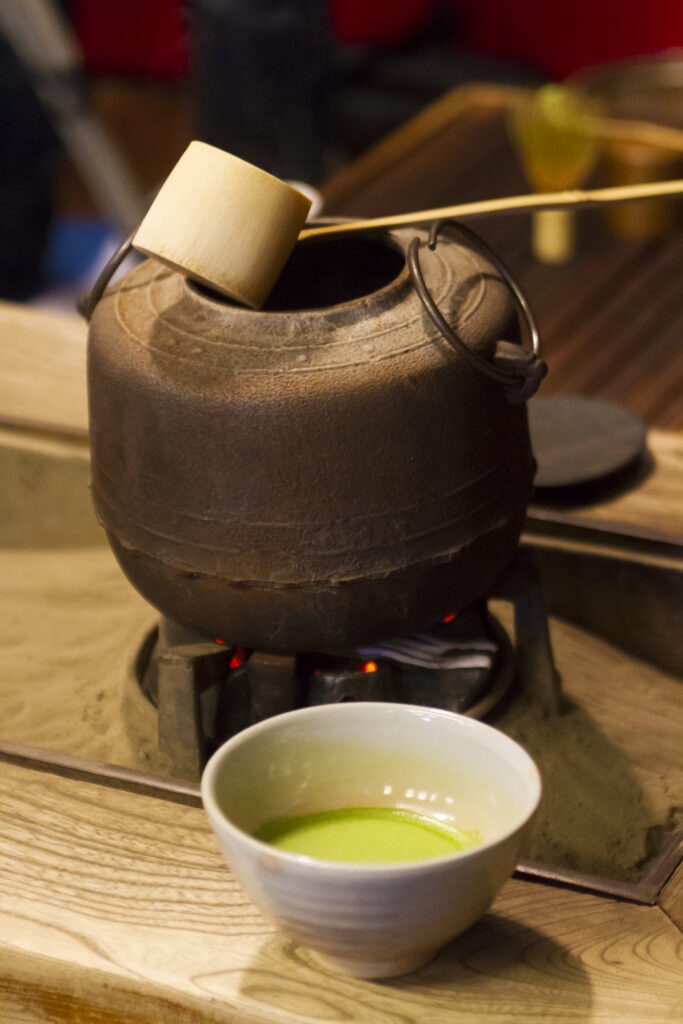
At the storefront, you can purchase Uji tea including matcha (powdered green tea), sencha (one of the most common Japanese teas), hojicha (roasted tea), and more. Inside, you can enjoy parfaits made with plenty of freshly ground matcha, a combo of matcha and cha-dango (skewered rice dumplings made with matcha), cha-soba (buckwheat noodles made with matcha) and so on, while gazing out at the Uji-bashi Bridge and scenic Uji River. It is the perfect place to relax and enjoy meals and sweets made with authentic Uji tea.

A pot with a wooden ladle

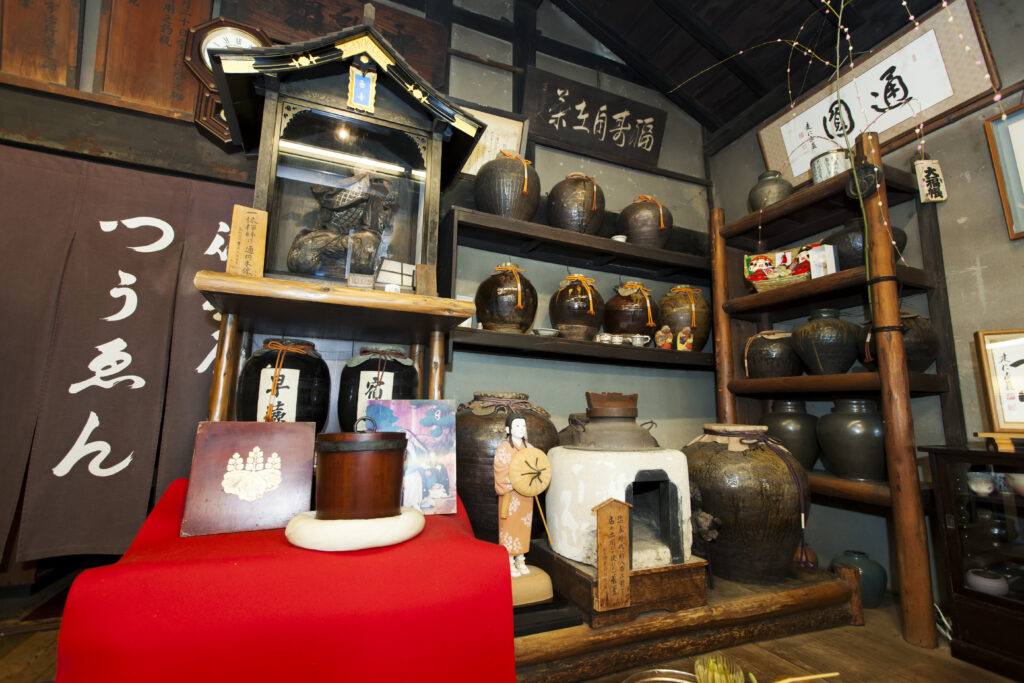
Just inside the entrance, you can find ceramic chatsubo (traditional tea jars) made centuries ago, the wooden statue of the first-generation Tsuen carved and presented by Ikkyu Sojun (a renowned Buddhist monk around the 15th century), and a wooden bucket that is said to have been made by Sen no Rikyu and used by the famous 16th century warlord Toyotomi Hideyoshi to draw the water of the Uji River. (Sen no Rikyu was a prominent figure in the world of 16th-century Japanese tea ceremony. He served Oda Nobunaga and Toyotomi Hideyoshi as a tea master, but ultimately committed ritual suicide by order of Hideyoshi.)

Shelves of tea jars

Tsuen-chaya Teahouse is the perfect place to take a break while exploring Uji. It offers a deeper understanding of the region, through not just its tea, but also the history and historical figures who shaped the culture and stories of the city.

Tsuen-chaya Teahouse

Uji-bashi Bridge has been a vital point in Uji throughout its long history. This long-established teahouse, located on the east bank of the river, was built in 1160. It has served as not only a teahouse, but also a guardian of the bridge, wishing for the safety of travelers passing by. It is the oldest existing teahouse in Japan.
The current building was constructed in 1672, showcasing the architectural style of machiya (traditional townhouses) in the Edo Period (around 1603-1868). It is registered as a part of the Japan Heritage (Japanese Tea: Eight Centuries of Tradition).
Inside the teahouse, you can find chatsubo (traditional tea jars) made centuries ago, the wooden statue of the first-generation Tsuen created and presented by Ikkyu Sojun enshrined within, and a wooden bucket that is said to have been made by Sen no Rikyu and used by Toyotomi Hideyoshi to draw the clear water of the Uji River. Renowned historical figures, including Ashikaga Yoshimasa, Toyotomi Hideyoshi, and Tokugawa Ieyasu, have visited this teahouse.
At the storefront, you can purchase matcha (powdered green tea), sencha (one of the most common Japanese teas), hojicha (roasted tea), and more. Inside, you can enjoy matcha sweets like parfaits and zenzai (dessert soup made with red beans) made with plenty of freshly ground matcha, a combo of matcha and cha-dango (skewered rice dumplings made with matcha), cha-soba (buckwheat noodles made with matcha) and so on, while gazing out at the Uji-bashi Bridge and Uji River.
Uji-bashi Bridge

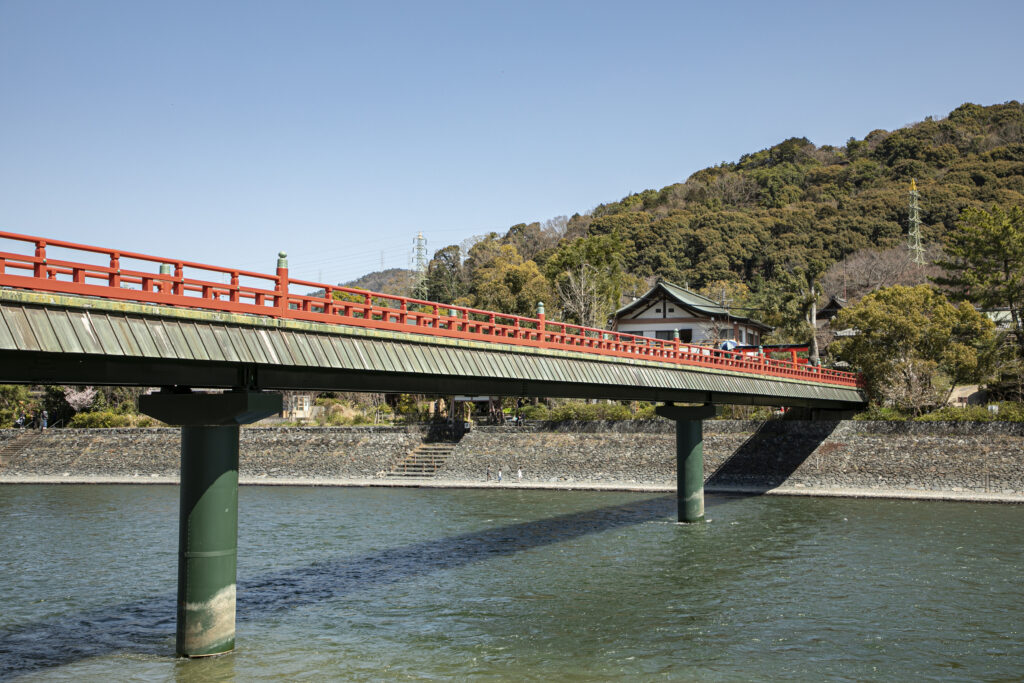
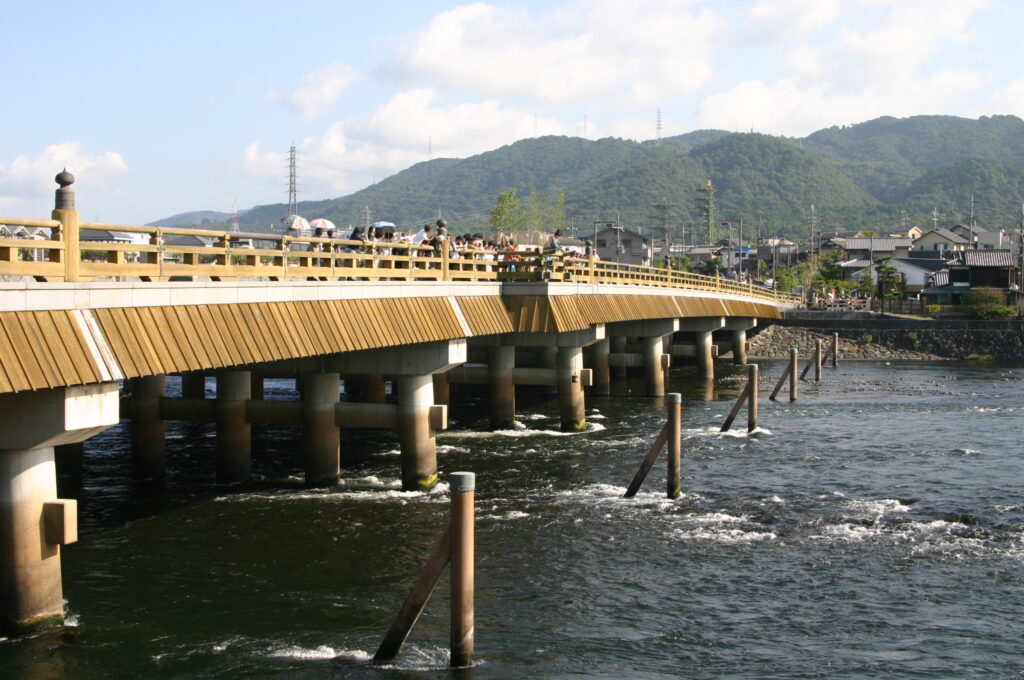
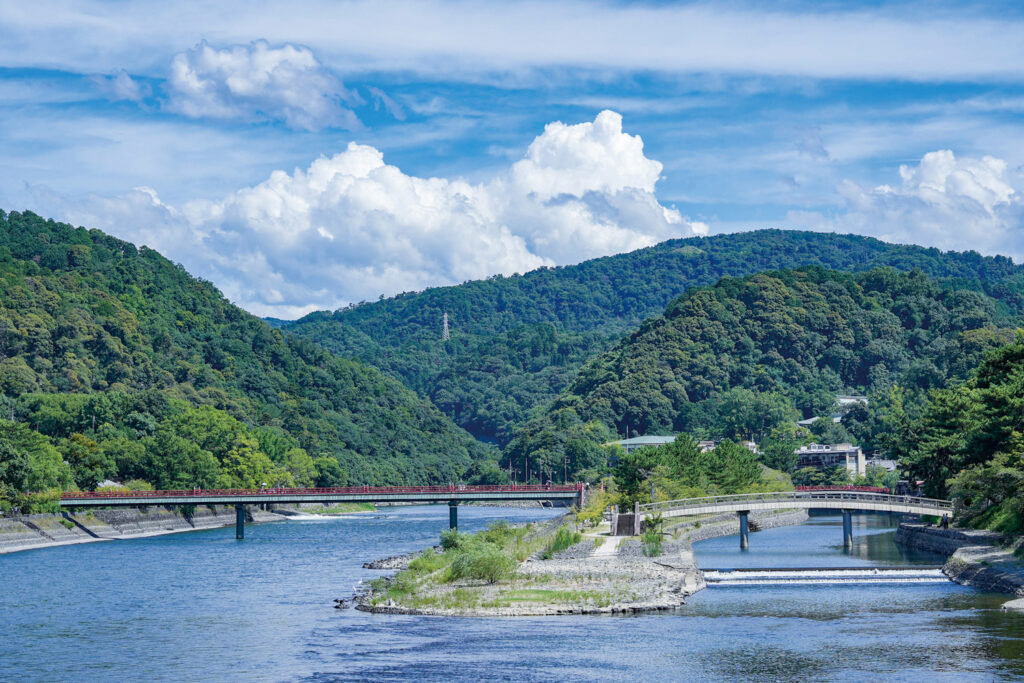
From Tsuen-chaya Teahouse, we’ll cross the Uji-bashi Bridge and head back towards JR Uji Station. The current Uji-bashi Bridge was constructed in 1996. It has rows of small tea bushes, in keeping with the character of Uji, home of tea. Looking upstream, you can view the amazing natural scenery that has been here for centuries. A little to the west of the middle of the bridge is a square platform called San-no-ma. It is said that Toyotomi Hideyoshi came to San-no-ma of Uji-bashi Bridge, and drew water for his tea ceremony. (We saw the wooden bucket at the teahouse!) Nowadays, the river water is drawn from San-no-ma at the annual Uji Tea Festival in October.

A bridge over a river

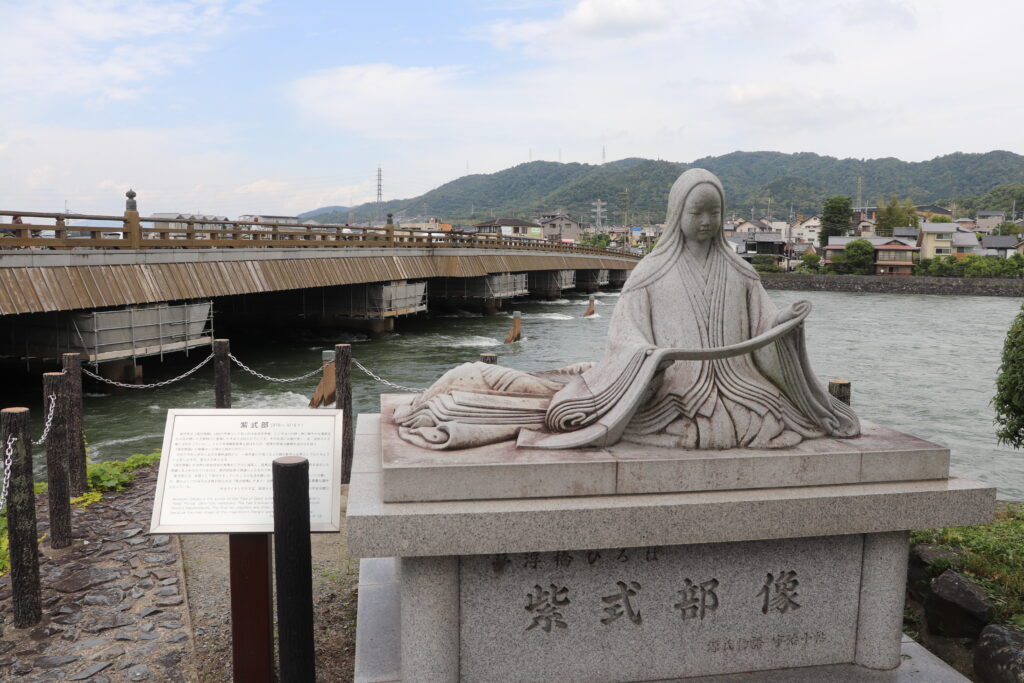
Uji-bashi Bridge is rich in history. One of the nearby temples, Hashidera Hojoin, has one of Japan’s oldest fragments of stone monuments, which says that a Buddhist monk Doto erected the bridge in 646. Furthermore, the bridge appears in many pieces of literature, including The Tale of Genji written by Murasaki Shikibu. On the southwest side of the bridge, you’ll find the stone statue of her.

A statue of a woman in a kimono by the river

The bridge also became a battleground in the 12th and 13th centuries. In the battle of 1180, the Minamoto clan and the Taira clan fought against each other. The above-mentioned Taikeian Tsuen Masahisa, who was a retainer of Minamoto no Yorimasa, took sides with the Minamoto clan’s forces and fought against the vastly outnumbered forces of the Taira clan. The Minamoto forces removed the bridge planks to prevent the enemies from crossing, but after volleys of arrows were exchanged over the river, the Taira clan forces eventually crossed the river on horseback. Yorimasa, hit in the knee by an arrow, and realizing that defeat was inevitable, committed suicide by seppuku (cutting one’s own abdomen) in the garden of Byodoin Temple. Tsuen Masahisa perished in this battle as well. Legend has it that Yorimasa’s head was sunk in the river by one of his subordinates to prevent it from falling into enemy hands.

Another battle at the bridge took place in 1184. When Minamoto no Yoshinaka confined Emperor Goshirakawa and captured power, one of his relatives, the famed samurai Minamoto no Yoshitsune, chased after him to attack. He finally came to Uji, confronted Yoshinaka’s forces, and defeated them.

In 1221, the Jōkyū War occurred between the forces of Retired Emperor Gotoba and the Kamakura shogunate. Uji was one of the strategic gateways into Kyoto, and the Uji-bashi Bridge was thought of as a key defensive point. The imperial forces held out for many hours, but the shogunate forces eventually broke through and routed them.

Now, let’s get back to the modern world. As you cross the bridge, take in the scenery of the flowing river and the serene, beautiful mountains, then you’ll find it hard to believe that such turbulent historical events played out here in centuries past. It makes for an interesting experience.

Uji-bashi Bridge

Uji-bashi Bridge

In Hashidera Hojoin temple, there remains one of Japan’s oldest fragments of stone monuments. It states that Doto, a monk from Gango-ji temple in Nara, built the Uji-bashi Bridge in 646. The bridge i …

Uji JR Station

Our route brings us back to the starting point. From here, you can continue your journey either to central Kyoto or Nara by the local or rapid trains.

Uji has played a significant role in the history and culture of not only Kyoto but also Japan as a whole. A half-day tour in Uji offers a glimpse into the heritage. Known globally for its tea, it also boasts a wealth of other fascinating attractions.

Another Kyoto Partners