Term archive
投稿タイプ:restaurants
Organic Café Tentomushibatake
Tentomushi Batake (meaning "ladybug garden") is a café that opened on Umemoto Farm in May 2020. Mr. Umemoto is a pioneer of organic farming in Kyotango, and created this café/restaurant with organic food as the standard, as he believes that everyone should be able to experience eating organically. The café creates their own unique dishes using the farm’s organic vegetables, promoting the idea of organic eating to everyone.

投稿タイプ:restaurants
Yuzuki
At Yuzuki, guests can enjoy seasonal kaiseki course meals, hot pot dishes, summer-only beer gardens, and other meals made with seasonal Kyoto ingredients.
The large garden reflects the changing faces of the season—from cherry blossoms, to deep green, to colored leaves, to white snow—and the elegant dining room offers an out-of-the-ordinary experience for guests, with flowers arranged by the chef himself, "as if they were in the field."
Available drinks include draft beer, Japanese sake, shochu, cocktails, non-alcoholic beverages, and authentic coffee.

投稿タイプ:restaurants
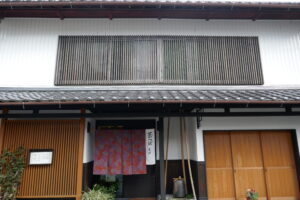
Chatsubo Yoshida
At Chatsubo Yoshida, you can enjoy both matcha and a meal, either by having matcha hand-whisked for you by your seat, or by whisking your own matcha.
The store, which used to be a tea and tea utensil shop, has been renovated and remade as a café where you can casually enjoy matcha and some conversation.
Enjoy authentic matcha tea without worrying about difficult preparation methods.
投稿タイプ:restaurants
Yanagimachi
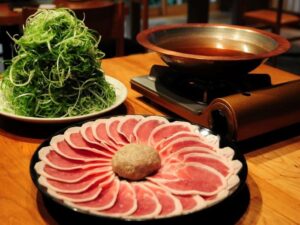
Yanagimachi is a famous restaurant in Fukuchiyama that showcases Fukuchiyama’s specialties of duck and green onion in a dish known as kamosuki (sukiyaki made with duck meat). The restaurant building is a restored Meiji era (1868-1912) machiya (traditional wooden house, typical of Kyoto) opened in 2015. The dishes showcase local and seasonal produce, and the green onion used in the kamosuki is Fukuchiyama’s own kujo onion (a famous vegetable of the Kyoto region). For lunch, you can enjoy wonderful oyakodon (rice topped with chicken and egg) or kara-age (fried chicken) set meal options, both made using the local Fukuchiyama chicken, and accompanied with seasonal local vegetables. There’s also a select range of alcohol, coffee, and books to enjoy at the café and bar, making it a perfect spot for any occasion.
投稿タイプ:restaurants
Un.donpuri Dessert Shop
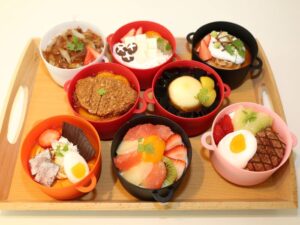
Located in Fukuchiyama City, Un.donpuri is a café known for its for puddings that look amazingly like Japanese cuisine. It has puddings in the form of 11 kinds of dishes: katsudon (fried pork cutlet on rice), ramen, seafood bowls, tororodon (grated yam rice bowl), mapo tofu (Sichuan-style bean curd with ground pork spicy taste), Japanese hot pot, beef bowl, loco moco, cold sweet red bean soup, wonton noodles, and Chinese style cold noodles (summer only), each sold for 600 yen including tax. They are not only delicious to taste, but also enjoyable to look at. The idea began when the pastry chef created a pudding that looked like katsudon as a gift for a friend, which later went viral on social media. In addition to the puddings, cakes and baked sweets like cute donuts and cookies for takeout are lined up in the showcase window (there is also an eat-in space within). The pudding containers are made of polypropylene, which is microwavable and can be taken home to use for other purposes. The café is now a famous attraction in Fukuchiyama for sweets-lovers, and while the cafe opens at 11 a.m., the 80 bowls of pudding prepared on weekdays and 120 on weekends are often sold out early.
投稿タイプ:restaurants
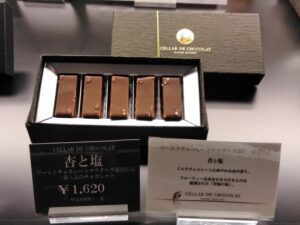
Pâtisserie Mountain × CELLAR DE CHOCOLAT by Naomi Mizuno
A classical European-style mansion situated in a quiet, residential part of Fukuchiyama City, looking like a confectionery kindom on the outskirts of Paris. This is a chocolate store run by Chef Mizuno, who won the 2007 World Chocolate Masters, a championship for the world's greatest chocolate-makers. The large store has terrace seating, and the first floor has a corner with a showcase of cakes and baked goods, as well as a cave-like space surrounded by antique furniture. There is a sales corner for chocolate bonbons and macarons, and chocolates displayed like jewelry. The second floor is a café where all in-store products can be eaten. The prize-winning "Apricot and Salt" chocolate, as well as the different shades of macaron, are delightful goods to bring home.
投稿タイプ:restaurants
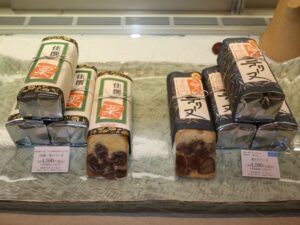
Adachi Otoemon
Tamba chestnuts are a traditional product in Kyoto Prefecture whose history is as long as other well-known Kyoto traditional vegetables. Tamba chestnuts are from the Tamba region, which includes Kameoka, the Funai region, Ayabe, and Fukuchiyama. It’s said that in the old days of the Edo period (1603-1868), Tamba chestnuts were used as offerings, when the chestnuts were also accepted in place of the annual rice tax. Using these Tamba chestnuts, Adachi Otoemon crafts specialty dessert terrines and pound cakes here in Fukuchiyama City. Cross sections of the desserts reveal large, whole chestnuts, which are combined with the wasanbon Japanese refined sugar from the Sanuki region and flavourful cultured butter to create an exquisite product. You can really enjoy the chestnuts as they make up more than two thirds of the weight of this luxurious dessert. Additionally, the shop building was previously the residence of the Matsumura family, built during the Taisho (1912-1926) and Meji era (1868-1912) and is designated as one of Kyoto Prefecture’s Tangible Cultural Properties. Other than the chestnut terrines and chestnut pound cakes, there are also other baked goods, cream puffs, and gelato available.
投稿タイプ:restaurants
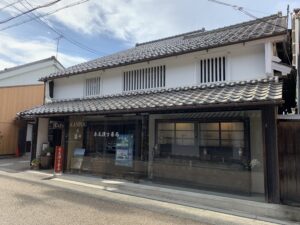
Yakuzen Café Yu-Yu
Yakuzen (medicinal Chinese cooking) Café Yu-Yu is located next to the Akao Chinese Medicine Pharmacy, which is built in a rennovated, 120 year-old machiya home. According to its concept of medicine and food being one, the café uses herbs used in Chinese medicine to create lotus-wrapped steamed rice and medicinal teas to suit your mood and physical condition.
投稿タイプ:stay
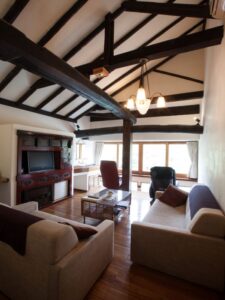
Wine & Hotel CHITOSE
About 3 minutes' walk from Amanohashidate Station and 3 minutes to the sea, Wine & Hotel CHITOSE is a strategic-locally hotel with the best onsen baths. Wine & Hotel CHITOSE began in the middle of the Edo period (1603-1868) and renovated in 2000, guests can not only relax in the onsen, but also enjoy wine. The owner also runs the Amanohashidate Winery, and there are 50 thousand bottles of wine kept in the wine cellar.
Dinner is French cuisine combined with Japanese flavors. Using local ingredients to create cuisine that can be enjoyed with wine, CHITOSE replaces rice with handmade nihachi-soba noodles (made with 20 percent flour and 80 percent buckwheat). From the furniture, to the lamps, to the stained-glass, everything is chosen with care, mixing modern with retro, Western with Japanese, making Wine & Hotel CHITOSE highly unique.
投稿タイプ:stay
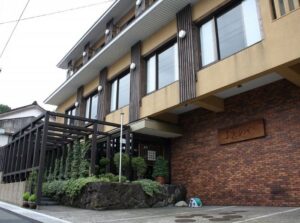
Shorenkan Yoshinoya
Overlooking the rural landscape of the small fishing town of Taiza, Shorenkan Yoshinoya is a traditional Japanese-style gourmet inn that has been open for 90 years. Chefs here prepare Kyoto seafood cuisine with the utmost passion, including rockfish caught with fishing rods in the spring, iwagaki oysters (also known as sea milk) and Japanese egg cockle (said to be the best of all shellfish in Japan), and Japanese sea urchin eggs from Taiza in the summer. In autumn there is fresh blackthroat sea perch and crunchy abalone, and in winter there is rare crab caught from the Taiza docks using only 5 boats, its rareness earning it the nickname “Taiza phantom crab.” All of the seasonal flavors above are available at Shorenkan Yoshinoya. What’s more, the Taiza Hot Springs here are said to lower blood pressure and lessen pain, and the bath is decorated with the artwork of an American carver.

投稿タイプ:stay
Lakeside Hotel and Restaurant Little White Flower
A spa resort on the banks of a lake. For dinner, Lakeside Hotel and Restaurant Little White Flower offers Italian cuisine loaded with Tajima beef, local fish, and other seasonal Tango ingredients. There are also crab dishes (only available during winter) if you prefer. There's a lot here to make your trip memorable, including a full-scale salon with organic aroma oils, and an outdoor space and kennel for dogs.
投稿タイプ:stay
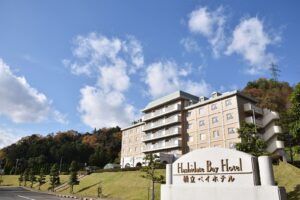
Hashidate Bay Hotel
The Hashidate Bay Hotel is a European-style resort hotel that sits atop a hill overlooking one of Japan's three most famous scenic views: Amanohashidate. The hotel has its own herb garden, and the hotel interior smells like lavender, perfect for relaxing while you travel. Next to the hotel you'll also find Kurhaus Iwataki, a facility with both hot springs and a pool for some leisure time, and once you’re ready to eat, you can come back to the Hashidate Bay Hotel for some of its specialty French cuisine that showcases Japanese seafood.