Term archive
投稿タイプ:restaurants
Adachi Otoemon
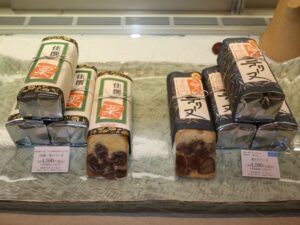
Tamba chestnuts are a traditional product in Kyoto Prefecture whose history is as long as other well-known Kyoto traditional vegetables. Tamba chestnuts are from the Tamba region, which includes Kameoka, the Funai region, Ayabe, and Fukuchiyama. It’s said that in the old days of the Edo period (1603-1868), Tamba chestnuts were used as offerings, when the chestnuts were also accepted in place of the annual rice tax. Using these Tamba chestnuts, Adachi Otoemon crafts specialty dessert terrines and pound cakes here in Fukuchiyama City. Cross sections of the desserts reveal large, whole chestnuts, which are combined with the wasanbon Japanese refined sugar from the Sanuki region and flavourful cultured butter to create an exquisite product. You can really enjoy the chestnuts as they make up more than two thirds of the weight of this luxurious dessert. Additionally, the shop building was previously the residence of the Matsumura family, built during the Taisho (1912-1926) and Meji era (1868-1912) and is designated as one of Kyoto Prefecture’s Tangible Cultural Properties. Other than the chestnut terrines and chestnut pound cakes, there are also other baked goods, cream puffs, and gelato available.


投稿タイプ:restaurants
Yakuzen Café Yu-Yu
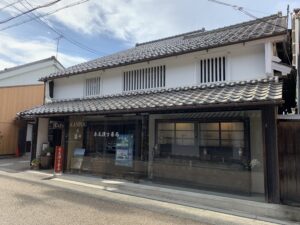
Yakuzen (medicinal Chinese cooking) Café Yu-Yu is located next to the Akao Chinese Medicine Pharmacy, which is built in a rennovated, 120 year-old machiya home. According to its concept of medicine and food being one, the café uses herbs used in Chinese medicine to create lotus-wrapped steamed rice and medicinal teas to suit your mood and physical condition.
投稿タイプ:restaurants
Yuzuki
At Yuzuki, guests can enjoy seasonal kaiseki course meals, hot pot dishes, summer-only beer gardens, and other meals made with seasonal Kyoto ingredients.
The large garden reflects the changing faces of the season—from cherry blossoms, to deep green, to colored leaves, to white snow—and the elegant dining room offers an out-of-the-ordinary experience for guests, with flowers arranged by the chef himself, "as if they were in the field."
Available drinks include draft beer, Japanese sake, shochu, cocktails, non-alcoholic beverages, and authentic coffee.
投稿タイプ:restaurants
Chatsubo Yoshida
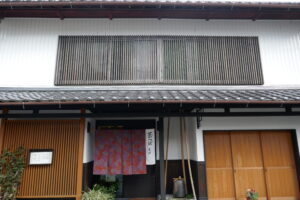
At Chatsubo Yoshida, you can enjoy both matcha and a meal, either by having matcha hand-whisked for you by your seat, or by whisking your own matcha.
The store, which used to be a tea and tea utensil shop, has been renovated and remade as a café where you can casually enjoy matcha and some conversation.
Enjoy authentic matcha tea without worrying about difficult preparation methods.
投稿タイプ:stay
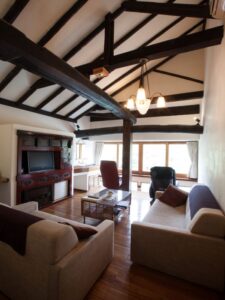
Wine & Hotel CHITOSE
About 3 minutes' walk from Amanohashidate Station and 3 minutes to the sea, Wine & Hotel CHITOSE is a strategic-locally hotel with the best onsen baths. Wine & Hotel CHITOSE began in the middle of the Edo period (1603-1868) and renovated in 2000, guests can not only relax in the onsen, but also enjoy wine. The owner also runs the Amanohashidate Winery, and there are 50 thousand bottles of wine kept in the wine cellar.
Dinner is French cuisine combined with Japanese flavors. Using local ingredients to create cuisine that can be enjoyed with wine, CHITOSE replaces rice with handmade nihachi-soba noodles (made with 20 percent flour and 80 percent buckwheat). From the furniture, to the lamps, to the stained-glass, everything is chosen with care, mixing modern with retro, Western with Japanese, making Wine & Hotel CHITOSE highly unique.
投稿タイプ:stay
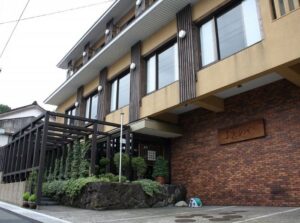
Shorenkan Yoshinoya
Overlooking the rural landscape of the small fishing town of Taiza, Shorenkan Yoshinoya is a traditional Japanese-style gourmet inn that has been open for 90 years. Chefs here prepare Kyoto seafood cuisine with the utmost passion, including rockfish caught with fishing rods in the spring, iwagaki oysters (also known as sea milk) and Japanese egg cockle (said to be the best of all shellfish in Japan), and Japanese sea urchin eggs from Taiza in the summer. In autumn there is fresh blackthroat sea perch and crunchy abalone, and in winter there is rare crab caught from the Taiza docks using only 5 boats, its rareness earning it the nickname “Taiza phantom crab.” All of the seasonal flavors above are available at Shorenkan Yoshinoya. What’s more, the Taiza Hot Springs here are said to lower blood pressure and lessen pain, and the bath is decorated with the artwork of an American carver.
投稿タイプ:stay
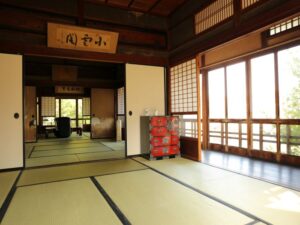
Shoreki-ji Temple
The Shoreki-ji Temple, constructed in 942, is situated in Ayabe City next to the Yura-gawa River. The temple enshrines a statue of the bodhisattva Kannon carved by the temple’s founder, Kuya, a famous priest in the Heian era (794-1185). The statue can only be seen by the public every 33 years. Some of the temple's other treasures include a Thousand-Armed Kannon statue (a designated cultural property of Ayabe City) and a nirvana painting (an Important Cultural Property).
The dry rock garden, which was built in the middle of the Edo period (1603-1868), is a designated scenic spot in Kyoto Prefecture. There are annually flowering plants such as azaleas and bushclover that color the garden throughout the seasons, as well as many ancient trees, including a zelkova tree selected as one of the ten famous trees of Ayabe City.
Shoreki-ji Temple also provides a unique, all-inclusiv temple-stay experience', giving visitors the chance to live in a hundred-year-old tatami room (individuals or groups of a maximum of 6). The experience also includes meals, and for dinner, guests can choose between local specialties (high quality chicken from a local farm) and the traditional vegetarian course meals of Buddhist monks.
Highlights include the various experiences you can try out at the temple by making a reservation in advance. These include meditation in the bamboo grotto, sutra writing, sutra recitation, ablution, trying out Buddhist music instruments, wearing priest’s clothing, plating your own food Japanese style, and last but not least, drawing Goshuin inscriptions. Other activities include baking pizza in the hand-made oven, and season-limited activities such as nagashi-soumen (noodles eaten by sending them down flowing water in a bamboo chute) and canoeing (must have at least 4 people, 4,000 yen per capita/ 2 hours).
投稿タイプ:stay
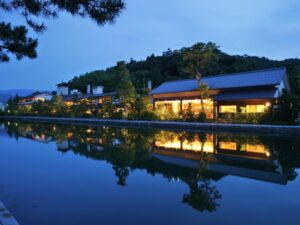
Monjusou
Get up close and personal with Amanohashidate at Monjusou, where all the guest rooms are designed for the best view possible overlooking the Amanohashidate sandbar with its pine trees. The story of this building follows the history of Amanohashidate: since 1690 it was known as the Kanshichi Tea House, which sold famous "wisdom rice cake" sweets in front of the Chion-ji Temple gates. Throughout its 13 generations, this ryokan has been called by various names, including Taikyorou, Shourotei, and now Monjusou. There is plenty to see in the area surrounding the inn, including many famous historical temples and shrines, such as Chion-ji Temple, Motoise Kono Shrine, Nariai-ji Temple, and Amanohashidate Shrine, as well as places to view Amanohashidate, like Amanohashidate Viewland and Kasamatsu Park. In the summer, you can also enjoy Amanohashidate Beach. Also very popular here is the ishigama (stone oven) cuisine that showcases the fresh and seasonal Tango produce.
投稿タイプ:stay
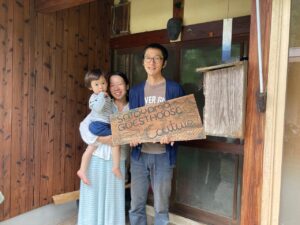
Satoyama Guest House Couture
Kanbayashi, where Satoyama Guest House Couture is located, is to the east of Ayabe City, in the north of Kyoto Prefecture. It's about a 15 minute drive from the first traffic light to the guest house, which you'll find in the countryside, full of nature, where the Yura-gawa River and several other smaller rivers run. The garden is regularly visited by wild animals like deer, squirrels, and monkeys. There are many villages facing depopulation in Japan, but the number of young people moving to these villages has been increasing.
The four seasons of the countryside ("satoyama") here are beautiful. You'll also find several-thousand-year-old chesnut trees in an area that was registered as a quasi-national park in March, 2016, a perfect place for practicing some mindfulness.
投稿タイプ:stay
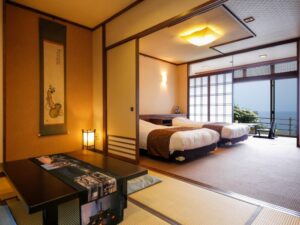
Okuine Onsen Aburaya Bekken NAGOMITEI
Okuine Onsen Nagomitei is an onsen ryokan (a Japanese style inn with hot spring baths) overlooking the Sea of Japan, where every room has a private open air bath, and a view of the ocean horizon where you can watch the sun rise. Inside, Nagomitei has tatami flooring with an elevator and open-plan space, making it accessible for wheel chair use. Lately, most open air baths in guest rooms do not use hot spring water, but Nagomitei has a personal supply to the hot springs, which means you can bathe in water from natural hot springs around the clock. As for food, courses are brought directly to your room, so you can enjoy seasonal seafood and Tajima beef (a famous brand of wagyu beef) in peace and quiet. Nagomitei is a retreat especially for adults, so children under the age of 12 are not permitted. The ryokan was also placed in the top 100 for the 45th Professional Choice Hotel and Ryokan Japan Awards, and received one of ten Special Jury Awards for "small inns of Japan."
投稿タイプ:stay
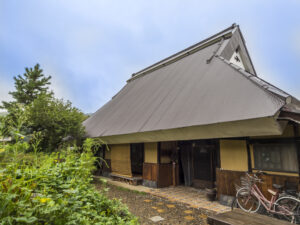
Furuma-ya
Furuma-ya is an old country house located in the countryside of Miwa, in Fukuchiyama City, just 10 minutes on the express train from Kyoto Station.
We plough the small fields around the perimeter of the house, and harvest and cook the seasonal blessings of nature. On summer nights, we listen to the sounds of insects and the chorus of frogs as we cool ourselves outside, and in winter we warm up with a firewood stove. It may be modest, but this is how our family at Furuma-ya lives together in harmony with nature.
Come and visit us if you'd like to get away from the busy city and experience a bit of our country life.
"Furumaya" means "beautiful flower" in Nepali. Furuyama's owner hopes that this inn, too, will attract people as beautiful country flowers do, and become a place of rest and relaxation.
投稿タイプ:stay
Yakuno House
This inn is run by an Australian owner. Guests can freely use the entirety of the traditional Japanese house, built over 200 years ago. The kitchen has all the necessary utensils for cooking, and guests can also rent bicycles to explore the area. It's about a 30 minute ride to Takeda Castle and about 15 minutes to Fukuchiyama City. Both Japanese and English support is available.