What a day-use visit involves at hot springs near Kyoto
First time at a Japanese hot spring? Day-use bathing comes with a few simple rules that quickly become second nature. Wash and rinse thoroughly at the seated shower stalls before entering the shared bath. Baths are gender-separated and enjoyed without clothing, so swimwear should remain in your bag unless you are visiting a designated mixed-bathing area. Keep your small hand towel out of the water—resting it on your head or beside the bath—and tie up long hair. Be sure to bring a towel, unless the venue offers rentals.
Prices give you a rough guide to what you are getting. A simple neighborhood bathhouse runs 490 to 800 yen. A day-use hot spring facility is usually 1,000 to 2,200 yen. A lunch-and-bath plan at a ryokan (traditional inn) usually costs 4,000 to 9,000 yen and includes a meal, a quieter setting, and often a garden. Private baths for your group cost extra.
Tattoo policies vary by facility, so it’s best to call ahead.
Two hours: the onsen nearest Kyoto, in Arashiyama
Located 20 minutes from central Kyoto on the city’s western edge, Arashiyama brings hot spring relaxation within easy reach. While not deep countryside, a soak here fits neatly into a day trip between morning temple explorations and an evening meal.
Fufu-no-Yu accepts walk-in visitors. It stands about a minute from Hankyu Arashiyama Station and draws on a weak-alkaline spring, with an indoor bath, a silky bath, an open-air bath, and a sauna. It is open from noon to 10:00 PM, with the last entry at 9:30 PM. Adults pay 1,200 yen on weekdays and 1,400 yen on weekends and holidays, and children from age 3 through elementary school pay 600 yen. There is no on-site parking, so the train is the easiest way to get there.
Hanaikada is the more relaxed option. This ryokan stands at the southern end of the Togetsukyo Bridge and offers two day-use plans: lunch with the baths from 4,100 yen, or a private-room lunch with the baths from 7,150 yen. From the bath, you can enjoy views upriver toward Mt. Atago. A private open-air bath can be added for 1,650 yen per group for 40 minutes.
If you only have 20 minutes, the foot bath at the Randen tram station is a good alternative. It costs 200 yen, including a small towel to keep, and you don’t need to ride the tram to use it.
Half a day: Yunohana Onsen, Kameoka

For a lunch-and-bath plan in the mountains, head to Yunohana Onsen, in the hills above Kameoka. Kameoka is 30 minutes from Kyoto on the JR Sagano Line, and the onsen is about 20 minutes by bus from the station, plus a short walk. Two inns here, Sumiya Kihoan and Syoenso Hozugawatei, offer day plans.
Sumiya Kihoan offers a simple day plan with a set lunch in the open-kitchen dining room and unlimited use of its Hanare-no-yu bath, starting at 7,150 yen. The building is open to day guests from 11:00 AM to 2:30 PM, with lunch seated at 11:30 AM, noon, or 12:30 PM. Hand towels and bath towels are included, and a 150-yen bathing tax is added per person. A private open-air bath set among the trees can be added to the plan for an extra charge. A free shuttle (advanced booking required) runs from JR Kameoka Station at 10:30 AM and 11:30 AM, taking about 20 minutes.
Syoenso Hozugawatei has a similar plan that pairs a seasonal lunch or dinner with its baths, for parties of 2 or more with a reservation. The bath area has 8 open-air baths split between the men’s and women’s sides, including a stone bath, a cypress bath, and a medicinal bath. Note that the shuttle runs from the station on a fixed timetable, so make sure to plan ahead.
The Hozu-gawa river boats also leave from Kameoka, so you can combine a morning on the water with an afternoon soak for an easygoing full day.
Book it: Hozu-gawa River Boat Ride

Syoenso Hozugawatei
Syoenso Hozugawatei is a Japanese-style ryokan inn in Kameoka’s Yunohana Onsen, often referred to as “Kyo no Okuzashiki,” meaning a getaway location close to the city of Kyoto. Upon entering the ryoka …
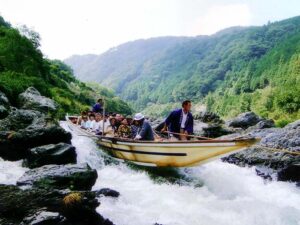
Hozu-gawa River Boat Ride
Kyoto’s premiere spot for scenic beauty, the Hozugawa River flows 16 kilometers between the mountains leading to Arashiyama. Once an essential waterway for transporting lumber, rice, and other goods t …
A full day: Ayabe or Rurikei
With a full day at your disposal, you can venture further into the prefecture to explore Ayabe’s cultural landmarks or the newly renovated spa complex in the Rurikei valley.
At Ayabe Onsen Nio-no-yu, visitors can unwind in a sodium-bicarbonate spring, sauna, and open-air bath. The facility operates from 10:00 AM to 9:00 PM, with final reception at 8:30 PM. Admission is 700 yen for adults and 350 yen for children aged 3 through sixth grade, though it is closed on Mondays and during occasional winter snow closures. One of Ayabe’s standout destinations sits just up the hill at Komyo-ji temple.

Komyo-ji is famous for its Niomon (guardian gate), raised in 1248 and designated a National Treasure in 1954, the only one in the northern half of Kyoto Prefecture. Admission to the temple grounds is free and accessible via a 40-minute uphill walk or a brief drive from the Ayabe Onsen-mae bus stop. Mid-November is ideal for viewing the striking autumn maples, but visitors should note that heavy snowfall frequently shuts down access for much of the winter. The area is also great for hiking and biking through the wilderness. Our guide to hiking near Kyoto covers a guided day here.

Rurikei suits anyone who wants to spend the whole day in the water. The complex reopened in 2025 after a full renovation, and its one-day pass is good value at 800 yen on weekdays and 950 yen on weekends and holidays for adults, 400 and 500 yen for children. The price covers the main baths, the swimsuit bathing zone, the pool, and the Lantern Terrace lounge. Only the hot-stone bath costs extra. The pass also lets you come and go all day, and the baths are open from 7:00 AM to 11:30 PM.
To get there, take the JR Sagano Line to Sonobe Station, then the free shuttle, which takes about 30 minutes. Allow 1.5 to 2 hours.
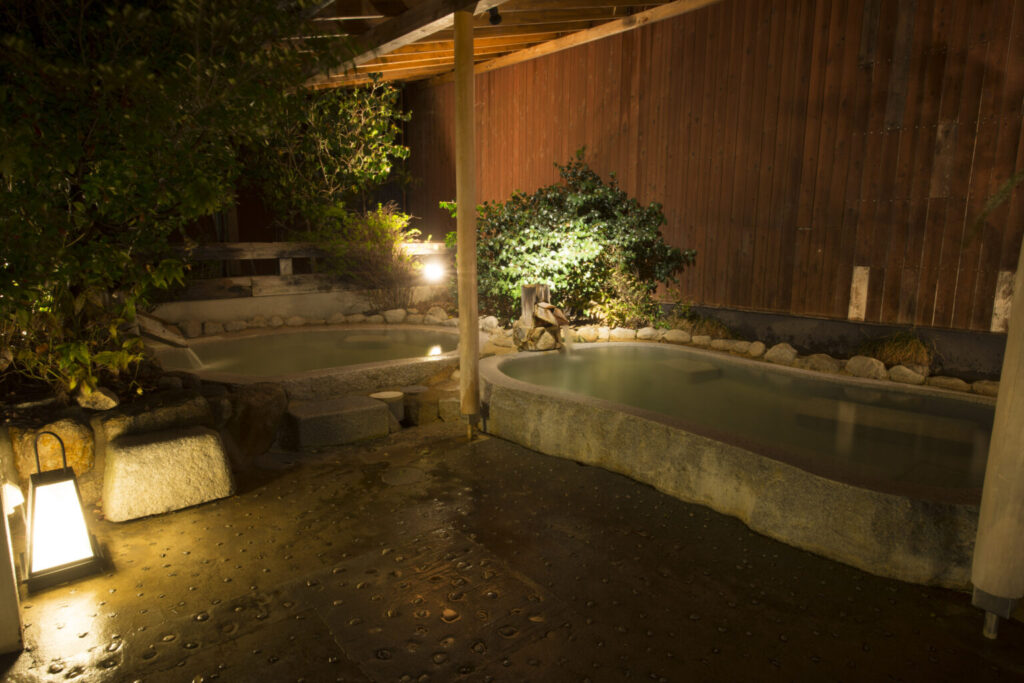

Ayabe Onsen
Ayabe Onsen Nio-no-yu, surrounded by the nature of Kanbayashi in Ayabe, is a natural hot spring that boasts a rich and incredibly effective set of hot spring ingredients that is one of the finest in k …

Niomon Gate and Komyo-ji Temple
You’ll find Komyo-ji Temple on a mountain slope in the forests of Ayabe City. It was said to have been founded by the legendary Prince Shotoku (572-622). The temple’s main Niomon Gate was constructed …

ASOBIYUKU Kyoto Rurikei Onsen
This is a health promotion establishment that is equipped with accommodation and hot spring facilities. Here, you can spend a relaxing day enjoying the large communal bath, along with the barde zone …
Across the border: Ogoto Onsen, Shiga
Ogoto lies on the western shore of Lake Biwa, about 20 minutes from Kyoto Station on the JR Kosei Line—closer than most places in Kyoto Prefecture. The water is alkaline, with a pH of around 9, and the local tourism association describes it as a beautifying spring.
Biwako Ryokusuitei offers day use only as a meal-included plan, so expect a leisurely lunch and a long soak there.
If you prefer a bath-only visit, make your way to Spa Resort Ogoto Agariyanse. It draws water from 2 on-site springs and has 9 indoor and outdoor baths, plus a sauna, a hot-stone bath, a foot bath, and a lake-view lounge for afterward. Adults pay 1,650 yen on weekdays, and children from age 4 through sixth grade pay 800 yen, with higher rates on weekends and holidays. A free shuttle runs from JR Ogoto-Onsen Station, and a free hexagonal foot bath stands in front of the station if you are only passing through.
Which one fits your afternoon?
You can easily tailor your destination to your available schedule. If you have only an hour free before dinner, choose the Randen foot bath, or give yourself two hours for nearby Arashiyama.
When you have half a day, Yunohana makes planning effortless by combining lunch, hot springs, and shuttle transfers into a single booking.
Have a full day available? Travelers interested in culture can pair Ayabe’s National Treasure gate with a post-tour soak, while bathing enthusiasts looking for a longer soak will find Rurikei offers a wide range of baths at an accessible price.
If scenic lake views are your priority, Ogoto is reachable via one of the shortest train rides on this list.
For more of the prefecture’s countryside baths, our roundup of 9 Tranquil Onsen in Kyoto That Deliver Ultimate Relaxation is a good place to start planning.
Related in this series : Hiking Near Kyoto (the Ayabe day), Day Trips from Kyoto, and Autumn in Rural Kyoto.