Inspiration

Experience Seasonal Beauty of the Southern Part of Kyoto Prefecture! Check 10 Amazing Spots in “Kyoto Tea Country”!

2021.10.22

Kyoto Tea Country

Kyoto is renowned for its iconic landmarks, such as the Kinkaku-ji (Rokuon-ji) temple, Kiyomizu-dera Temple, and Kamo River. Beyond these, many wonderful attractions await those seeking unique experiences, especially in the city’s outskirts. They can be ideal destinations even for repeat visitors. The Kyoto Tea Country region, located just south of Kyoto City, boasts a wide variety of charming places in every season. Let’s explore 10 of them!

Spring: Gansenji Temple and Takayama Dam

● Gansenji Temple (Kizugawa City)
Gansenji Temple is an ancient Buddhist temple with a history of around 1300 years. It houses many Important Cultural Properties: the statue of Seated Amida Nyorai, the statue of Fugen (Samantabhadra) Bodhisattva riding a white elephant, the Three-storied Pagoda, and more. Visitors can immerse themselves in the temple’s history and natural beauty, finding a sense of peaceful tranquility.
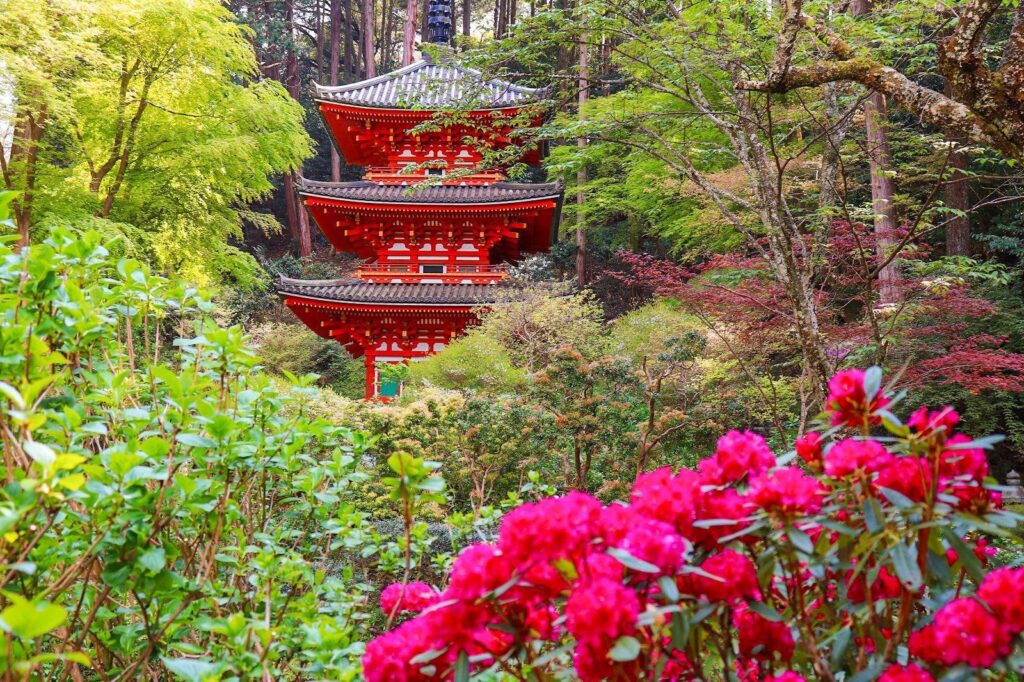
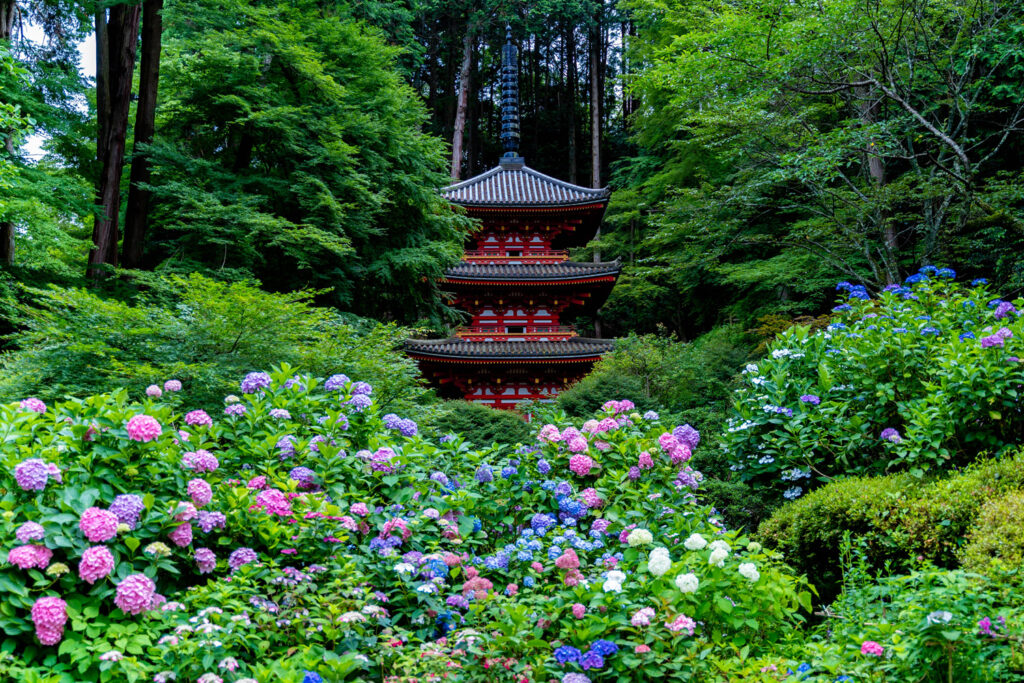
A pagoda in the forest

For your Instagram, we present the picturesque Three-storied Pagoda. Located in the garden surrounded by lush greenery, the majestic pagoda is a popular photo spot for tourists visiting this temple. To create a truly captivating image, use the surrounding flowers and trees as a natural frame, capturing the pagoda amidst the springtime splendor. (If you visit in the hydrangea season, step back to capture the full expanse of the colorful hydrangeas.)

By changing the camera angles, the photo can include the serene pond and the beautiful shapes of trees, expressing another facet of Japanese charm.

Gansenji Temple

Gansenji Temple

Gansenji Temple is an ancient Buddhist temple in Kamo-cho, Kizugawa City, the southernmost part of Kyoto Prefecture. It’s located in the tea-producing region of Kyoto. The temple was founded in 729. T …
● Takayama Dam (Minamiyamashiro Village)
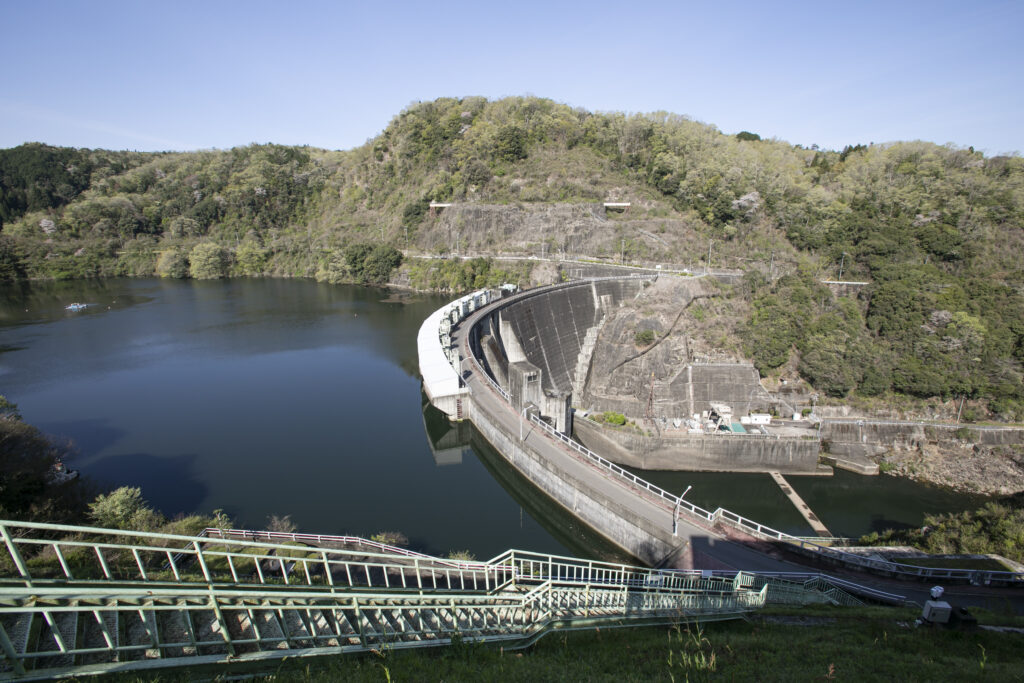
Constructed in 1968 and beginning operation the following year, Takayama Dam has relieved flood damage, maintained the river environment, generated electricity, and supplied drinking water to various cities in Osaka and Hyogo for over half a century.

A dam

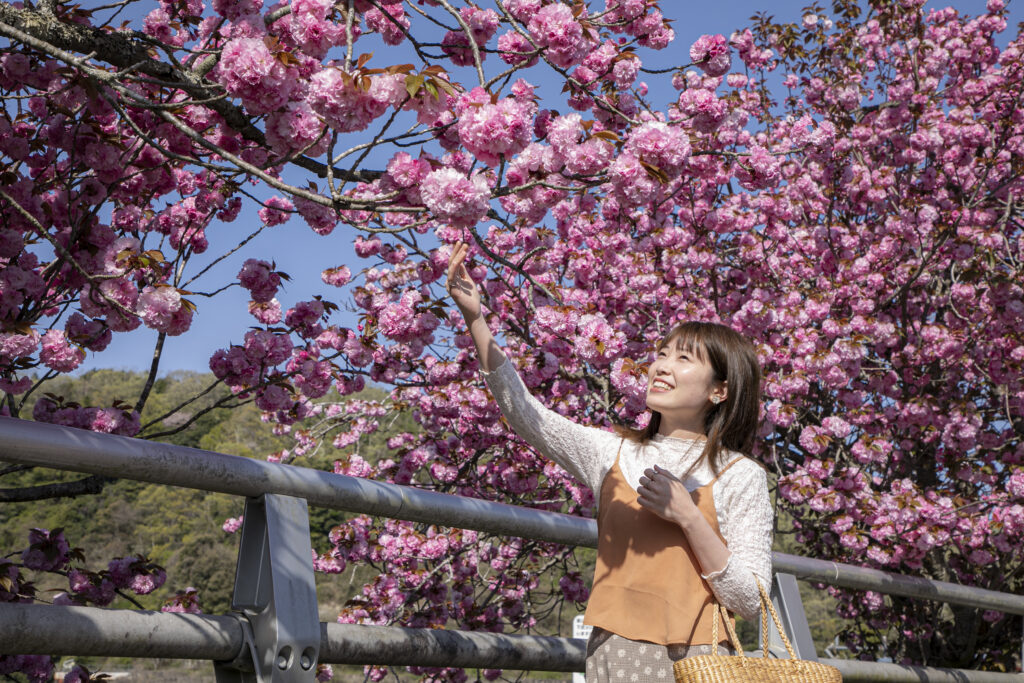
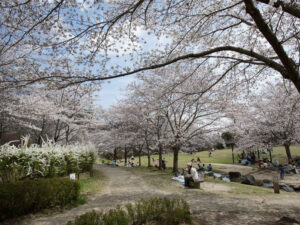
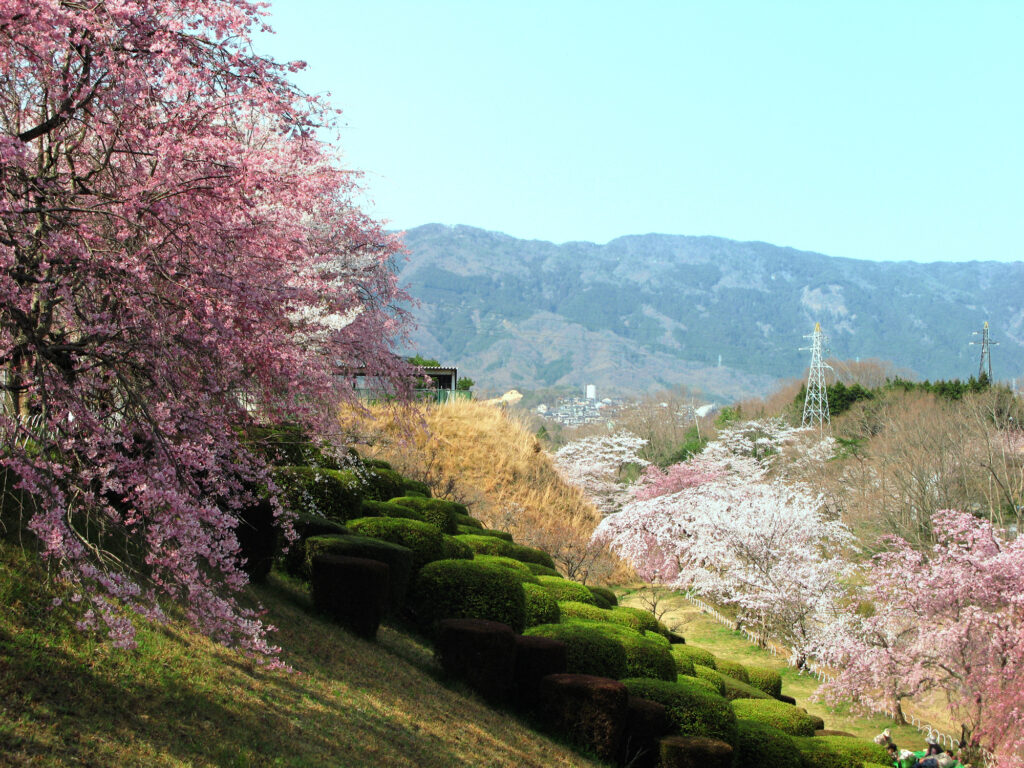
In spring, cherry blossoms are beautiful around the dam, and following them, yae-zakura (double-flowered cherry blossoms) show another charm in April. You can also enjoy panoramic views of the dam, with lush greenery stretching out as far as the eye can see.

Cherry blossoms lining a hill

There is a park next to the dam’s office, a great spot to enjoy a picnic while viewing the lovely pink blossoms. You can experience the beauty of spring in a peaceful atmosphere.

A person touching cherry blossoms

Also, having a stroll around the area and taking various photos are fun. Share beautiful shots of yourself with the gorgeous, fully bloomed double-flowered cherry blossoms!

As a side note, around the middle of the dam’s reservoir, there is Tsukigase Baikei (Tsukigase Plum Valley) that is one of the “Places of Scenic Beauty” of Japan. (The blooming season of the plum blossoms is different from that of the cherry blossoms.)

Takayama Dam

Takayama Dam

The dam was constructed in Minamiyamashiro Village in 1968 and began operation the following year. It’s 67 meters high, and stretches approximately 209 meters in length. It has six emergency gates tha …

Summer: Shoujuin and Mimurotoji

● Shoujuin (Ujitawara Town)
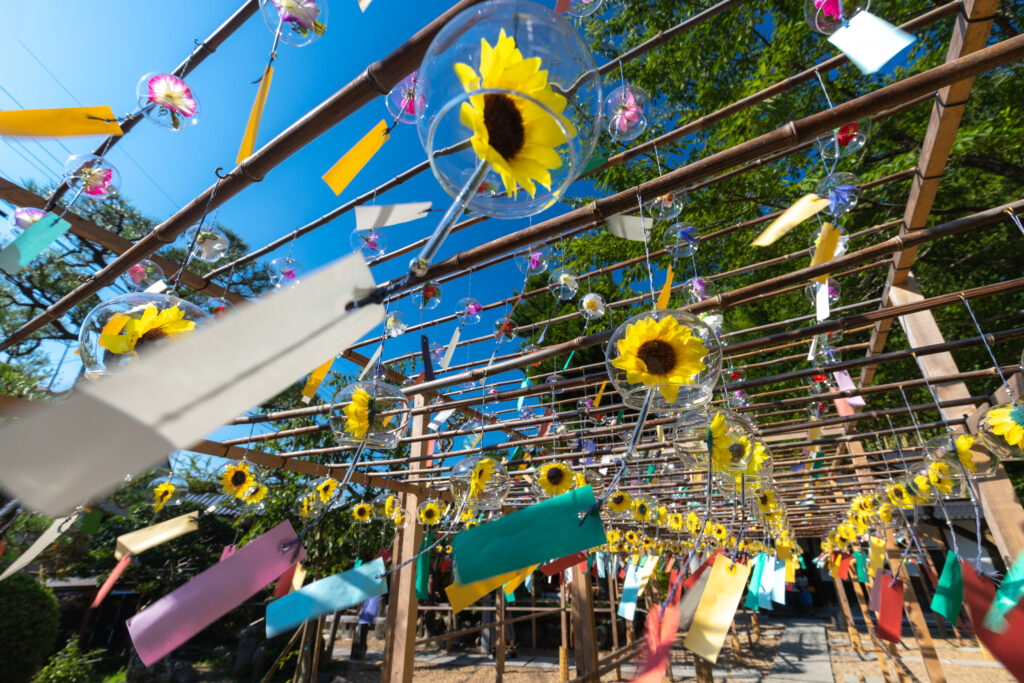
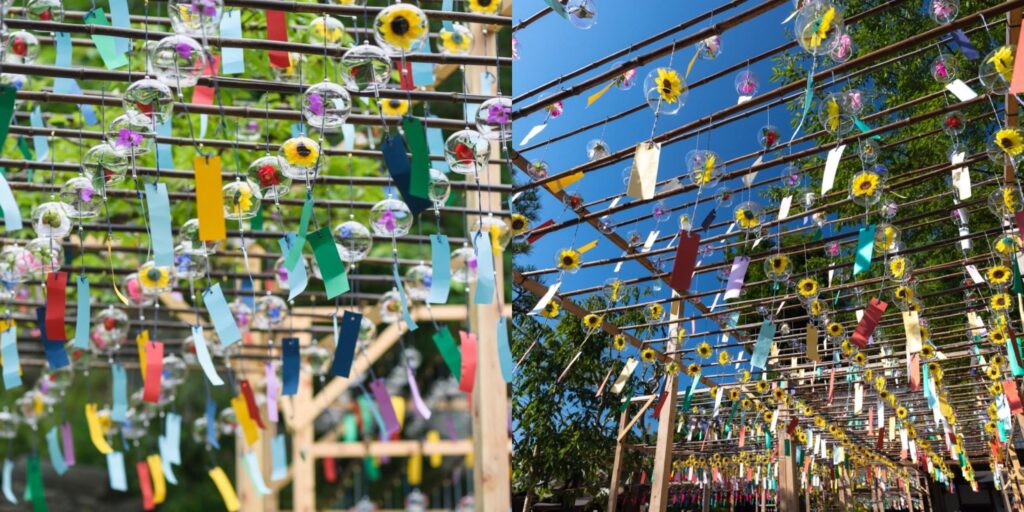
For Japanese people, fūrin (wind chimes) are one of the symbols of summer. The Shoujuin temple is a great place to experience the summer beauty. The temple holds its annual wind chime festival from June to September. You can enjoy the spectacle of colorful wind chimes dancing in the breeze against a backdrop of blue sky. Combined with the soothing sounds resonating throughout the temple precincts, it’s easy to see why this temple is nicknamed Fūrin-dera (the wind chime temple).

Wind chimes with sunflowers inside


Glass wind chimes

One of the most special features of this event is the display of many wind chimes hanging overhead, each of which literally encases seasonal beauty. From hydrangeas to sunflowers and cosmos, you can find different charms depending on when you visit. When the wind blows, the pretty wind chimes sway gently and tinkle, as if carrying away the summer heat with their clear, melodious sounds.

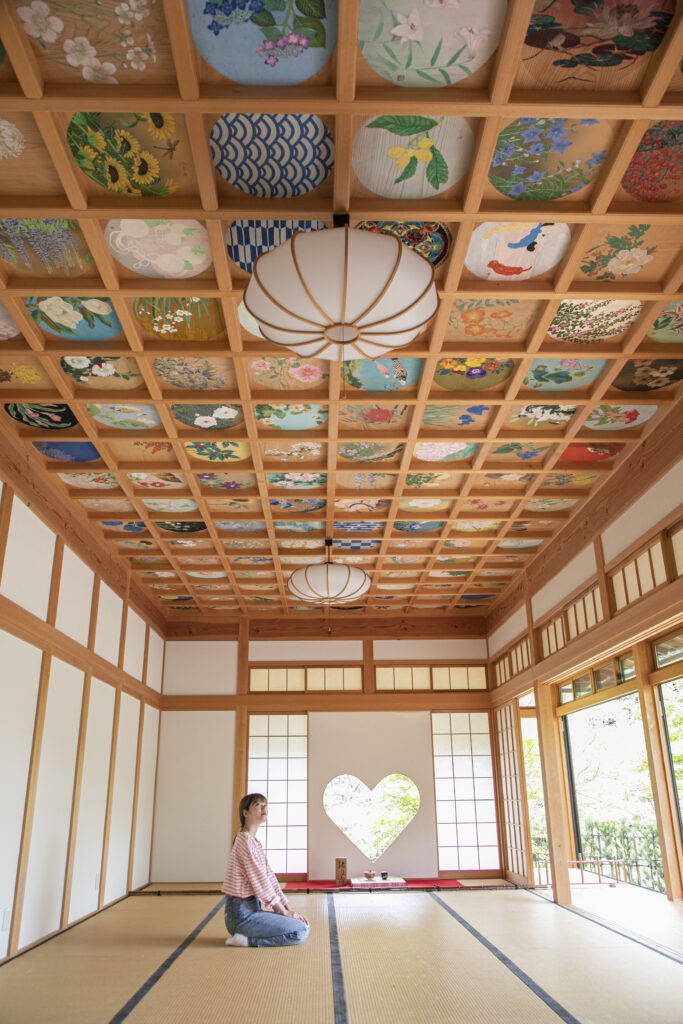
Ceiling murals and paper lanterns

This temple’s guest hall, Sokuten no Ma, is a popular tourist spot with two main attractions: the ceiling paintings and Inome-mado window. The colorful ceiling paintings were completed in 2017 with the cooperation of many Japanese painters, as a recreation of about 300-year-old ceiling paintings of the main hall. One of the highlights is the depiction of maiko (a young female apprentice learning various traditional Japanese performing arts) in each of the four seasons, which evokes the timeless elegance of Kyoto.

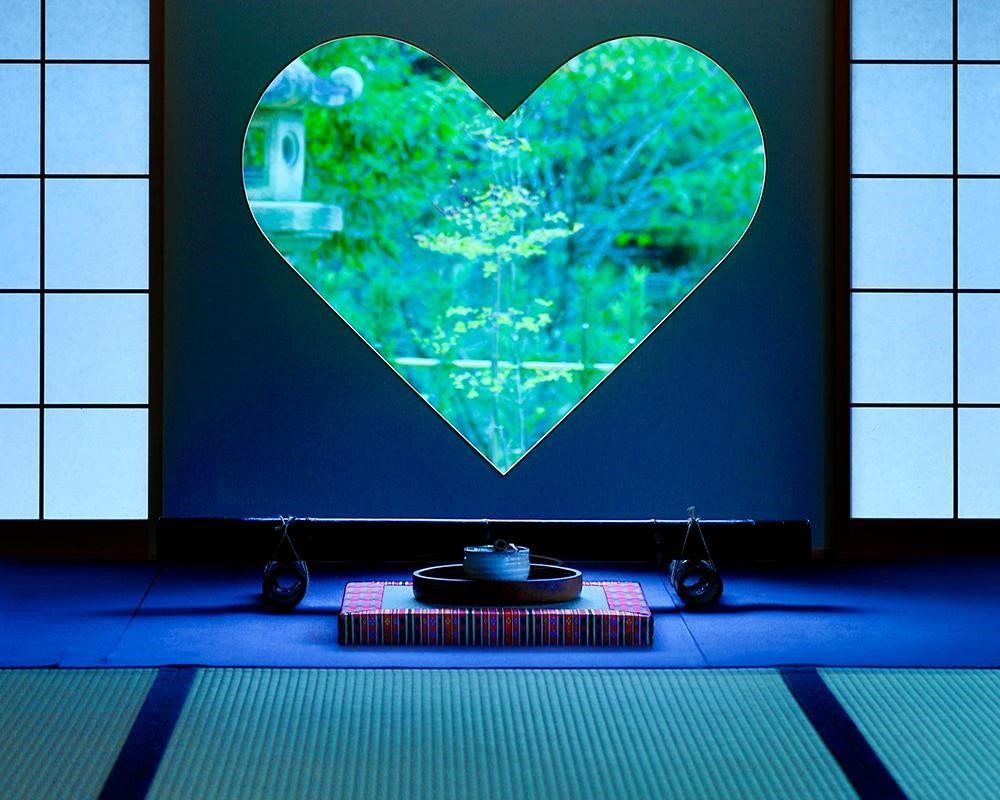
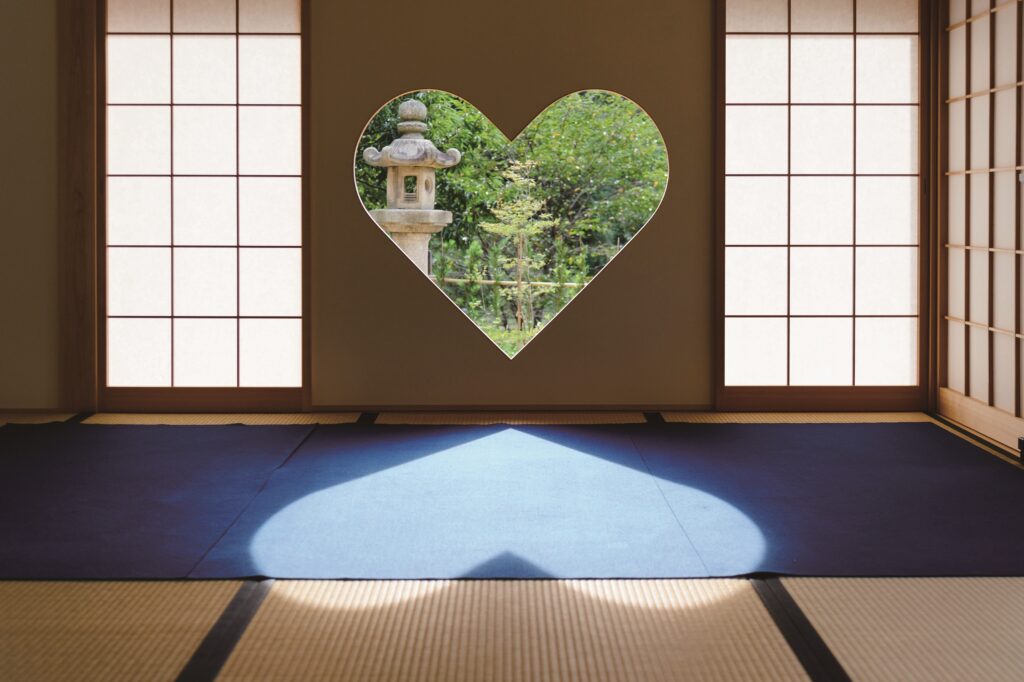
A heart-shaped window

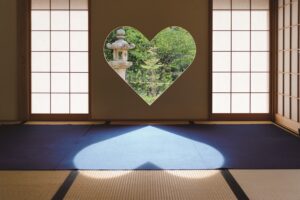
The Inome (boar’s eye), a heart-shaped motif, is a traditional design that has been used since approximately 1400 years ago, primarily for architectural adornment in shrines and temples. It has been believed to ward off evil spirits and bring good fortune. Shoujuin’s Inome-shaped window (Inome-mado) offers breathtaking sights of the garden that transform with the seasons: cherry blossoms in spring, lush greenery in summer, colored leaves in fall, and a serene snowscape in winter. Throughout the year, visitors can experience the tranquil beauty of Japan. Additionally, if the season and time are just right, you might witness a magical moment when the sunlight streams through the window, creating another heart shape in the shadow.

Shoujuin

Shoujuin

Shoujuin, a Buddhist temple of the Koyasan Shingon sect, is located in Ujitawara Town in southern Kyoto. It was founded in 1200, more than 800 years ago. Two fires between the 15th and 19th centuries …

● Mimurotoji (Uji City)
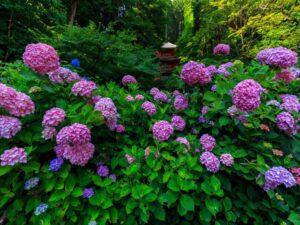
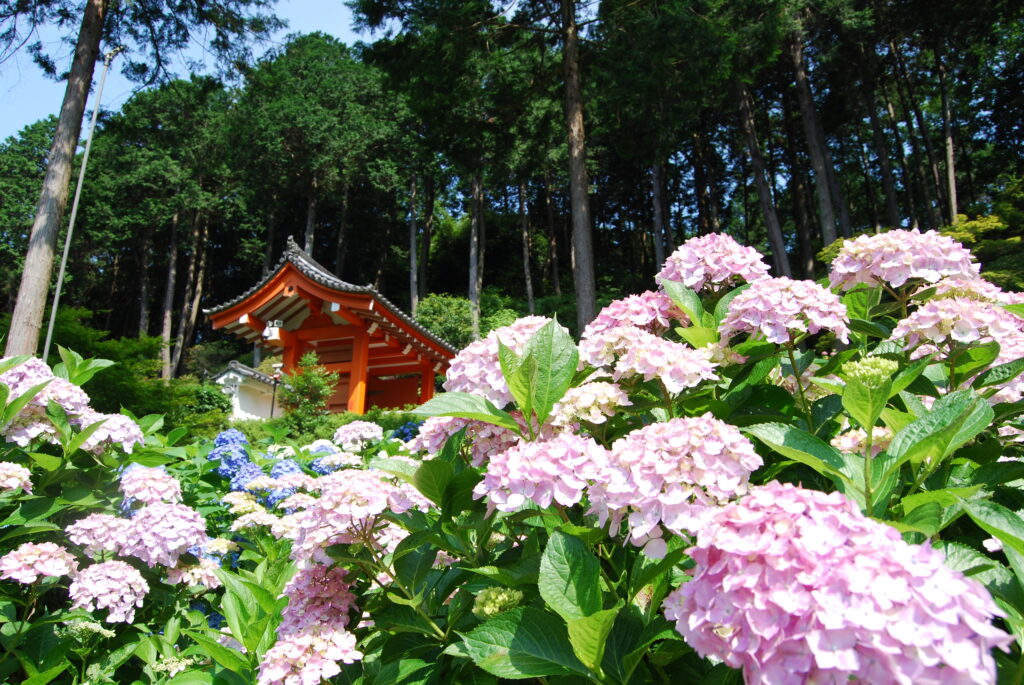
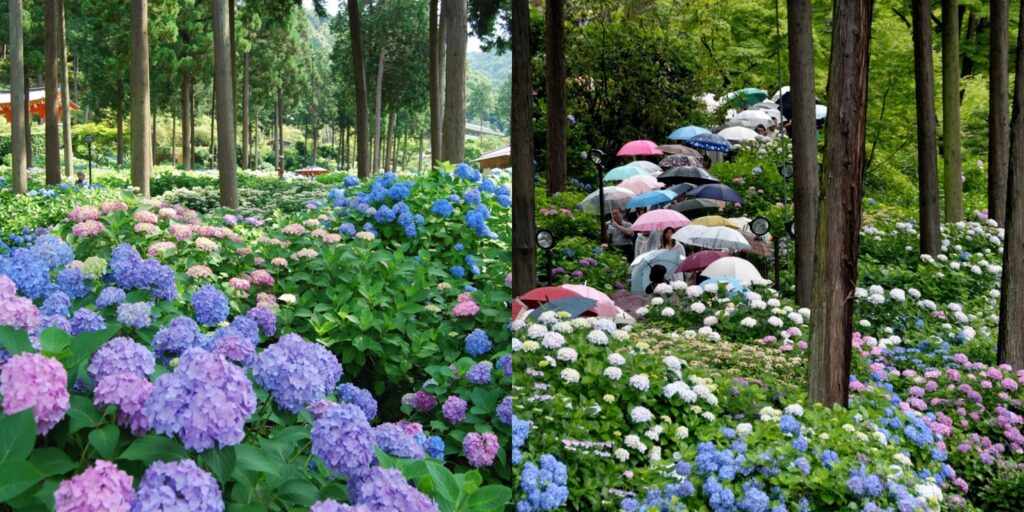
When you ask those who live in Kyoto about beautiful places to see hydrangeas in the rainy season, they may mention the Mimurotoji temple. Around June, its hydrangea garden transforms into a sea of vibrant colors with about 20,000 hydrangea bushes among Japanese cedar trees. Stepping into this scene is like entering a wonderful world of a fairy tale, where you can immerse yourself in the beauty of nature.

A close-up of hydrangeas with a building and trees in the background

The sight of the billowing hydrangeas is truly therapeutic! For unique pictures, beyond snapping shots as you like, try capturing the hydrangeas with the soaring trees as a backdrop, creating a sense of depth and perspective. It’s perfect if you can include the vermillion gate in the shot!

People walking through a field of hydrangeas with umbrellas

While this place is certainly beautiful when the sun is shining, it possesses a unique charm on rainy days. As rain drizzles softly onto the temple precincts, visitors add colors with a variety of umbrellas, creating a cheerful atmosphere. And if fortune smiles upon you, you might stumble upon a naturally formed heart-shaped hydrangeas! This temple is famous for the heart-shaped hydrangeas, for it is even rumored that if you find one, your love will come true.

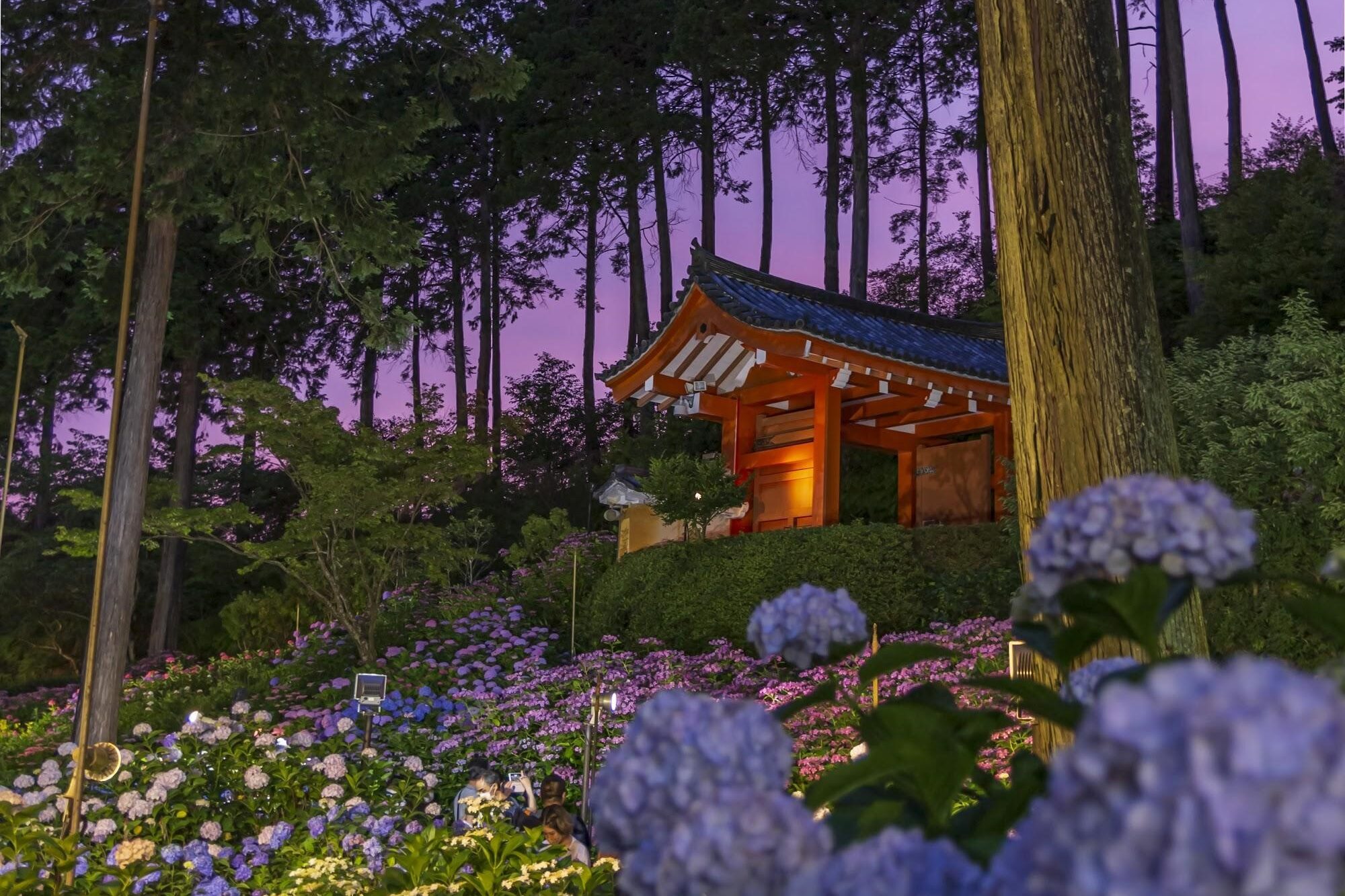
A field of hydrangeas illuminated at night

If you visit the temple in the evening, you might be able to take stunning pictures that combine the sunset-colored sky with the hydrangeas. Also, the lit up hydrangeas create a magical atmosphere. It looks like it would be fun to take pictures with friends, and couples could have a romantic time here. (To enjoy the illumination, be sure to check the event dates in advance.)

Mimurotoji

Mimurotoji

The Mimurotoji temple is located in Uji City in the Kyoto Tea Country region, southern Kyoto Prefecture. This temple has a long history, and its Treasure House enshrines Buddhist statues including Imp …

Fall: Keihanna Commemorative Park and Taisho Pond Green Park

● Keihanna Commemorative Park (Seika Town)
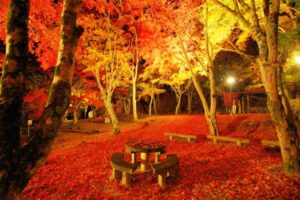
This park is a great place to relax and enjoy nature all year round. In the Taniai (Valley) area, you can view a typical Japanese landscape with a small stream, a bamboo grove, and a plum garden. In the paid area, there is Suikei-en, a Japanese-style garden with paths that bring you to wonderful spots including a cascading pond, a magnificent Rock Cluster, beautiful places with seasonal flowers, and Floating Stage where you can feed Japanese carp. Also, at Mebuki-no-Mori (Budding Tree Forest), you can enjoy strolling through abundant nature, which offers different scenery depending on the season. In this park, the fall foliage is among the best features. During the peak season, the beautiful Japanese maple leaves are illuminated in the evening as well (from early to late November, on Fridays, Saturdays, Sundays, and national holidays).

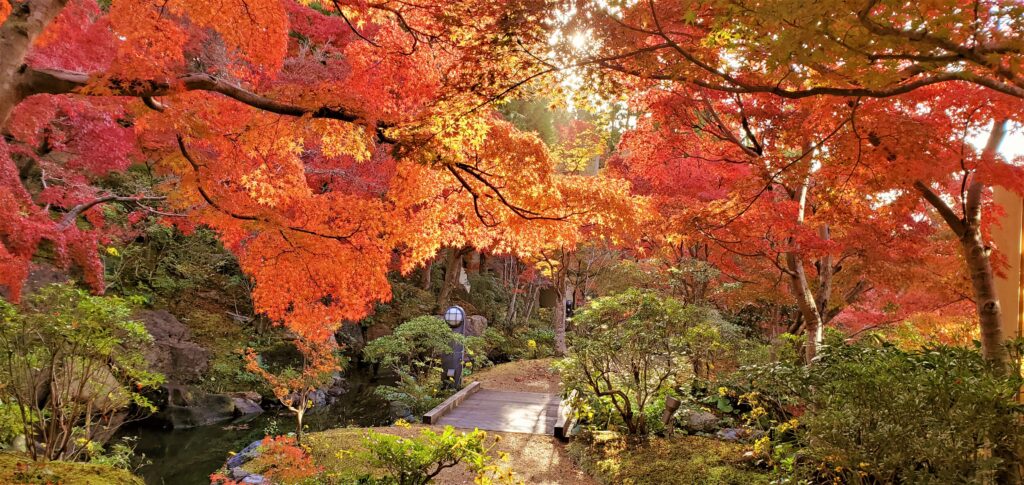
Autumn foliage

A warm tone of scarlet embellishes the maple trees by the pond, and rays of sunlight shine through them, melting away the chill of fall breeze. Surrounded by the fascinating colorful leaves, you can experience the wonder of fall in Japan.

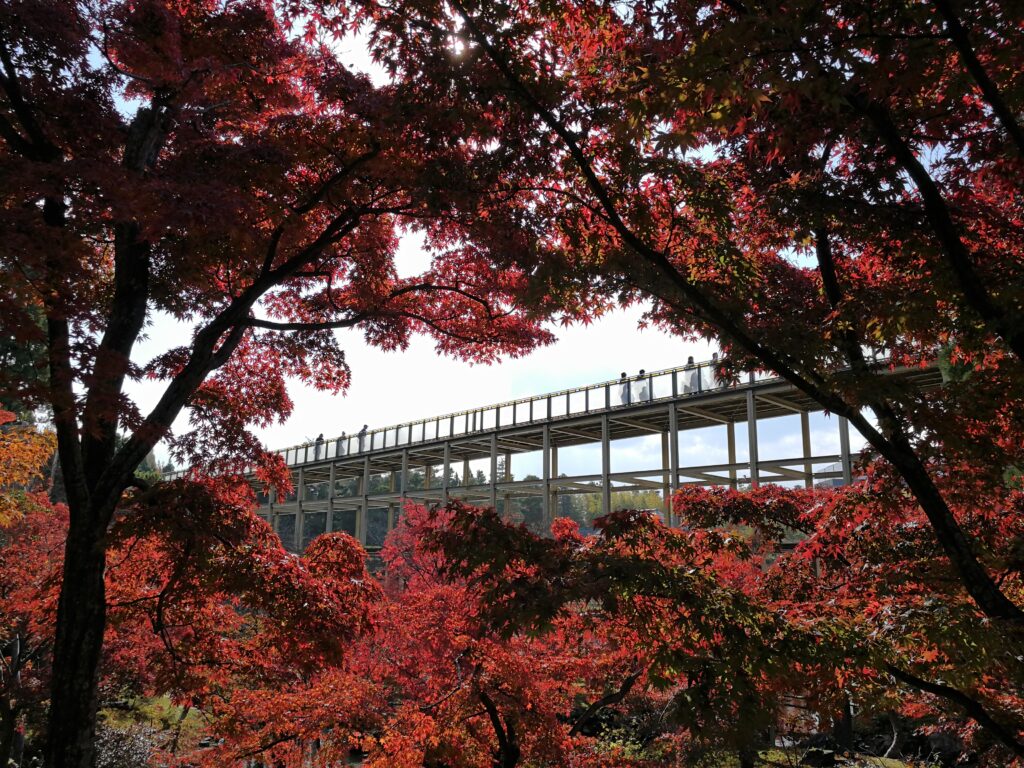
People walking on a bridge

You can also look down on the amazing sight from the Kangetsukyo Bridge, or take photos of the bridge, pond, and fall foliage together. Framing the scenery with the trees creates a stunning photographic composition!

Keihanna Commemorative Park

Keihanna Commemorative Park

The Keihanna Commemorative Park, officially called the Kyoto Prefectural Kansai Culture and Science City Commemorative Park, is 24.1 hectares in size. It was built to commemorate the establishment of …

● Taisho Pond Green Park (Ide Town)
Surrounded by nature, Taisho Pond Green Park offers fun outdoor activities. It has bungalows, a camping site, and an auto-camping site. There is also a barbeque area for those who prefer to enjoy a day trip. In fall, you can admire the scenery of vibrant Japanese maple leaves and other colorful leaves.

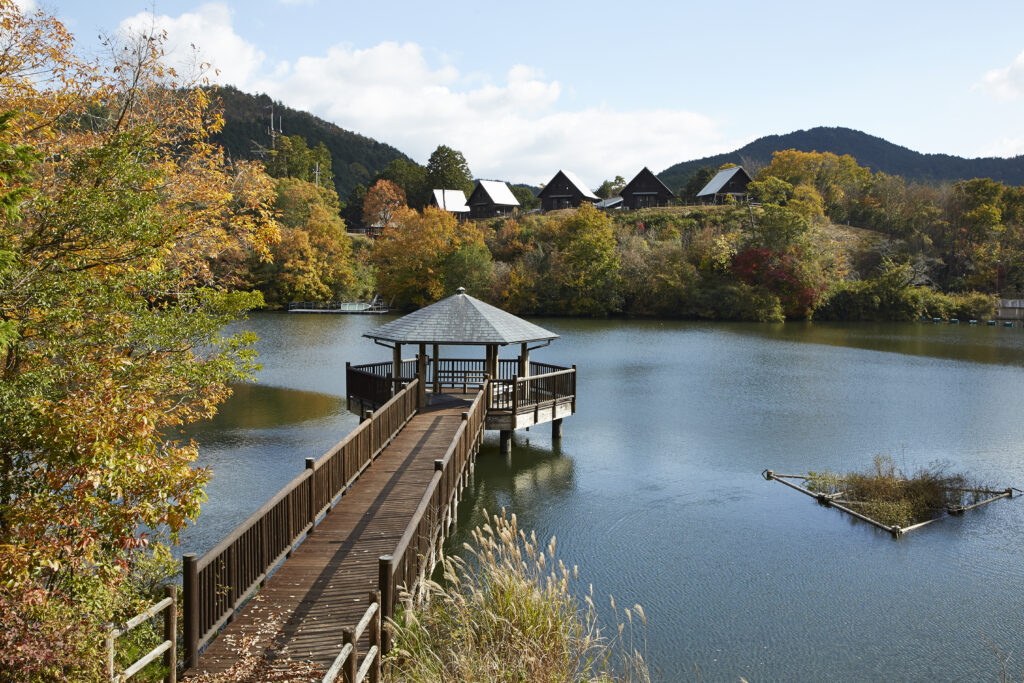
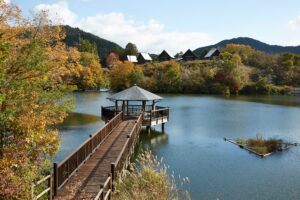
A gazebo at the end of a dock in a lake

On the Taisho Pond, there is Ukimido, a floating pavilion where you can rest. For beautiful pictures of the scenery around the pond including the fall foliage and gentle mountains, you might as well stand on the walkway that leads to the pavilion and ask a friend to press the shutter. That way you can capture the stunning nature in a photograph.

An aerial shot of a lake surrounded by trees

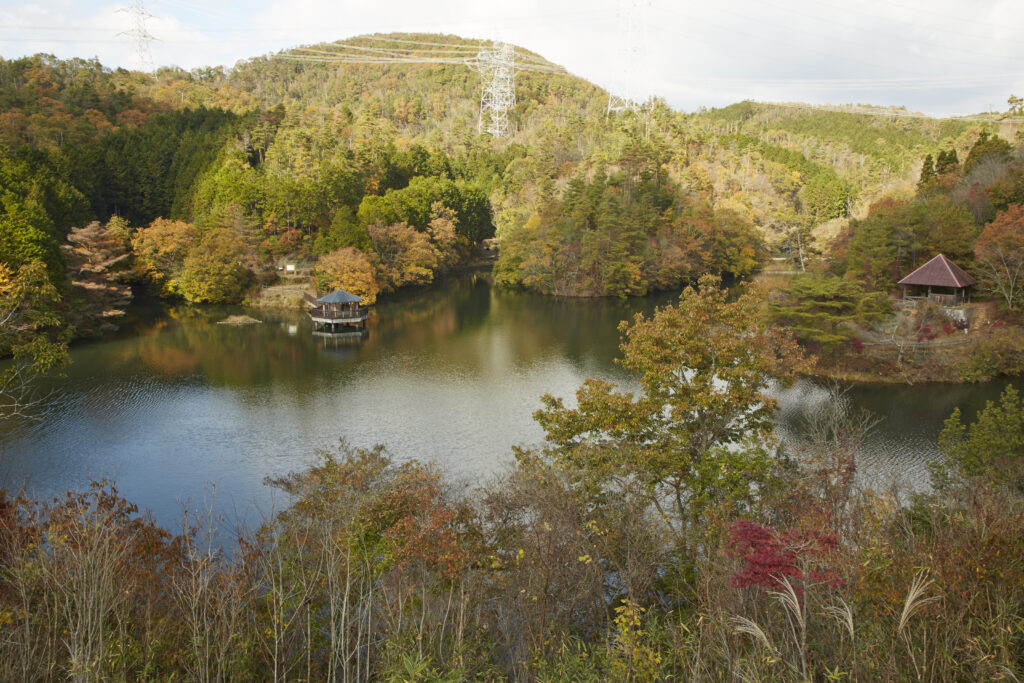
The trees surrounding the pond gradually put on their fall colors, and their reflection in the shimmering pond holds serene beauty.

For those who are looking for more adventure, stop by the nearby Mandoro-yama Viewpoint on your way back. The panoramic vista will add to the feeling of liberation.

Taisho Pond Green Park

Taisho Pond Green Park

You can enjoy outdoor activities at Taisho Pond Green Park. It has bungalows, a camping site where you can pitch your tent anywhere in a designated area or on one of their tent decks, and an auto-camp …

Winter: Mt. Kasagi and Aodani-Bairin Plum Grove

● Mt. Kasagi (Kasagi Town)
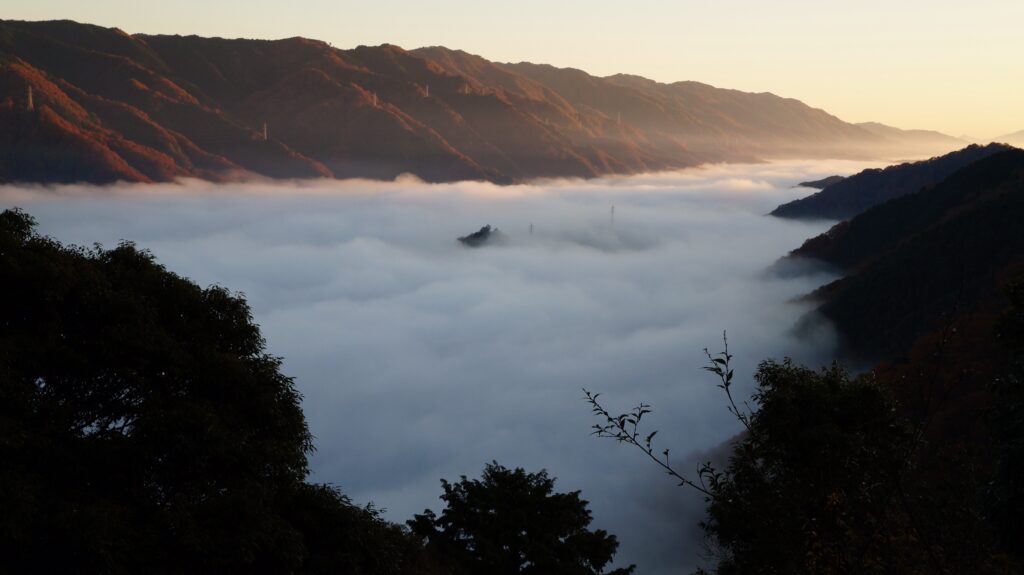
The sea of clouds spread amidst the mountains covered in greenery, which makes you feel as if you were in a fairyland and cleanses your spirit. Such a stunning view can be seen from Mt. Kasagi in the cold season, if you’re lucky.

A sea of clouds settling between mountain ranges

The view of the mountains and sea of clouds extending endlessly is a must-visit attraction for many photography enthusiasts.

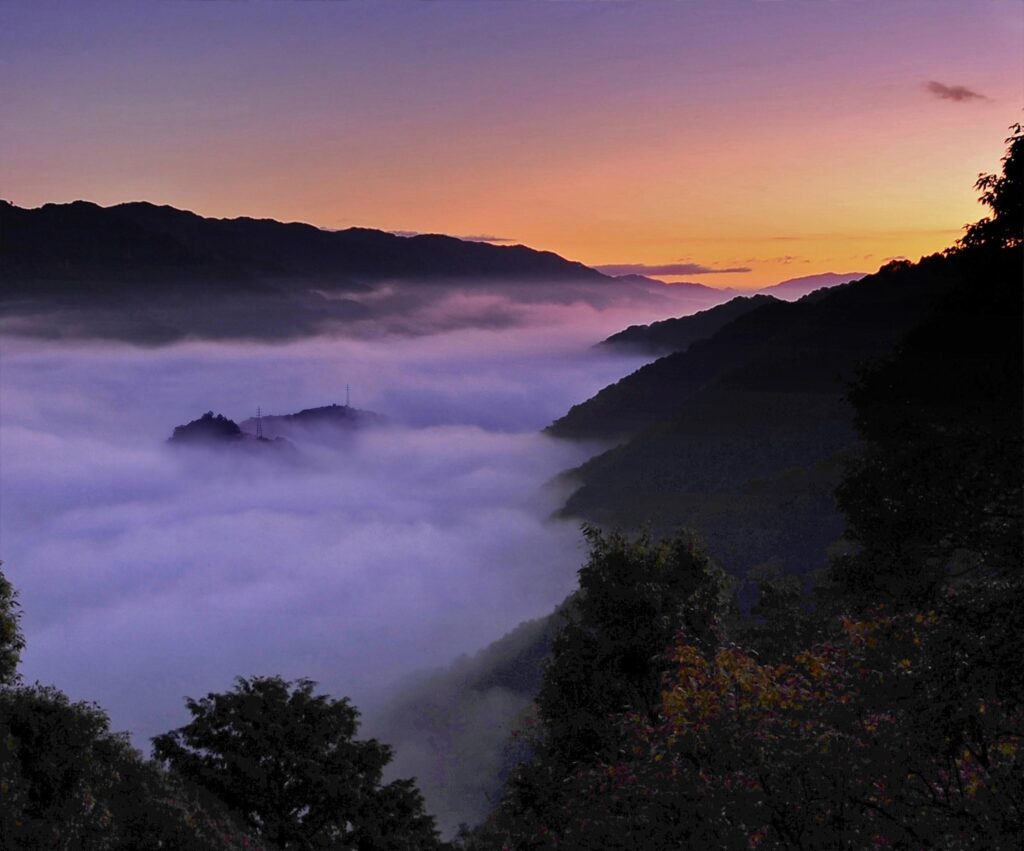
A sea of clouds at sunset

The color of the sky varies depending on the time and weather conditions. You might capture a landscape bathed in purplish-pink hues.

The mountaintop was also a renowned spot for moon gazing in the Edo Period (around 1603-1868). Today, the mountain is famous for its fall foliage as well, with a park of approximately 3,000 square meters, transforming into a breathtaking tapestry of crimson Japanese maple leaves.

#笠置山(mount_kasagi)  #雲海(sea_of_clouds)  #京都南部(southern_kyoto)  #期間限定絕景(stunning_view_for_a_limited_time)

Mt. Kasagi / Kasagiyama Nature Park

Mt. Kasagi / Kasagiyama Nature Park

Kasagiyama Nature Park, located in Kasagi Town, is an area rich in nature, including Mt. Kasagi. The mountain, on the south bank of the Kizu River, is about 288 meters tall and known for its mystical, …

● Aodani-Bairin Plum Grove (Joyo City)
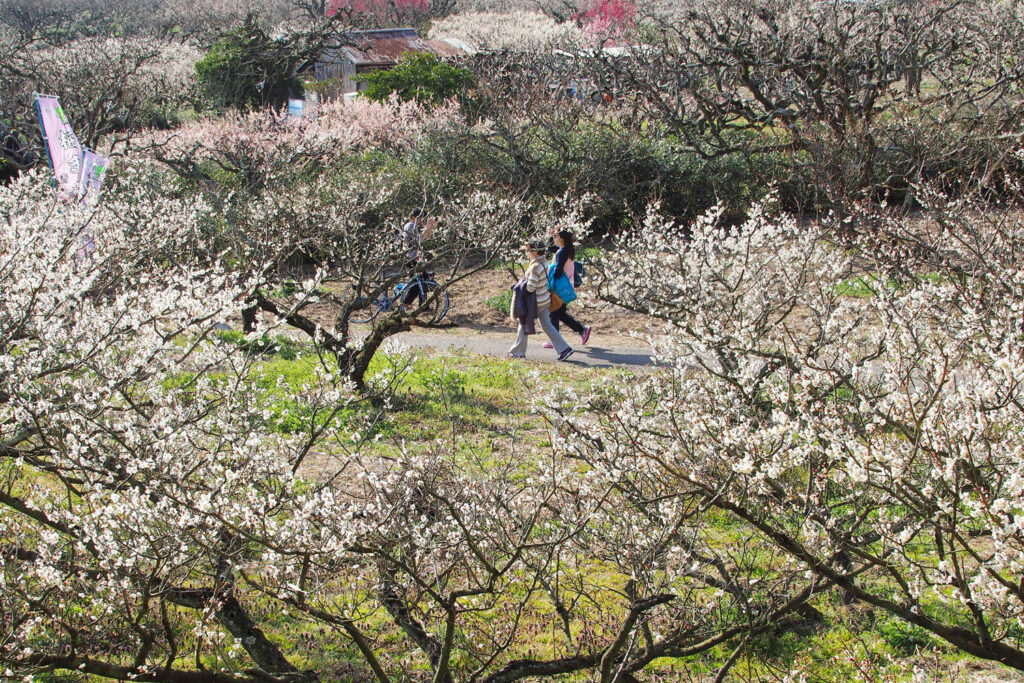
Covering approximately 20 hectares, Aodani-Bairin Plum Grove in Joyo City is one of the largest ume (Japanese plum) groves in Kyoto Prefecture. Furthermore, it boasts the highest ume fruit production in Kyoto. The ume fruit produced here are used for various purposes, such as preservable umeboshi (pickled plum fruit that is very sour and salty, often enjoyed with rice), umeshu (Japanese plum wine), syrup, extract, and even dyes.

The festival lasts for three weeks and attracts more than 20,000 people each year. During the event, visitors can also purchase dried plums and other pickled plum products that are made from the plum gardens in the Aodani region.

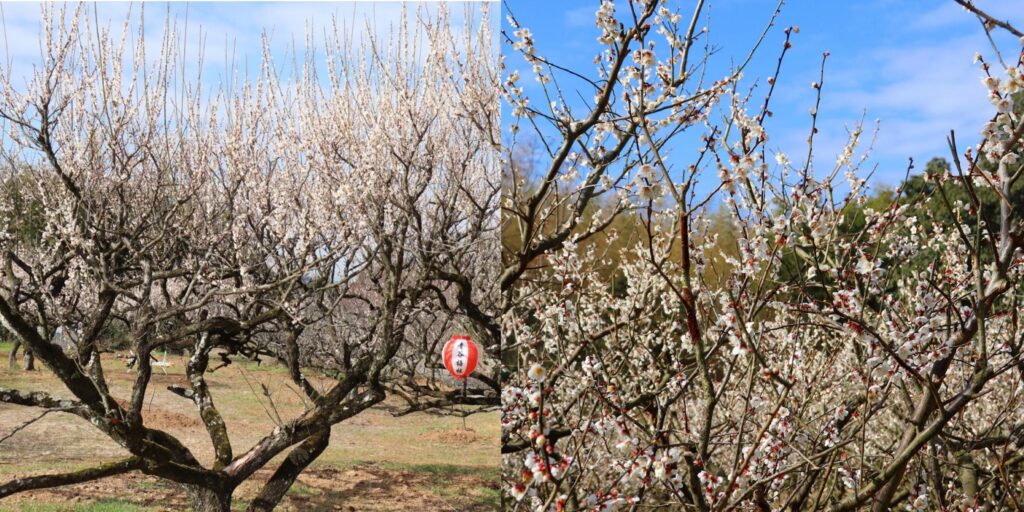
Around late February to mid-March, there is an annual festival to admire the blooming of the flowers and the arrival of spring around here. In this area, you can find pretty ume blossoms with a delicate scent of early spring. The festival, held for about three weeks, attracts approximately 20,000 people. You can purchase sour and salty umeboshi and other food using ume fruit from the Aodani region.

A local specialty, Joshuhaku, is a fragrant, fleshy plum variety. Some grow to be larger than golf balls, perfect for big, premium umeboshi. Joshuhaku is great for not only the high-quality fruit, but also the lovely blossoms. A landscape with the white Joshuhaku blossoms and scattered other pink plum blossoms is like a harmonious painting, perfect for photography.

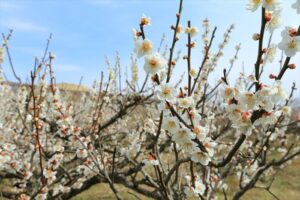
A close-up shot of plum blossoms

This plum grove is seen in poetry written by Emperor Godaigo’s son in the 14th century, which tells us that the grove has a very long history.

Aodani-Bairin Plum Grove

Aodani-Bairin Plum Grove

This ume (Japanese plum) grove, sprawling across the gentle hill along the Aodani River, has been a renowned plum blossom viewing spot since olden times. It’s even seen in poetry written by Emperor Go …

All year round: “Shirasu and Ishitera Tea Plantations” and Byodoin Temple

● Shirasu and Ishitera Tea Plantations (Wazuka Town)
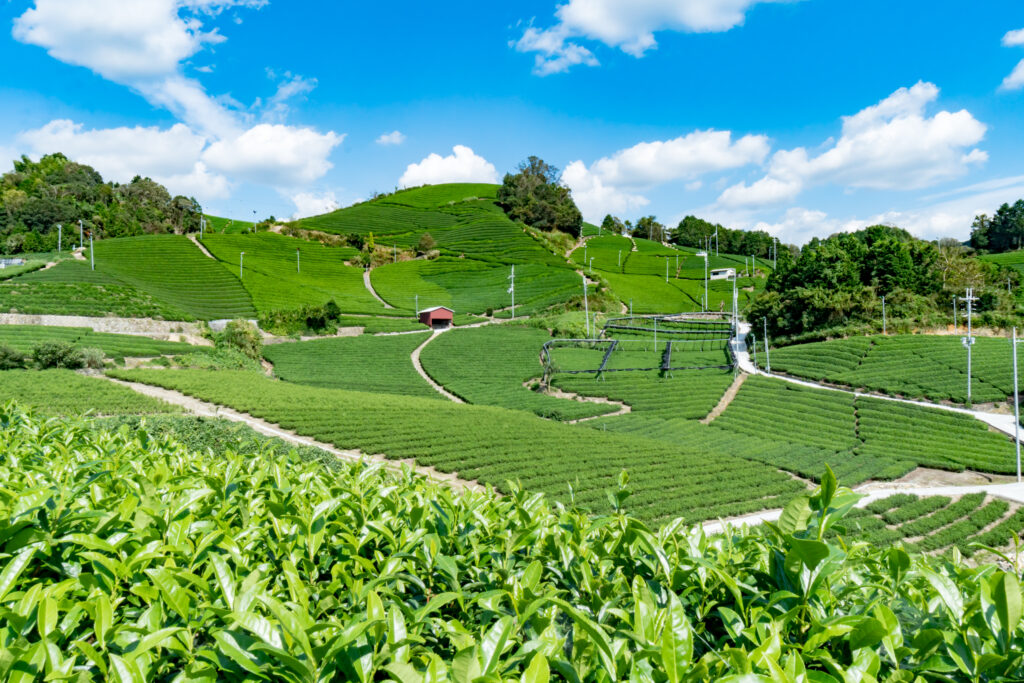
These are renowned tea plantations in Kyoto, designated as the first Scenic Assets of Kyoto Prefecture, and a part of the Japan Heritage (Japanese Tea: Eight Centuries of Tradition). In addition to visiting Uji, those seeking magnificent landscapes should consider a trip to these areas for a unique tea journey. Visiting the heart of the tea producing region in Kyoto allows you to gain a deeper understanding of Uji tea, too.

Tea fields

A tapestry of lush green tea plants, rising dynamically to meet the heavens, creates a stunning contrast with the blue sky above! Tea picking begins no later than late April around here, so visitors during this season might be lucky enough to see farmers harvesting the leaves.

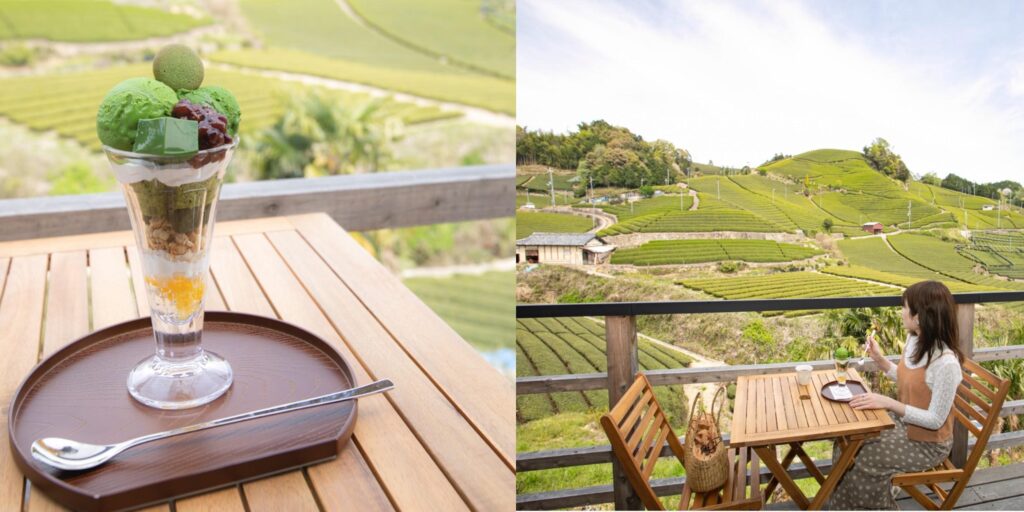
A person eating a matcha parfait while looking at tea fields

In the Ishitera area, there is “Dan Dan Cafë” . in front of the tea field. You can enjoy a delicious matcha green tea parfait, while gazing at the amazing view. All the matcha used at this cafe is from Wazuka. This is an ideal scenic spot for matcha lovers!

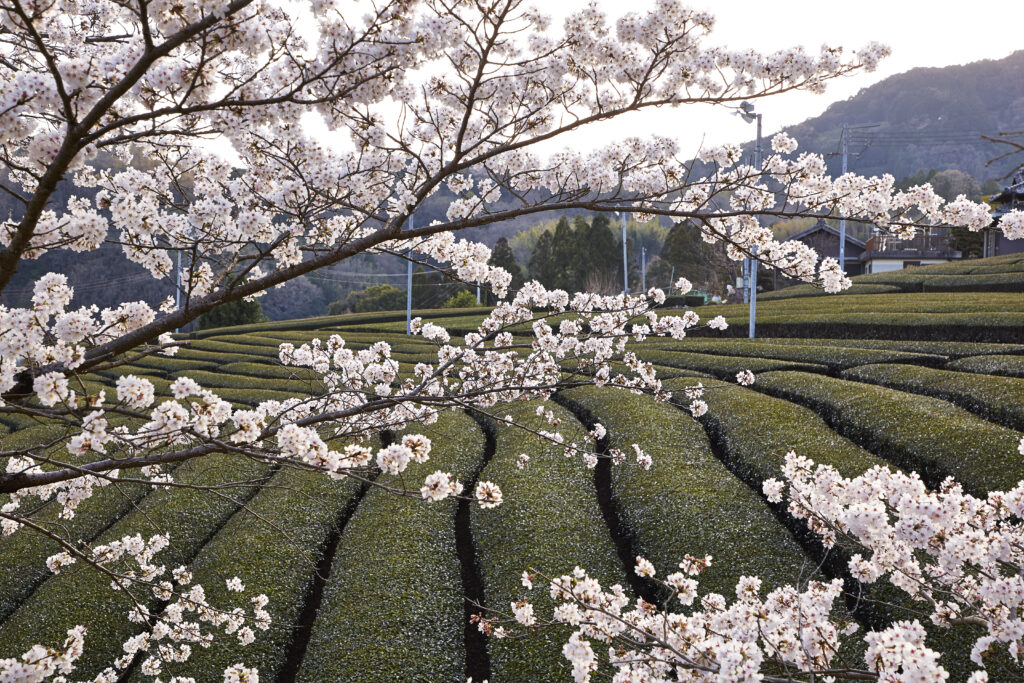
Cherry blossoms by a tea field

Furthermore, when you walk to the cafe from a bus stop Wazuka-takahashi in spring, you can see beautiful scenery of cherry blossoms in full bloom intertwined with green tea plantations. This harmonious blend of colors and the peaceful atmosphere offer the wonders of Japan and another profound appreciation for Kyoto’s tea culture.

Shirasu and Ishitera Tea Plantations

Shirasu and Ishitera Tea Plantations

Wazuka Town gradually warms up from west to east in spring. In Ishitera and nearby places, located in the western part of Wazuka, tea picking begins no later than late April. Therefore, the tea planta …

● Byodoin Temple (Uji City)
At Byodoin Temple, you can enjoy cherry blossoms and wisteria flowers in spring, fresh greenery in summer, colorful leaves in fall, and white snow in winter. In recent years, this region has had less snowfall, making the snowy scenery of the temple a rarer sight than before. If you’re fortunate enough to witness it, capture the magical moment with your camera.

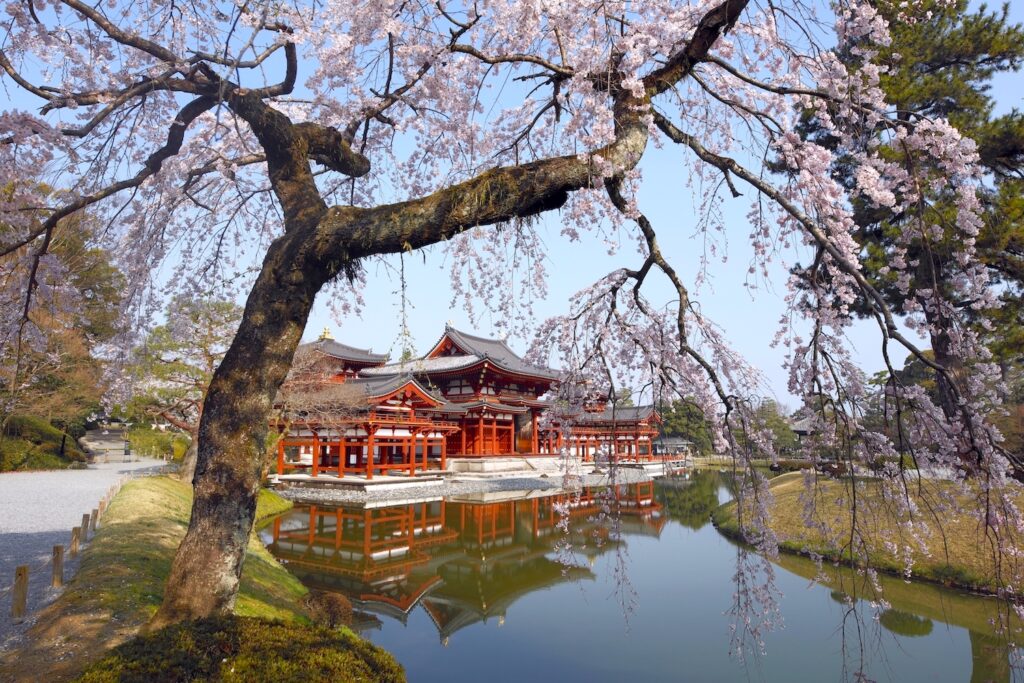
Cherry blossoms over water with a temple in the background

In this photo, the clear pond, like a mirror, reflects the magnificent Phoenix Hall (Hou-ou-do) on its surface, which creates a symmetrical image. This picturesque sight is overwhelming, and pink weeping cherry blossoms add a touch of color to it, creating a fascinating ambience.

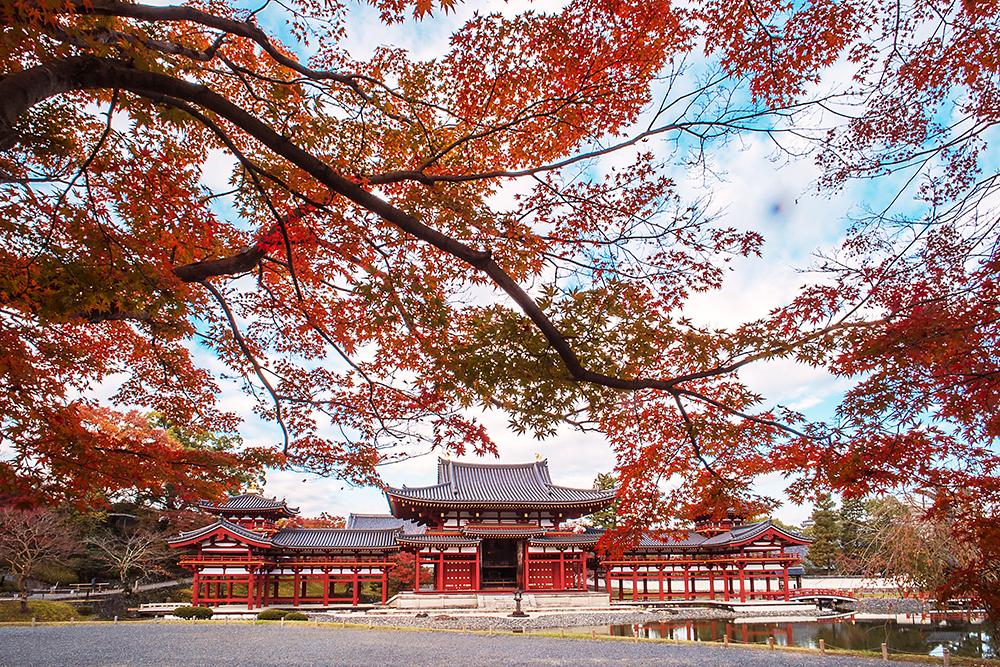
Autumn foliage in front of a temple

In fall, the vermilion Phoenix Hall, with maple leaves of similar beautiful color, offers a different atmosphere unique to this season. It’s a wonderful experience to admire the majestic view of the Phoenix Hall and fall foliage, while strolling peacefully.

When the nighttime illumination is held in this temple, you can encounter a fantastical charm unlike anything you can feel during the day. Please make sure to check the information on the lit-up event, including the schedule and application in advance.

Byodoin Temple

Byodoin Temple

Byodoin Temple, located on the west bank of the Uji River, shows the historical glory of the Fujiwara clan’s prosperity. Originally Minamoto no Toru’s villa, it was later acquired by Fujiwara no Michi …

Another Kyoto Partners