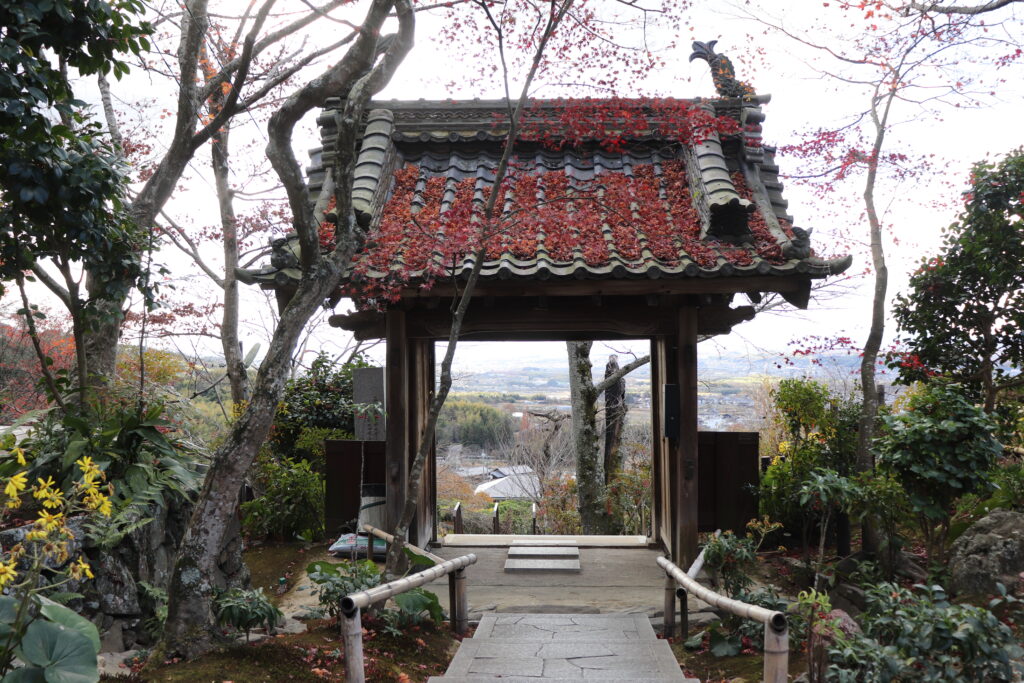

Experience the charm of rural Japan in Ide Town. It offers a delightful hike with its natural landscapes and idyllic countryside scenery. The hike takes less than half a day.
Inspiration
Hike Through Time and Nature: Yamashiro-Kodo Road Along Train Line
The Yamashiro-kodo Road is a walking route in southern Kyoto Prefecture, which meanders for about 25 km through Joyo City, Ide Town, and Kizugawa City. It offers a variety of scenery, from mountains and rural landscapes to residential areas. One of the highlights is the abundance of attractions in the area around the paths: hanami (cherry-blossom viewing) spots, views of tea plantations, Kamikoma Tea Wholesaler District, streams where fireflies dance, wonderful cafes, bakeries, shops, and more. Also, Teoterasu Ide opened in 2023, which is a community hub with a farmers’ market and a cafe. For outdoor dining, recreation and overnight stays, there’s Logos Land. Furthermore, you can find interesting places that will pique your curiosity about the local history and culture. For example, there are historical places that ignite the imagination with their secrets, and locations where the old paths still remain in daily use.
The Yamashiro-kodo Road is the perfect stop-off when travelling between Kyoto and Nara by train. The trail follows a north-south trajectory similar to the JR Nara Line and Kizu River. While hiking the entire 25 km route is a big undertaking, the train line offers the flexibility to hop on and off and customize your walk. For example, you could try the recommended section of about 5 km between Yamashiro-Taga Station and Tamamizu Station, as described here.
An Ancient Shrine and Seasonal Surprises
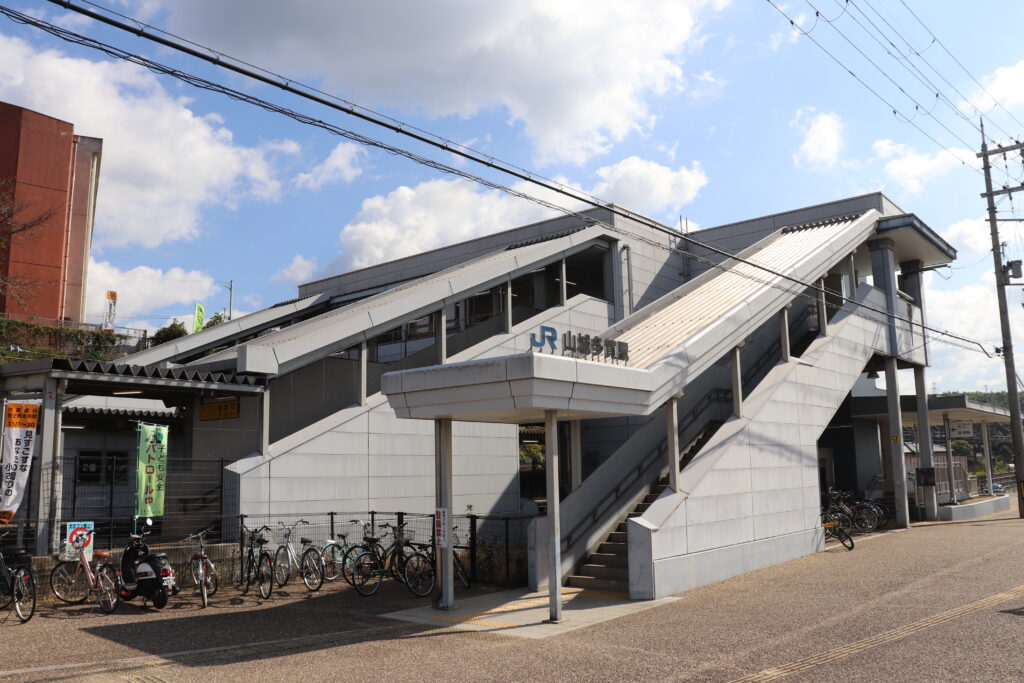
Yamashiro-Taga Station faces west. Head out the east exit at the back of the station, and enjoy a peaceful stroll. You can see rural scenery, and in spring, cherry blossoms are beautiful, too. After about a 10-minute walk, you will arrive at Taka-jinja Shrine, your first destination.
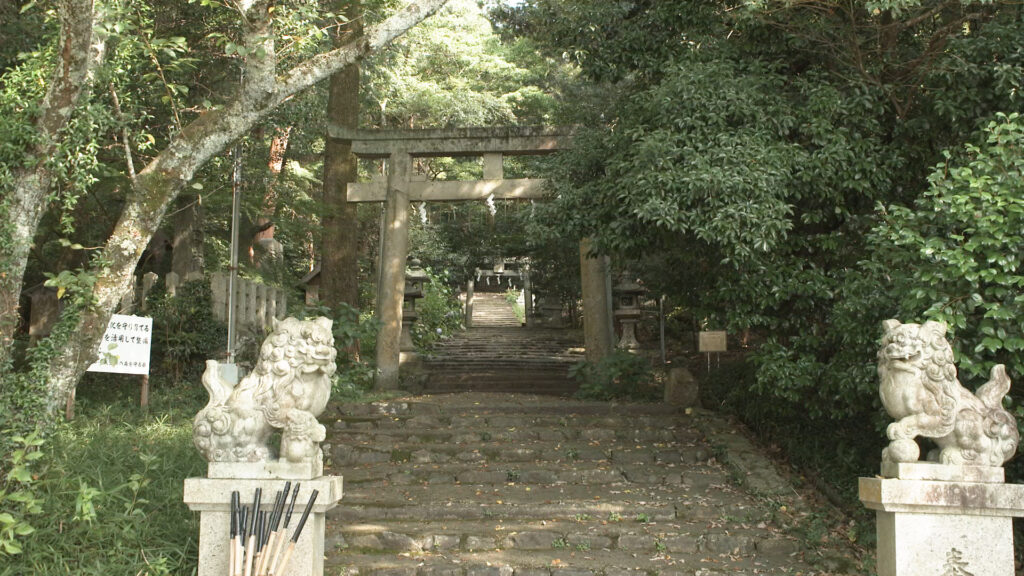
After climbing long stone steps surrounded by lush greenery, you will soon come to the main hall. Taka-jinja Shrine, founded in 711, has long been a place of worship among the local people. With the Chinju no Mori (the sacred shrine grove), one of the 100 landscapes of Kyoto, the shrine is enveloped in a tranquil atmosphere. The main hall, built in 1604, is a cultural property designated by Kyoto Prefecture. This building preserves the gorgeous decorations that are one of the characteristics of its time. A document of the shrine from the Kamakura Period (1185-1333) records that a traditional Japanese theatre, sarugaku (a precursor to nōgaku performing arts) was performed when the shrine was reconstructed. This is one of the earliest records of sarugaku in Japan, further enhancing the shrine’s historical significance.
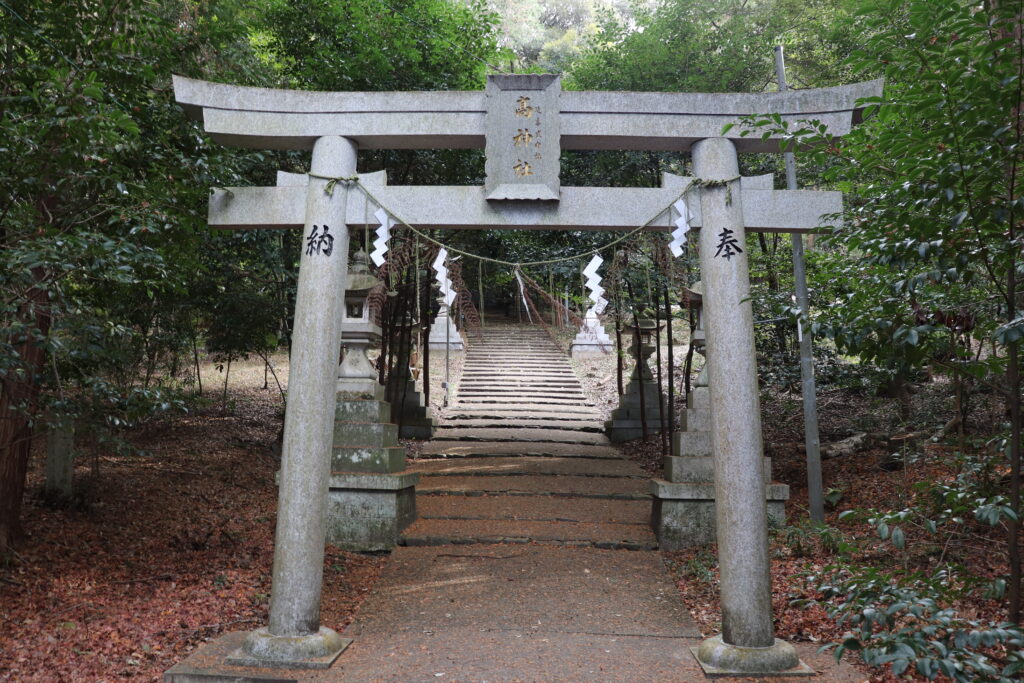
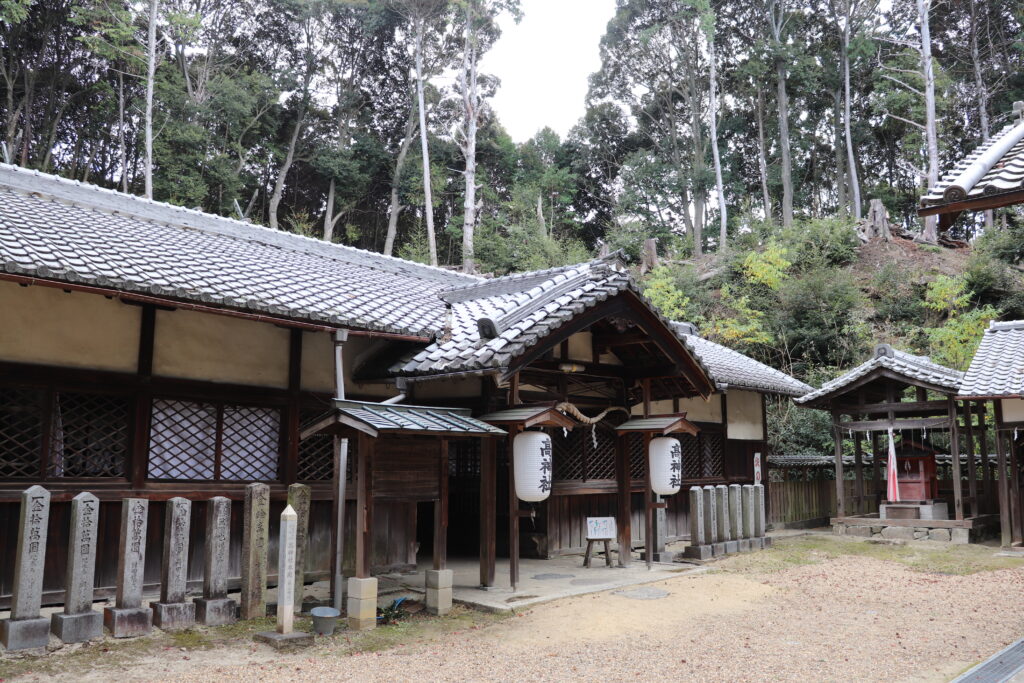
Right next to the entrance of the shrine, there is Tanigawa Hotaru Park where you can see fireflies flitting around in early summer evenings (around June). Fireflies are also seen at Tama River, where you will visit later. It is said that fireflies like clean water, which shows the richness of nature in this town.
Taka-jinja Shrine
Taka-jinja Shrine, founded in 711, has long been a place of worship among the local people. With the Chinju no Mori (the sacred shrine grove), one of the 100 landscapes of Kyoto, the shrine is envelop …
Refreshing Hike in Nature
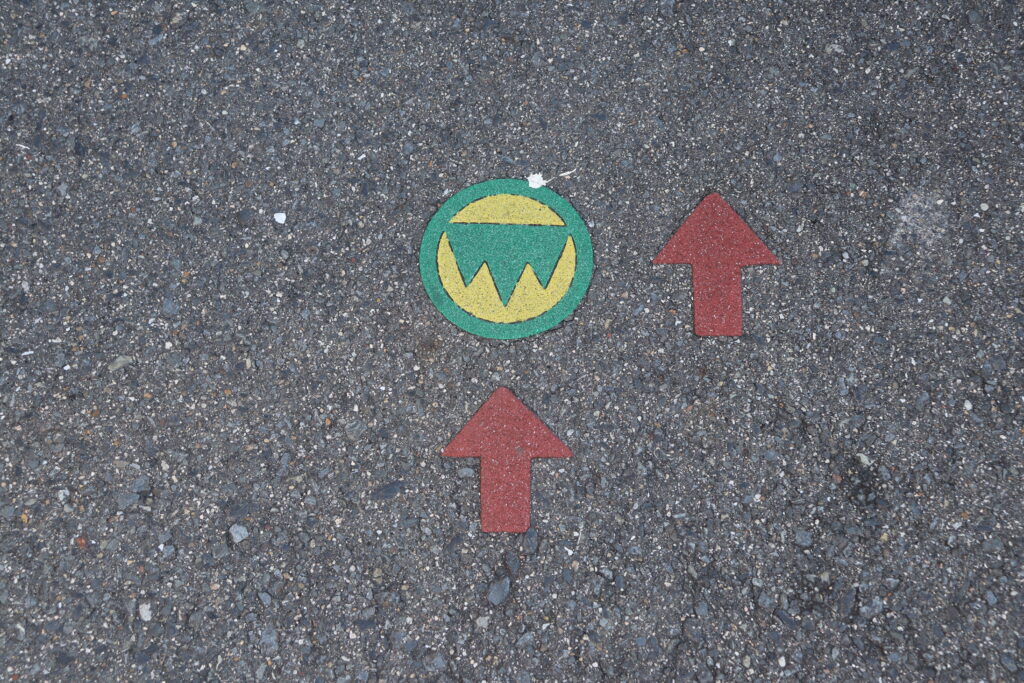
From Tanigawa Hotaru Park, the Yamashiro-kodo Road swings southwest, and then back southeastward, and goes through a quiet residential area where locals go about their daily lives. Then, the trail gets narrower, and after that, it forks. (Be sure to follow the circular marks with mountains inside painted on the paths so you don’t get lost.) The trail gets rougher as you climb the mountainside. After passing fields and the forest, and finishing the climb, you’ll come to a gray asphalt road. There are mountain marks here as well, so keep following them.
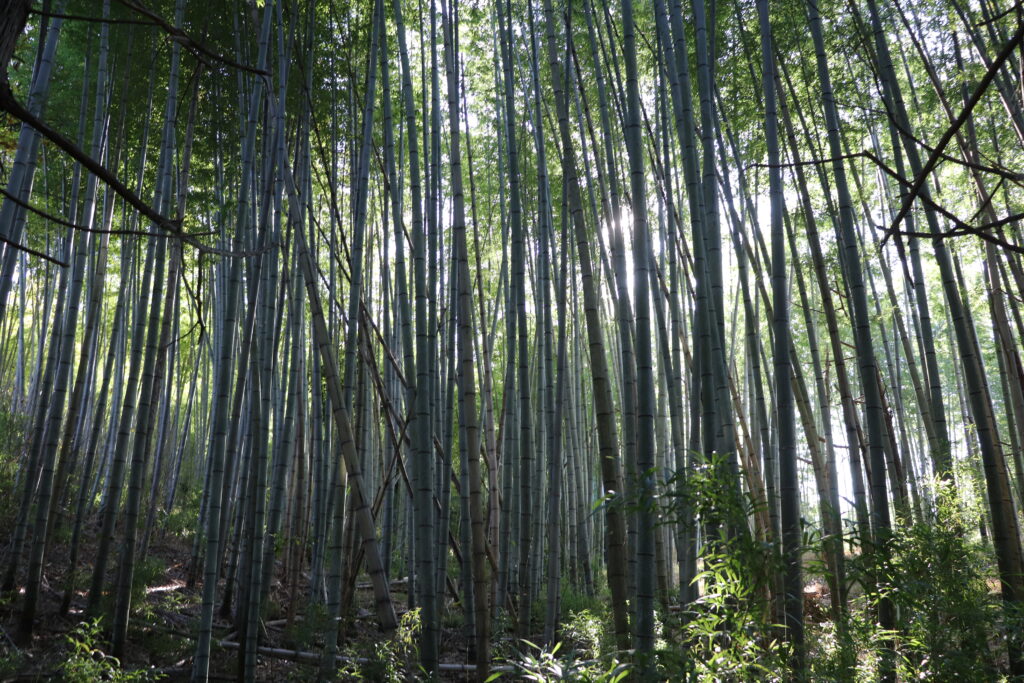
The road gently follows the mountainside and soon leads you through an impressive bamboo grove. Here, the wind whispers through the bamboo, with the sunlight filtering through them, creating a symphony of sights and sounds. It offers a serene escape where you can immerse yourself in the beauty and stillness of nature.
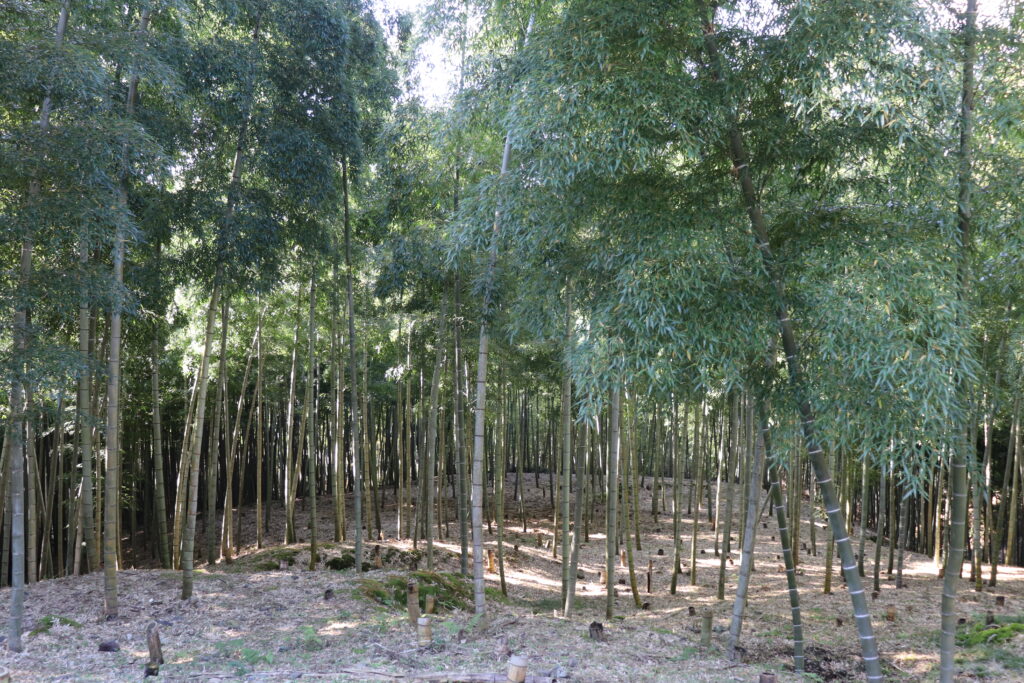
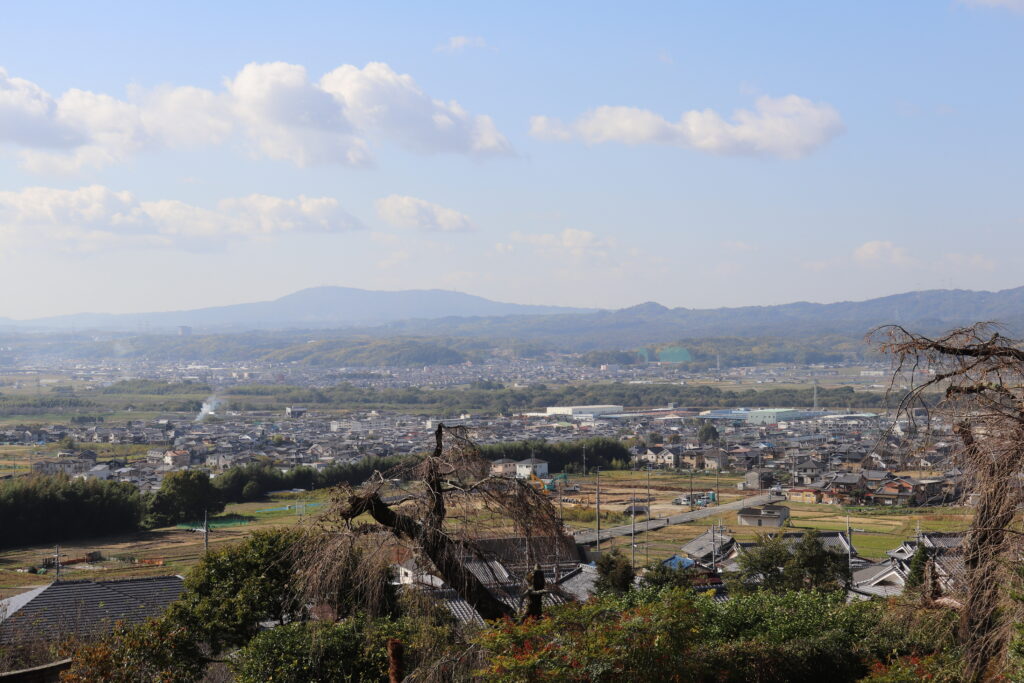
Walk through the bamboo and cedar trees, and you’ll emerge from the forest to an open view. Here, follow the sign and turn left. Soon, to the west, you’ll see the vast Yamashiro Basin stretching north and south and the Ikoma Mountains in the distance.
A Tranquil exploration of History
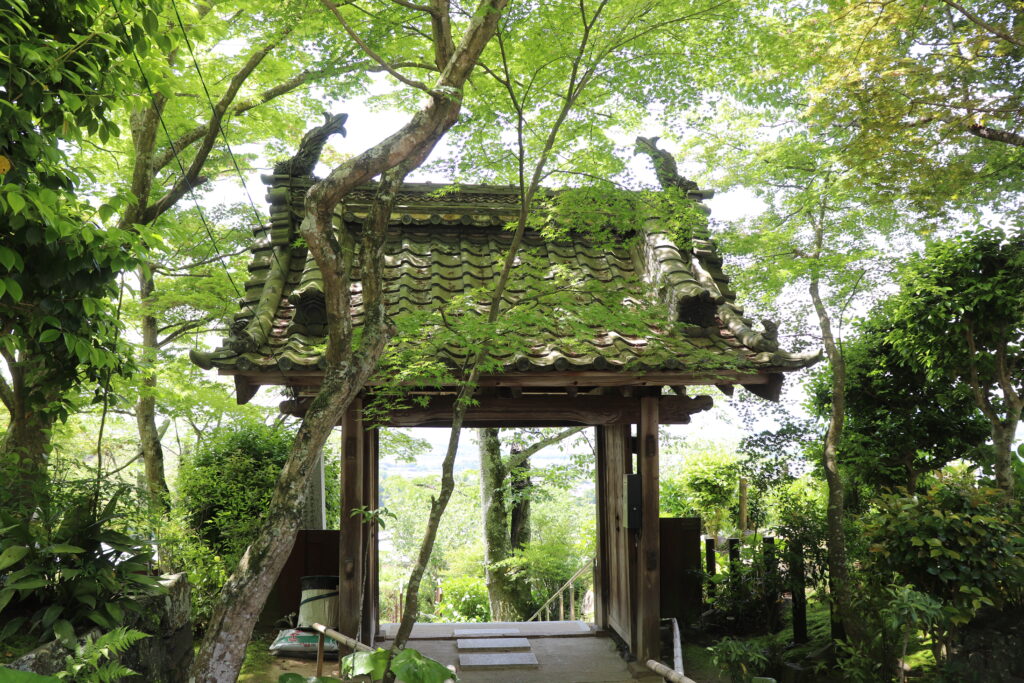
Walk further along quiet paths, up stone steps, and through a stone torii (entrance gate of a shrine). Jizo Zen-in Temple is on the left. (Of course, you can visit Tamatsuoka-jinja Shrine first.) Located at an elevation of over 100 meters, the temple offers a panoramic view over the plain of Ide Town.
There is a weeping cherry tree that is designated as a Natural Monument of Kyoto Prefecture. It’s estimated to be approximately 300 years old. In spring, you can see beautiful blossoms. The tree is related to a very famous hanami (cherry-blossom viewing) spot in Kyoto City, Maruyama Park. The park’s first-generation weeping cherry tree and this old tree have the same mother tree. This weeping cherry tree stands on a stone wall, and there is a hanging bell behind it. It has a classic Japanese charm, and when the sun sets, the view is amazing, too.
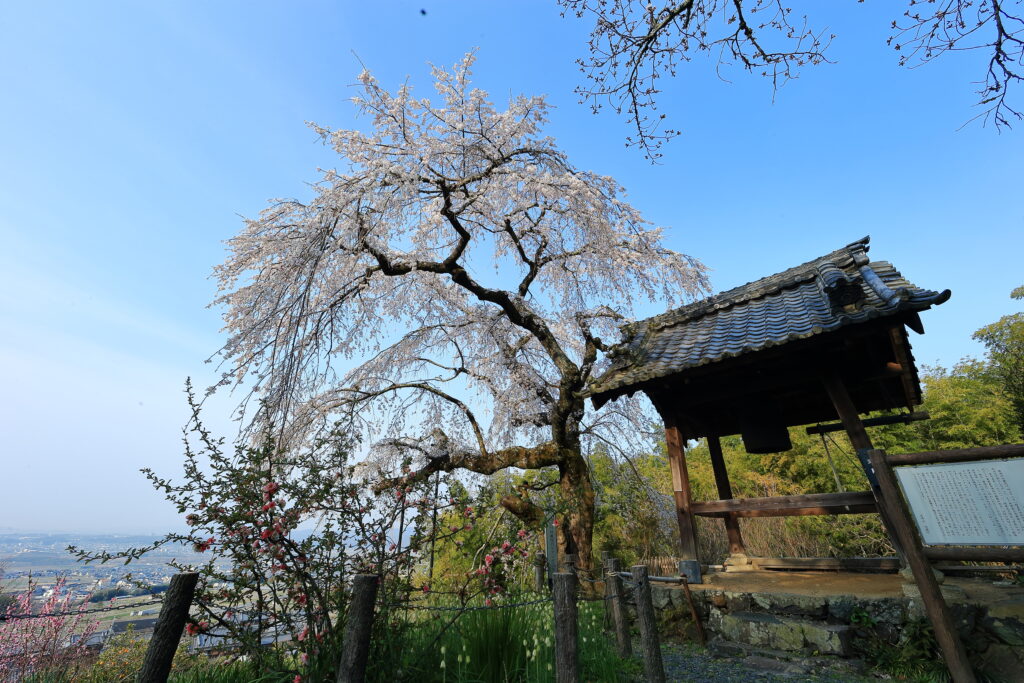
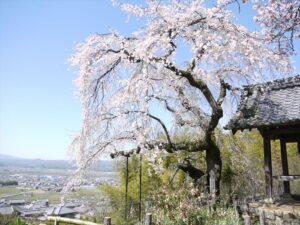
Jizozen-in Temple
Located at an elevation of over 100 meters and to the southwest of Tamatsuoka Shrine, Jizozen-in Temple offers a sweeping view over the plain of Ide Town. There is a weeping cherry tree with clouds of …
Then, continue straight along the way from the stone steps and torii gate you came through. Pass a vermilion torii gate, climb stone steps, and go through another stone torii gate to arrive at Tamatsuoka-jinja Shrine’s buildings. From there, as you go to the right, a winding path will appear with many vermilion torii gates lined up one after another. It will remind you of the famous shrine, Fushimi Inari Taisha in Kyoto City. There’s no crowd, so you can relax and enjoy your time freely.
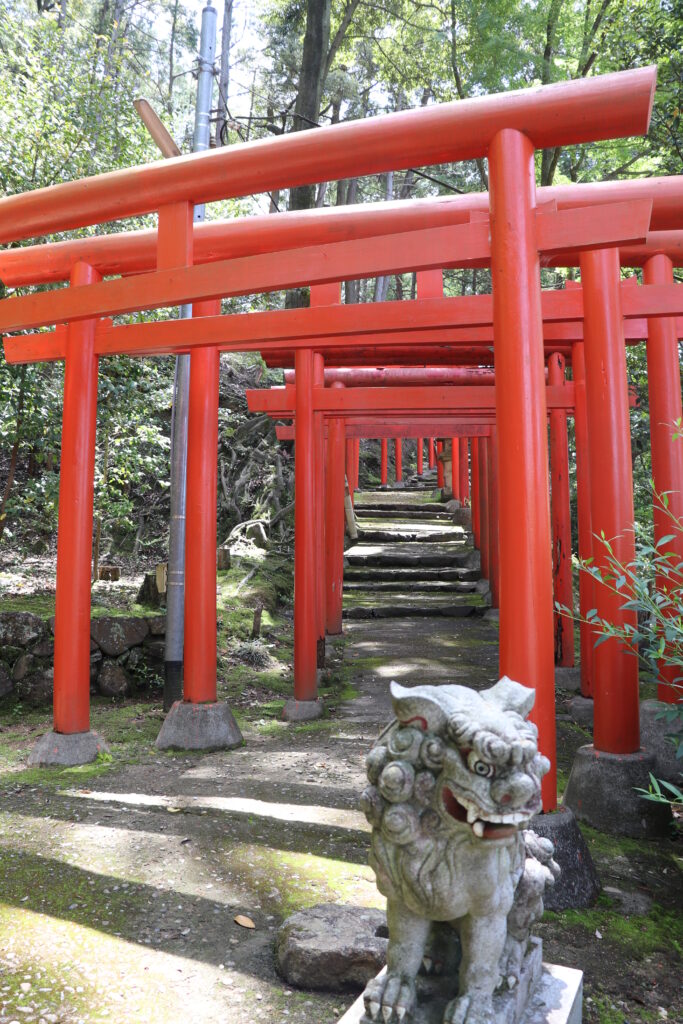
This beautiful shrine, home to a number of interesting deities, offers a magnificent landscape of the region with mountains. Furthermore, enveloped in dense foliage, it boasts a quiet and mystical atmosphere.
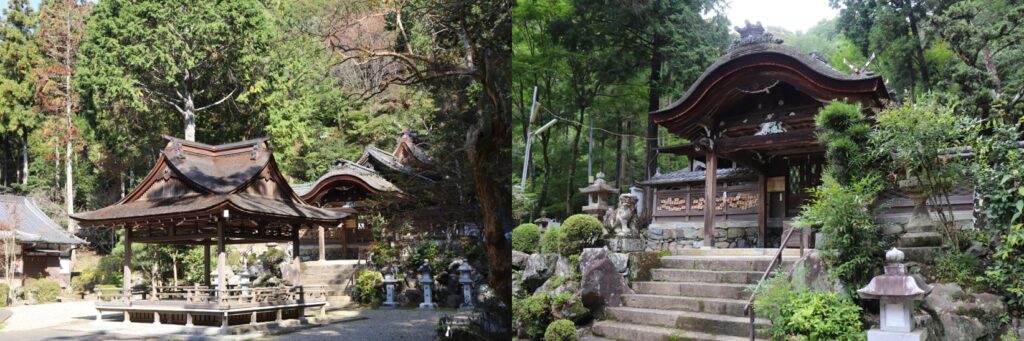
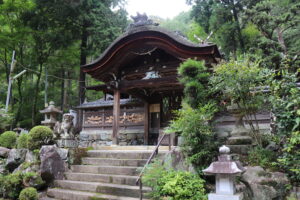
Tamatsuoka-jinja Shrine
This shrine is said to have originated in 540 when the female deity Shitateruhime no Mikoto descended to this place and was enshrined. In 731, Tachibana no Moroe established it as the local shrine. In …
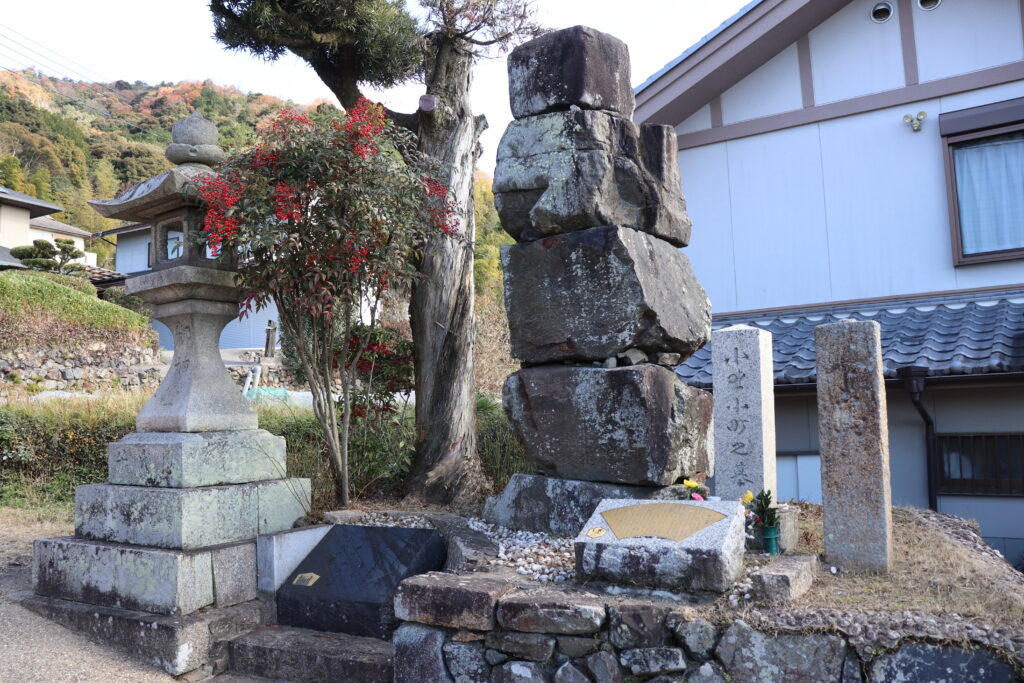
As you go back down the path, you’ll find an unassuming stone monument. It is said to be the gravestone of Ono no Komachi, who is famous as a legendary waka poet (a writer of classical Japanese poetry) and for her extraordinary beauty. Known for her poetry filled with the passion of love and melancholy, she is the subject of many tales. While she served the imperial court during the reign of Emperor Ninmyō (833-850), much of her life is shrouded in mystery, including the years of her birth and death. Among numerous theories, one suggests that she passed away at Ide Temple that once existed nearby. Yamabuki (Japanese kerria, or Japanese rose) in Ide appears in her waka poetry, and she is said to have spent her later years peacefully, strolling along the banks of the Tama River in Ide.
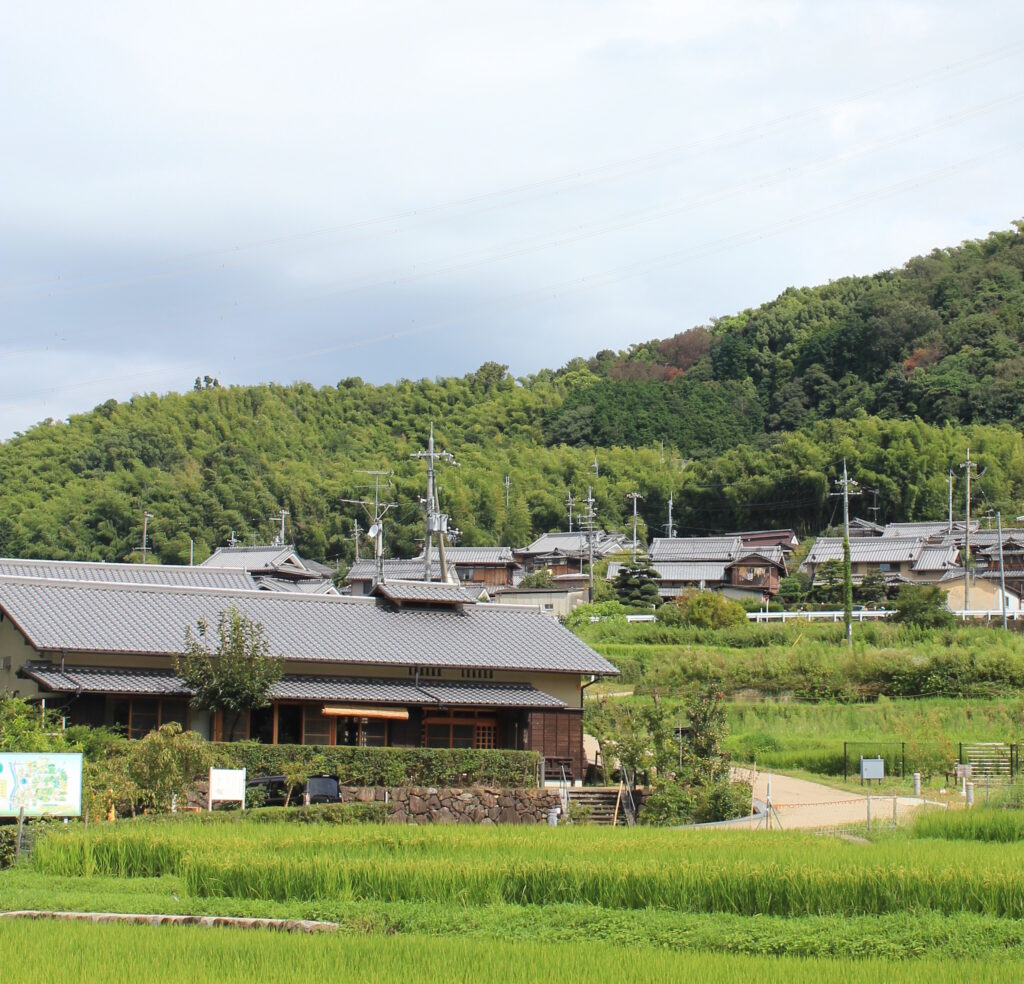
Continue a little further and cross Kyoto Prefectural Route 321. Soon, you’ll see Ide Town Machizukuri Center Tsubakizaka, surrounded by the open fields and rice paddies. This facility promotes the town’s charms through community gatherings, sales of local specialties, and more. Tourist brochures and maps are available, too. It’s a great rest stop for those enjoying walks, historical site visits, and cycling to refresh. You can also enjoy coffee here. The building is reminiscent of a relaxing, traditional Japanese farmhouse. It has an irori (open fireplace) inside, offering a peaceful ambiance. Don’t forget to enjoy the quintessential Japanese experience of basking in the sun on the engawa (traditional wood floor veranda).
*Currently closed, but due to re-open soon.
Ide Town Machizukuri Center Tsubakizaka
This facility promotes the town’s charms through community gatherings, sales of local specialties, and more. Tourist brochures and maps are available, too. It’s a great rest stop for those enjoying wa …
A Lovely Stroll Along Tama River
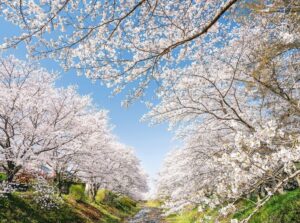
A short walk from there brings you to the Tama River. The river is so clear that it is one of the “Selected 100 Exquisite and Well-conserved Waters” of the Heisei Era (1989-2019). Since ancient times, the river has been woven into artworks such as famous poetry, stories and so on. In spring (around late March – early April), this peaceful riverside residential area offers a delightful 15-minute walk under a tunnel of cherry blossoms. From there, it’s another 5-minute walk to Tamamizu Station.
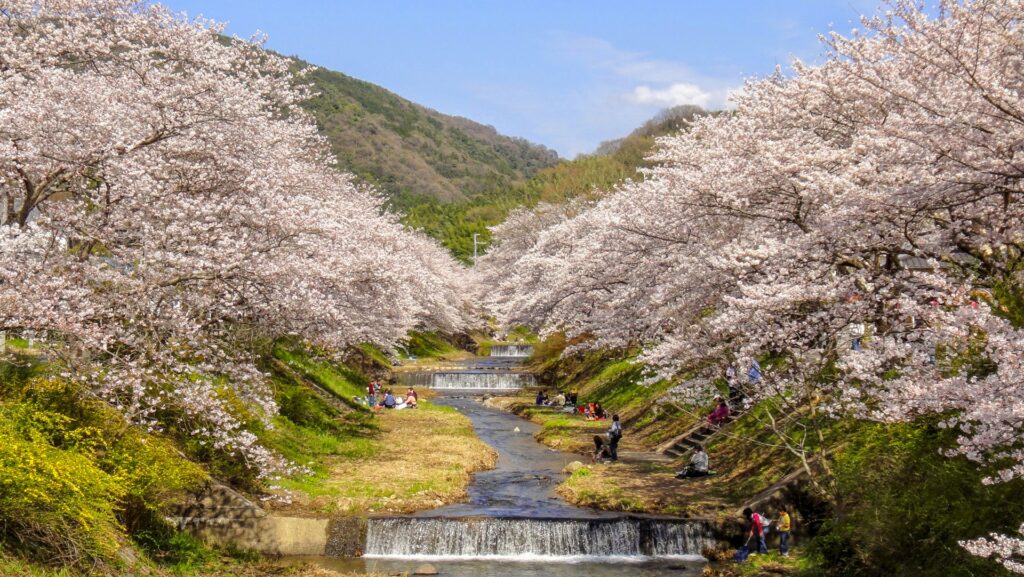
As a side note, the cherry tree-lined riverbanks stretch for about 1,500 meters. During the season of hanami (cherry-blossom viewing), a festival is held with the fascinating scenery, and many people enjoy it. You can even experience the magic of the blossoms illuminated in the evening. After these somei-yoshino (the most popular variety of cherry blossoms in Japan), the yamabuki flowers bloom, too. Also, adults and children alike can enjoy crossing the river by hopping across the stepping stones.
Cherry Blossoms Along Tama River
Tama River, located in Ide Town, is a wonderful hanami (cherry-blossom viewing) spot. Cherry trees form elegant rows for approximately 1,500 meters along both banks of the river, and amazing tunnels o …
Useful Information
While most of the hiking route is paved, a short part in the middle involves climbing a rough country path, so comfortable walking shoes are recommended. It’s best to prepare snacks and drinks beforehand, as there are few places to buy them along the way.
JR Nara Line offers regular train services between Yamashiro-Taga Station and Kyoto Station. You can take either a Local or Regional Rapid train (about 35-44 minutes; 510 yen). It’s the same from Nara Station (about 20-27 minutes; 330 yen). From Tamamizu Station, the end point of the walk, Rapid (or Miyakoji Rapid) trains operate to Kyoto Station (about 30 minutes; 510 yen), as well as Nara Station (about 13 minutes; 240 yen). Direct trains to Osaka Station are available from both Kyoto Station and Nara Station.
If you want to enjoy the local atmosphere by walking along old, country roads to explore the history and nature of this fascinating region, be sure to hike the Yamashiro-kodo Road. Let the journey inspire you, and create your own unique adventure!