One of the lovely things about Kyoto is that there’s something new to discover in every season here, whether it’s festivals, culinary delicacies, or natural beauty. When it comes to seasonal flowers, the prefecture is bursting with scenic spots to view colourful blossoms throughout the year, from the sea to the north, to the mountains and farmlands in its central region, to the tea fields in the south! Here are some of the top locations where you can admire Kyoto’s most beautiful blooms and nature, from the legendary cherry blossoms to fiery autumn leaves. Don’t forget to bring your camera!
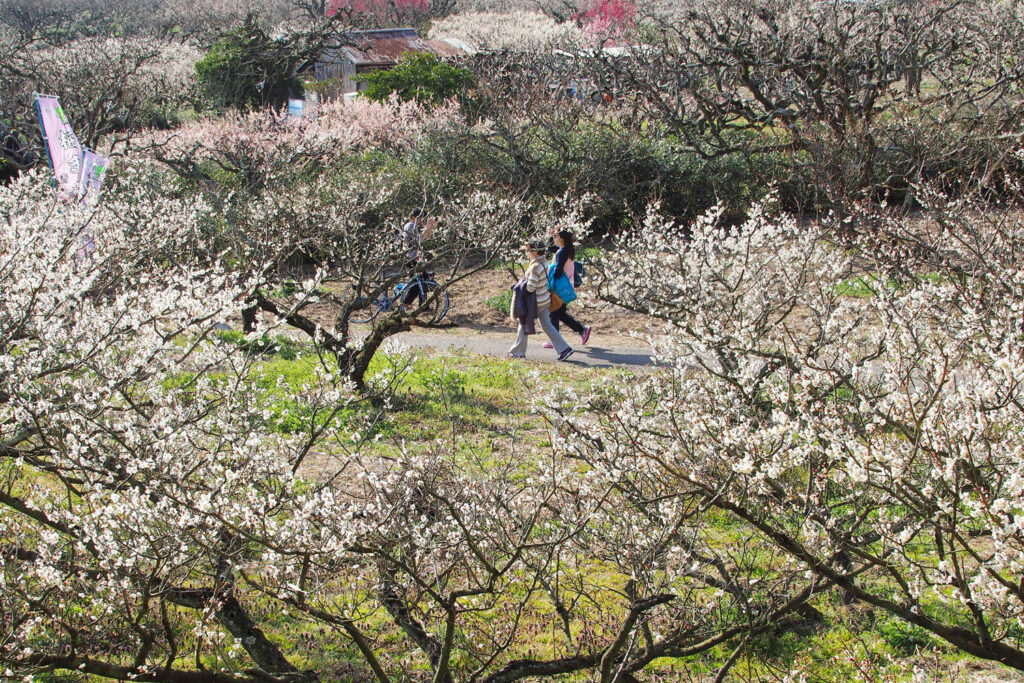
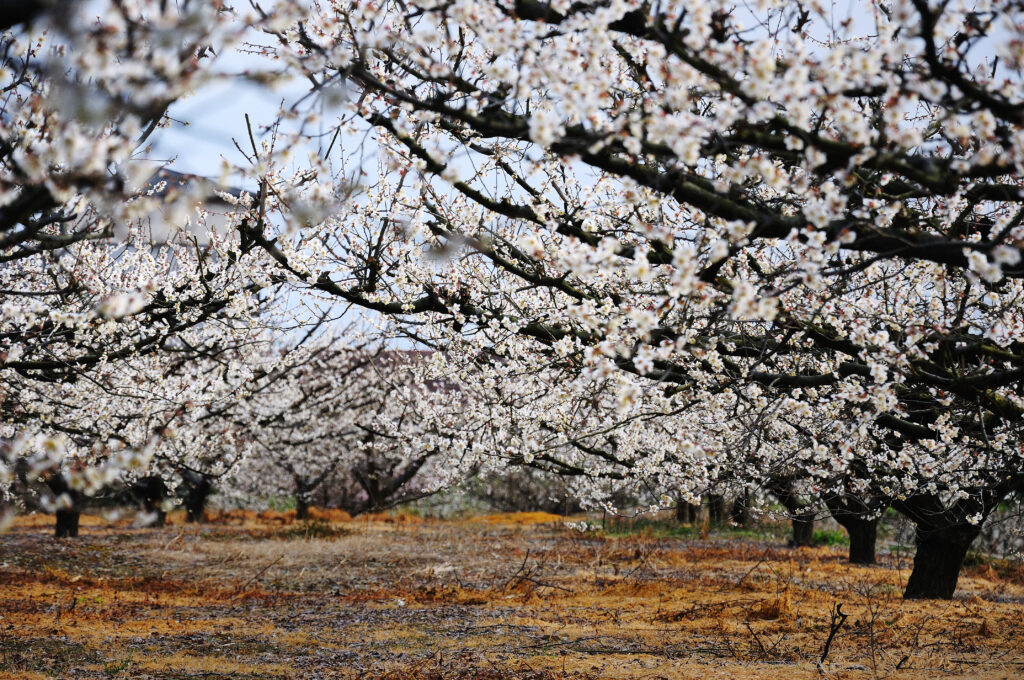
Ume (plum) blossoms are one of the flowers that herald the arrival of spring. Every year, people hold ume festivals throughout Japan to celebrate their blooming. Aodani-Bairin Plum Grove in Joyo City, southern Kyoto Prefecture, boasts many trees across about 20 hectares on the gentle slopes. Ume blossoms can also be found in the surrounding area, and their lovely colors, ranging from pure white to deep pink, soothe the heart with a delicate, sweet fragrance. This area’s ume blossoms appear in poetry of Emperor Godaigo’s son, which tells us that they have been beloved for a very long time.
Access:
About 20 min. on foot from Yamashiro-Aodani Station (JR Nara Line).
Aodani-Bairin Plum Grove
This ume (Japanese plum) grove, sprawling across the gentle hill along the Aodani River, has been a renowned plum blossom viewing spot since olden times. It’s even seen in poetry written by Emperor Go …
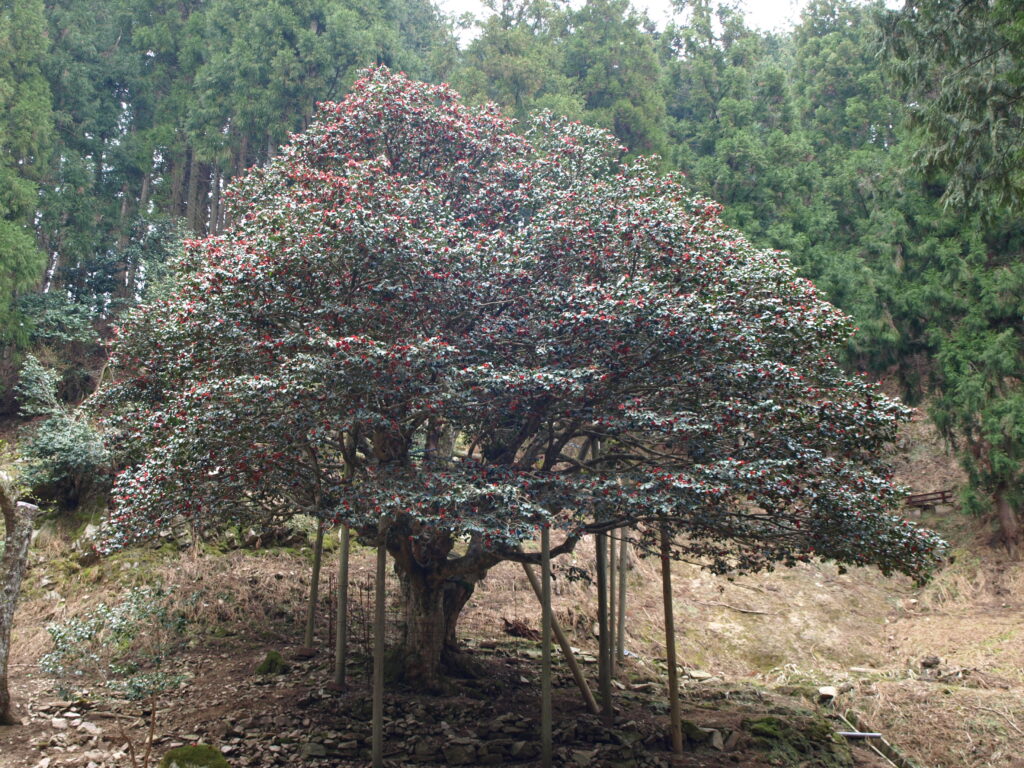
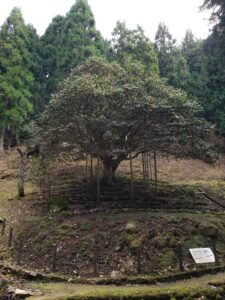
There are several places where you can view ornamental camellias (tsubaki) across Japan, however for something extra special visit Taki-no-Sennen Tsubaki Park in Yosano-cho. Here you will come across an enormous camellia tree that’s estimated to be over 1,000 years old, and still flowers today. These wild blossoms are a rare dark crimson in colour and, combined with the tree’s impressive size, make for a striking sight. Nearby you’ll find the Kaya Camellia Culture Museum, where you can admire camellia-related artwork and other floral displays.
Access:
The camellia tree is located at the end of a logging road, and best accessed by car using the address of the museum (1986 Taki, Yosano-cho, Yosa-gun, Kyoto).
Taki Thousand Year Camellia
Hidden away at the end of a logging road in Yosano, this camellia tree is about 1,000 years old, making it one of the oldest in the world. The tree is 9.7 meters tall, with a girth of 3.26 meters. A c …
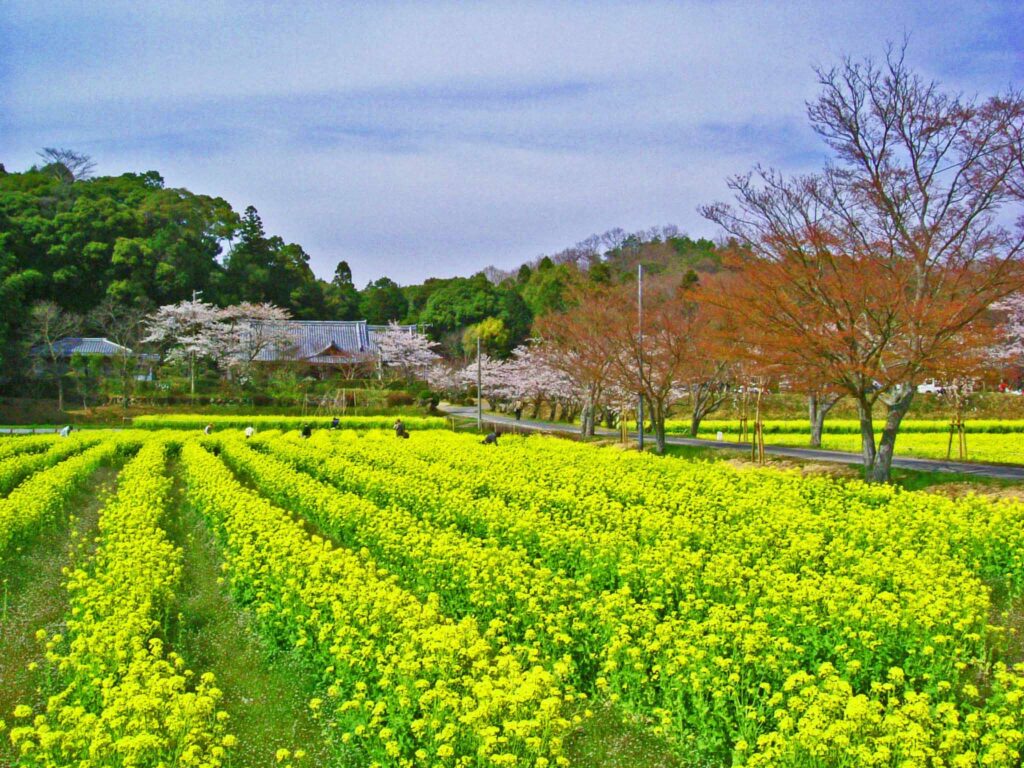
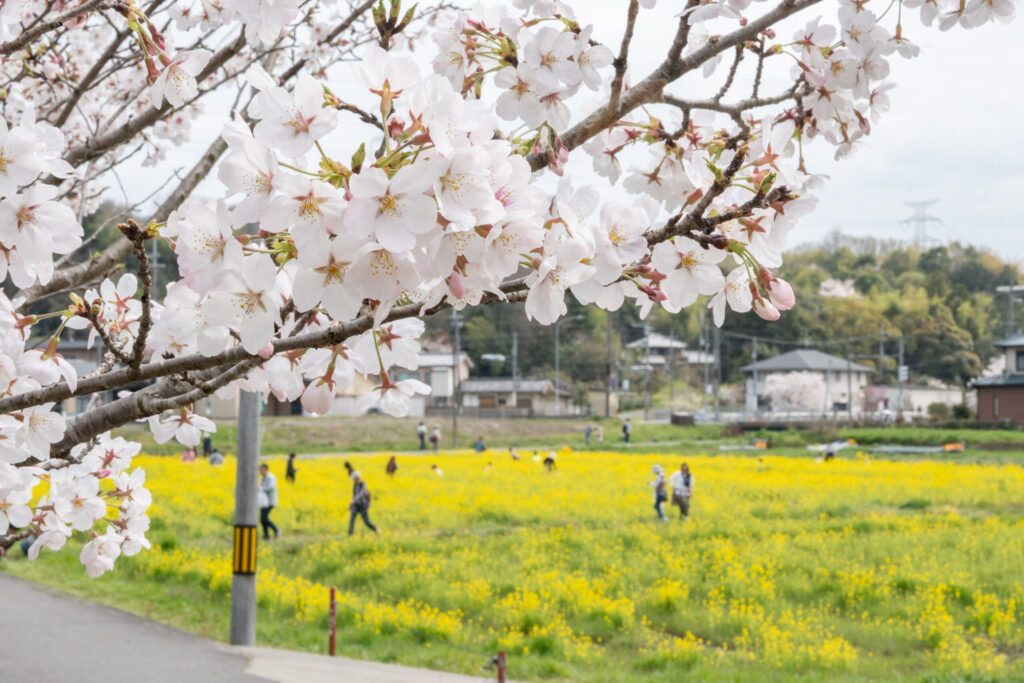
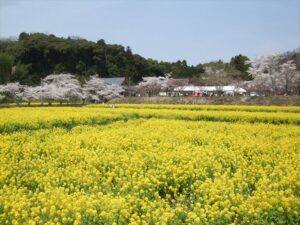
Nanohana (rapeseed blossoms) are spring flowers. Fields of nanohana can be seen throughout Japan. (Not just a feast for the eyes, they are often cultivated for food in the country.) One of the best places to view nanohana in Kyoto is at Omido Kannonji Temple in Kyotanabe City. In front of the temple, with over 1,300 years of history, you can admire bright yellow carpets of delicate flowers swaying in the breeze. When nanohana and cherry blossoms bloom together, the lovely combination of yellow and pink colors evokes the feeling of spring.
Access:
From Miyamaki Station (Kintetsu Kyoto Line) or JR-Miyamaki Station (JR Gakkentoshi Line), take the Nara Kotsu Bus and get off at Fugenji. Walk for about 5 minutes.
Omido Kannonji Temple
Omido Kannonji Temple is located in Kyotanabe City in the Kyoto Tea Country region. The temple is believed to have been founded over 1,300 years ago at the request of Emperor Tenmu. It has suffered fr …
Sakura, better known in English as cherry blossom, is undoubtedly the most iconic flower in Japan. The blossoms’ fleeting beauty is symbolic of the transient nature of life, and it’s impossible not to be captivated by the exquisite pale pink flowers when they come into bloom. There are a number of gorgeous locations to view cherry blossoms all across Kyoto prefecture, however many of those in the city centre get very crowded – so taking a trip off the beaten tourist track and to some lesser-known spots is especially good at this time of year.
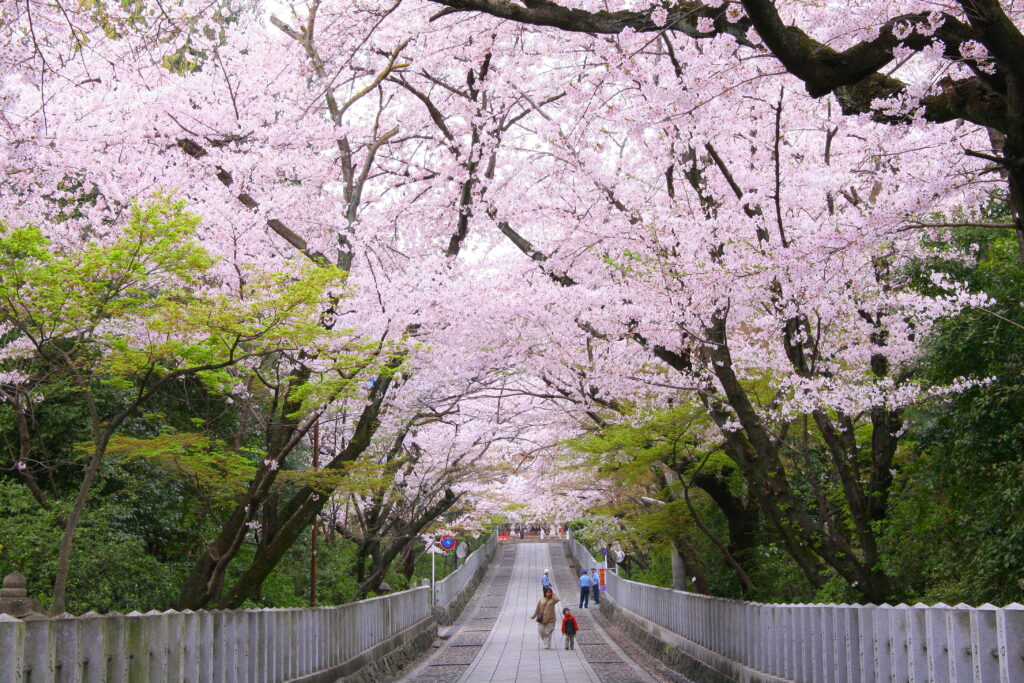
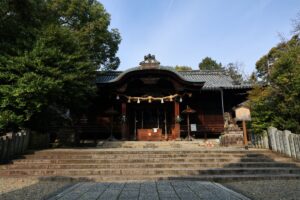
One great choice is Mukojinja Shrine in Muko City. Cherry trees line the long, paved path that leads up from the magnificent stone torii gate at the entrance, transforming the walkway into a magical tunnel of soft pink flowers when they bloom.
Access:
10-minute walk from Nishi-muko Station on the Hankyu Kyoto Line.
Mukojinja Shrine
Located in Muko City in the Otokuni Bamboo Grove area of Kyoto Prefecture, Muko shrine is an ancient shrine founded in 718 and is said to be a shrine for good harvest, academic achievement, and traffi …
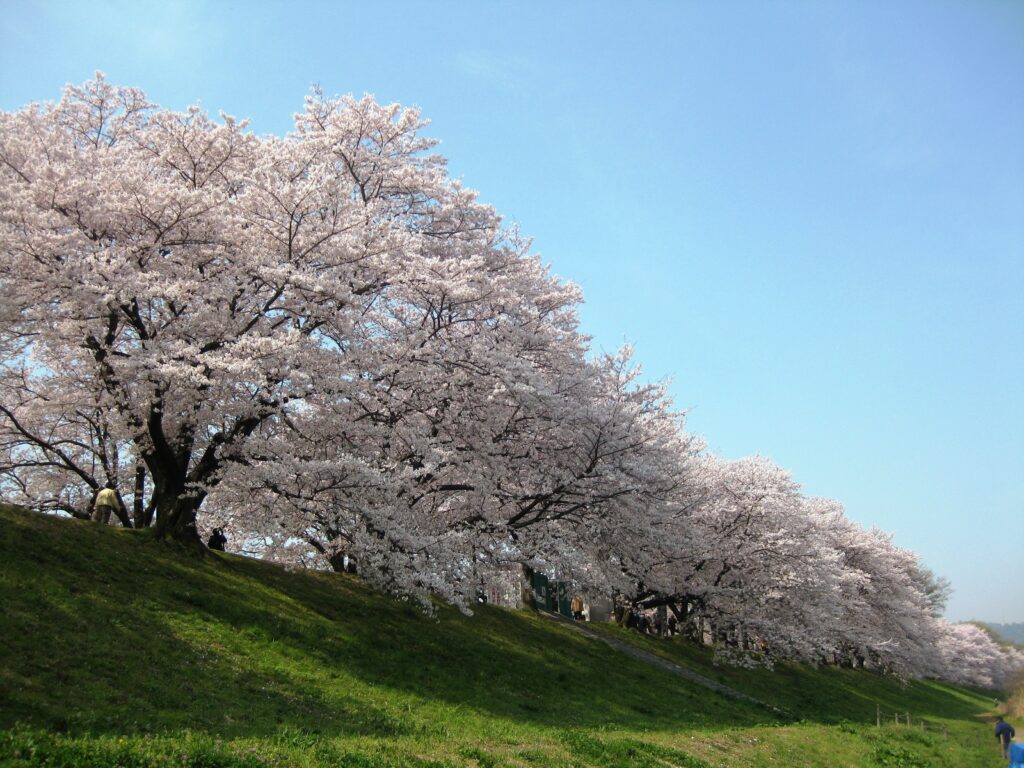
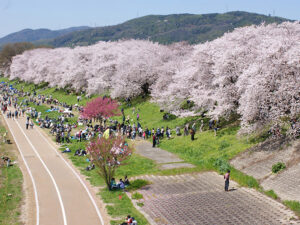
For a slightly longer stroll, head to the Sewaritei area (in Yodogawa Riverside Park) in Yawata City. The path with cherry trees on both sides stretches for approximately 1.4 kilometers, offering a delightful stroll under a tunnel of pale pink blossoms. Feel free to spread out a blanket and have a picnic on the grassy riverbank alongside the path, too. Also, be sure to take in the magnificent view from the observation tower.
Access:
About 10 min. on foot from Iwashimizu-hachimangu Station (Keihan Main Line).
The Sewaritei Area in Yodogawa Riverside Park
The Sewaritei area is located north of Iwashimizu-hachimangu Station (Keihan Main Line), immediately after crossing Goko-bashi Bridge. The cherry blossom tunnel stretches for approximately 1.4 kilomet …
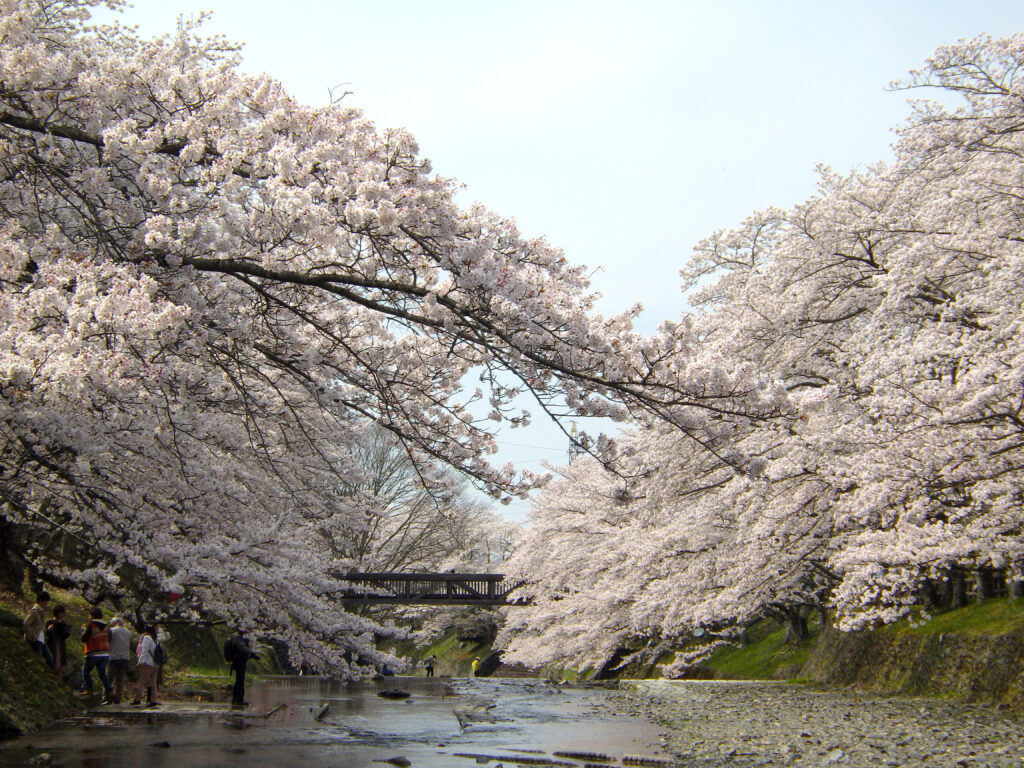
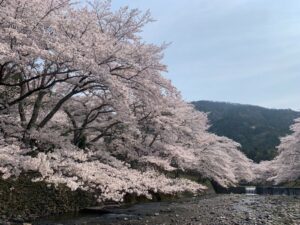
Another beautiful hanami (flower viewing) spot by the river is Yawaragi-no-michi Sakura Park in Kameoka City. Around 1,500 Somei Yoshino cherry trees grow along both banks of the Nanatani-gawa river, and in the park itself you can wander among 280 cherry trees of 28 varieties or attend light-up events after dark.
Access:
Take the Kameoka City Bus from Kameoka Station (JR Sagano Line) and alight at Nanatanigawa.
Nanatani-gawa River (Yawaragi Road)
Approximately 1,500 blossoming Somei-yoshino cherry trees line both banks of the Nanatani-gawa River, extending for about 1 km and making this a popular blossom-viewing location. Adjacent to the river …
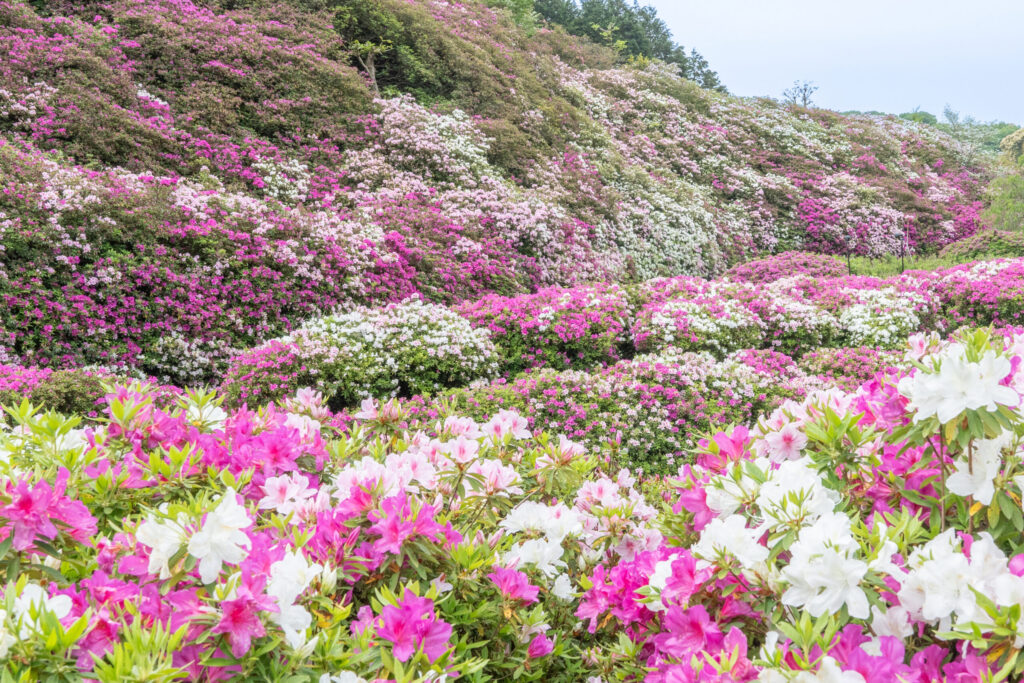
Kyoto offers many spots to admire the beauty of azaleas. Mimurotoji, aptly known as Hana no Tera (the flower temple), is one of them. Located in Uji City, azaleas bloom in profusion around late April to early May. A wander through the garden paths immerses you in a breathtaking ocean of approximately 20,000 blooming azaleas.
Access:
Get off at Mimurodo Station (Keihan Uji Line), and walk for 15 minutes or take a taxi.
Mimurotoji
The Mimurotoji temple is located in Uji City in the Kyoto Tea Country region, southern Kyoto Prefecture. This temple has a long history, and its Treasure House enshrines Buddhist statues including Imp …
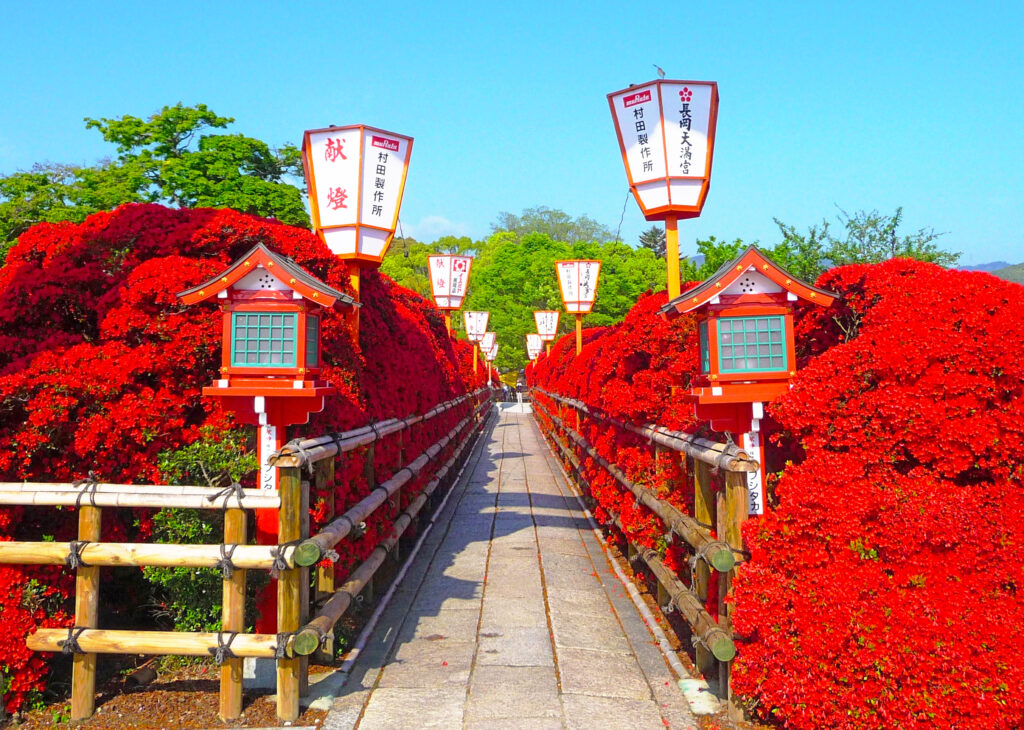
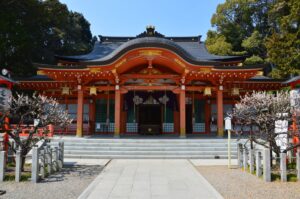
Another fantastic spot is Nagaoka-kyo City’s Nagaoka Tenmangu Shrine, which has a 200-metre long entryway lined with Kirishima azalea trees. Their distinctive deep crimson blossoms match the red-and-white lanterns dotted along the edges, creating a wonderfully picturesque pathway.
Access:
20-minute walk from the west exit of Nagaokakyo Station on the JR Kyoto Line, or 10-minute walk from the west exit of Nagaoka Tenjin Station on the Hankyu Kyoto Line.
Nagaoka Tenmangu Shrine
Nagaoka Tenmangu is a shrine in Nagaokakyo City, Kyoto Prefecture, not far from Kyoto City and close to Uji—the region of Kyoto famous for matcha green tea—and the famous Otokuni Bamboo grove. Nagaoka …
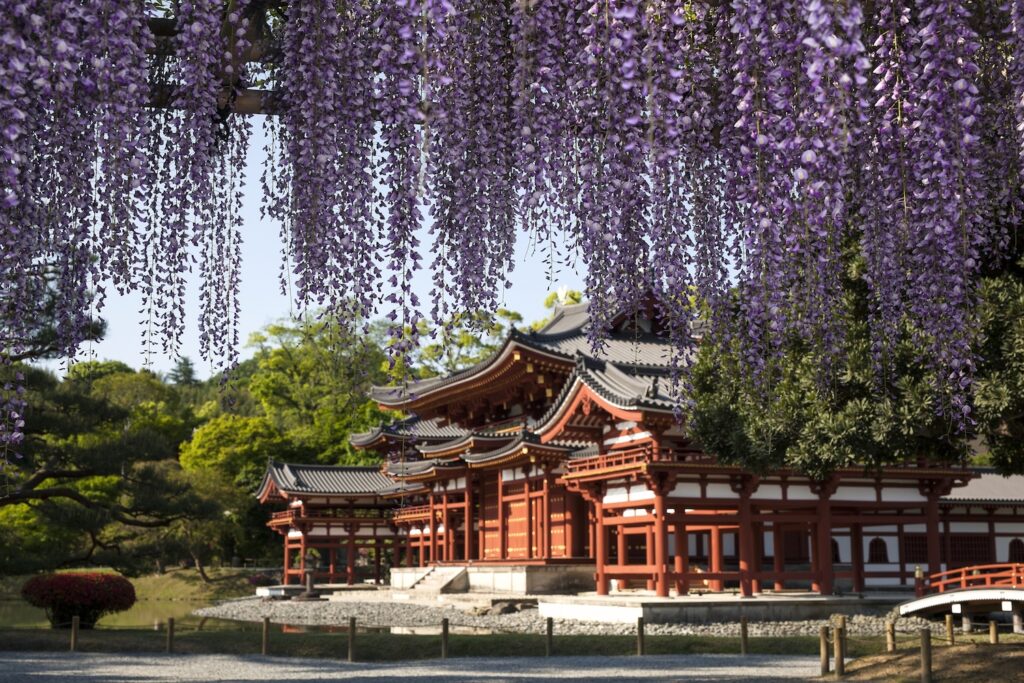
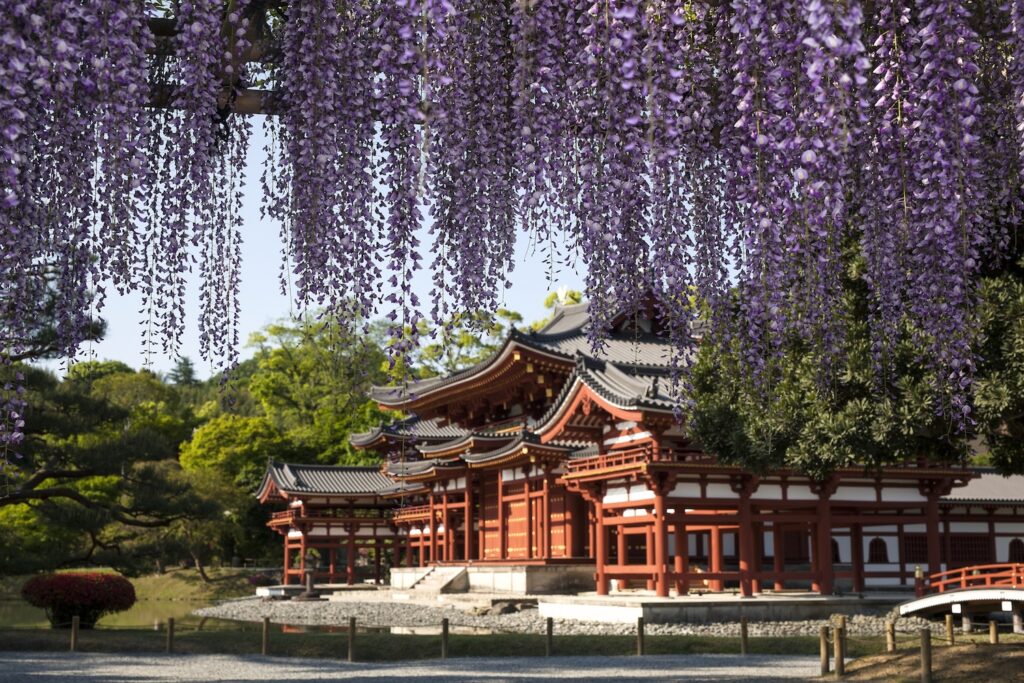
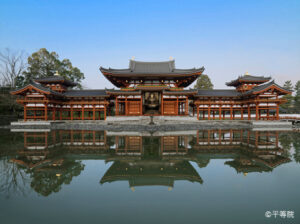
Fuji (wisteria), with its noble purple hue and gracefully cascading blossoms, has been admired in Japan since ancient times. One of the best fuji spots is the resplendent Byodoin Temple, a World Heritage site in Uji City. Its Phoenix Hall is famous for being depicted on the face of the 10-yen coin. The temple has three fuji trellises, and each tree creates a spectacle of an elegant waterfall of the flowers.
Some even grow over a meter long, which are breathtaking. Ancient trees about 300 years old evoke a sense of awe. Gazing at the central Phoenix Hall through fuji gives visitors the feeling of being lost in a beautiful work of art.
Access:
About 10 min. on foot from Uji Station (Keihan Uji Line), or Uji Station (JR Nara Line).
Byodoin Temple
Byodoin Temple, located on the west bank of the Uji River, shows the historical glory of the Fujiwara clan’s prosperity. Originally Minamoto no Toru’s villa, it was later acquired by Fujiwara no Michi …
Irises: end of April to mid-May & Oriental Paperbush: end of March to mid-April
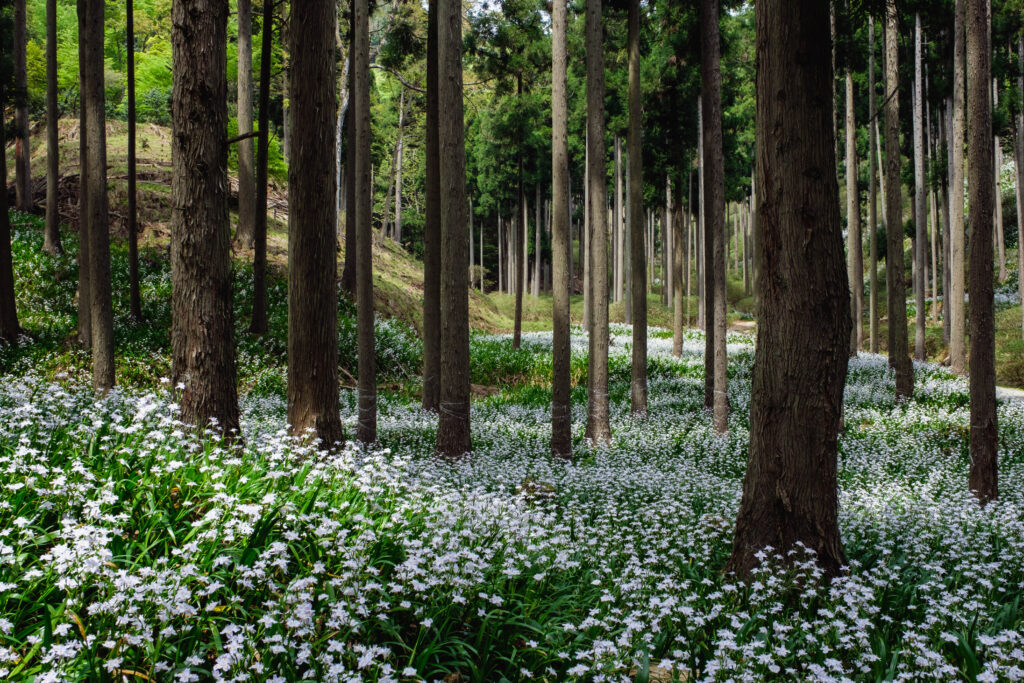
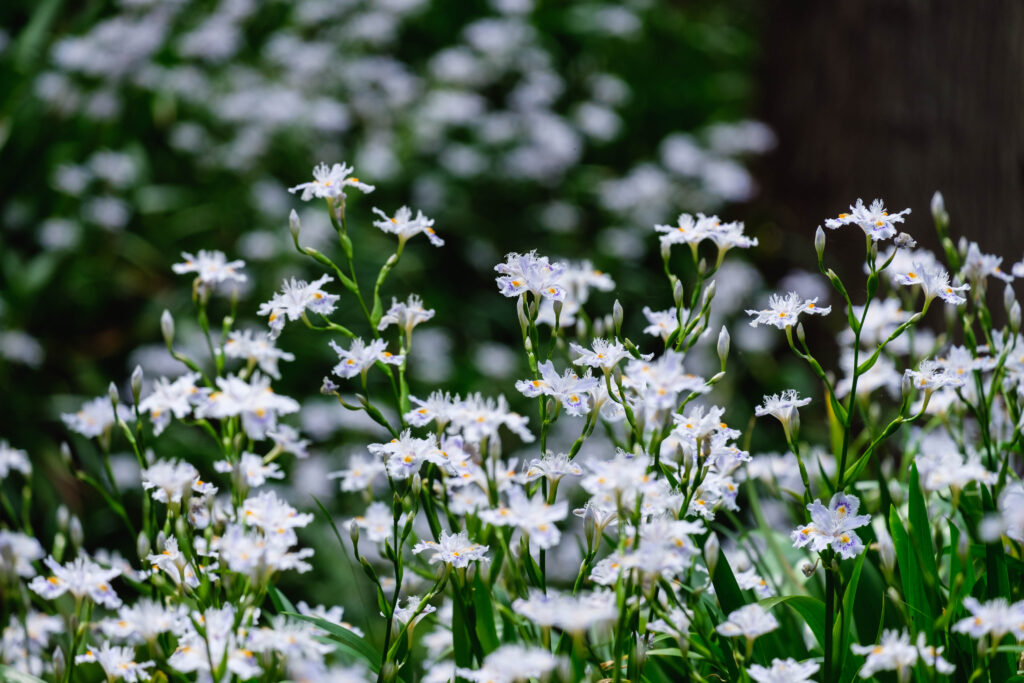
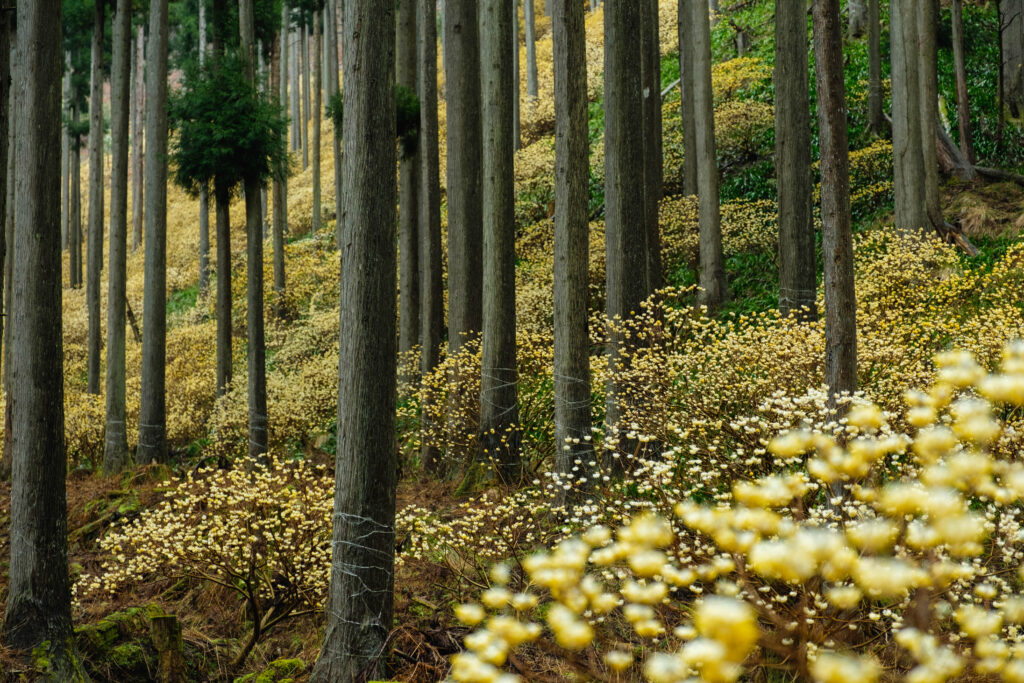
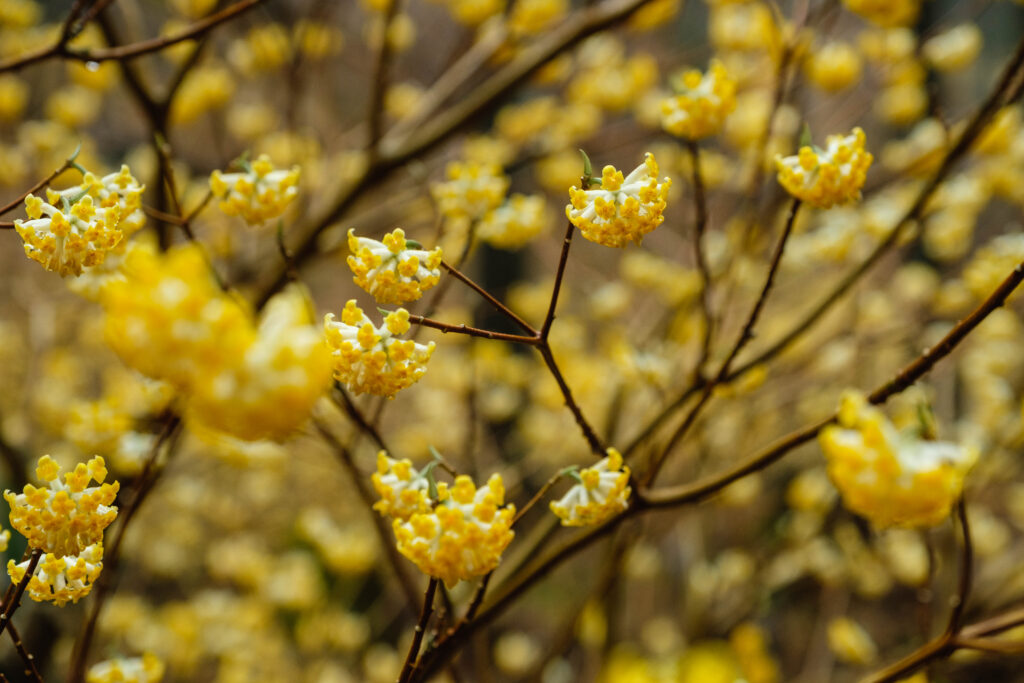
In the idyllic woodland around Oitomi in Ayabe City is one of Kyoto prefecture’s best-kept floral secrets. Stroll through the area in the first half of May, and you’ll be treated to the spectacular sight of countless fringed irises (shaga) blanketing the forest floor. You can even find a 400-metre-long ‘corridor of irises’, which looks just like a scene from a fairytale. Be sure to take a close look at these pretty flowers to admire the splashes of purple and yellow on the white petals, as well as their intricate fringed edges. The woods are also worth visiting between the end of March to mid-April, when they are transformed into a sea of buttery yellow as countless oriental paperbush flowers (mitsumata) come into bloom.
Access:
The forest is best accessed by car – from the Yamake Intersection on National Route 27, enter Prefectural Road 1 and go straight to the border of Fukui Prefecture.
Fringed Iris & Oriental Paperbush Meadow
Oitomi is a town in Ayabe City in the north of Kyoto Prefecture, where there’s a forest with dense fields of oriental paperbush (mitsumata) and fringed iris (shaga, Iris Japonica) flowers. These field …
Roses: late May to early June, and mid-October to mid-November
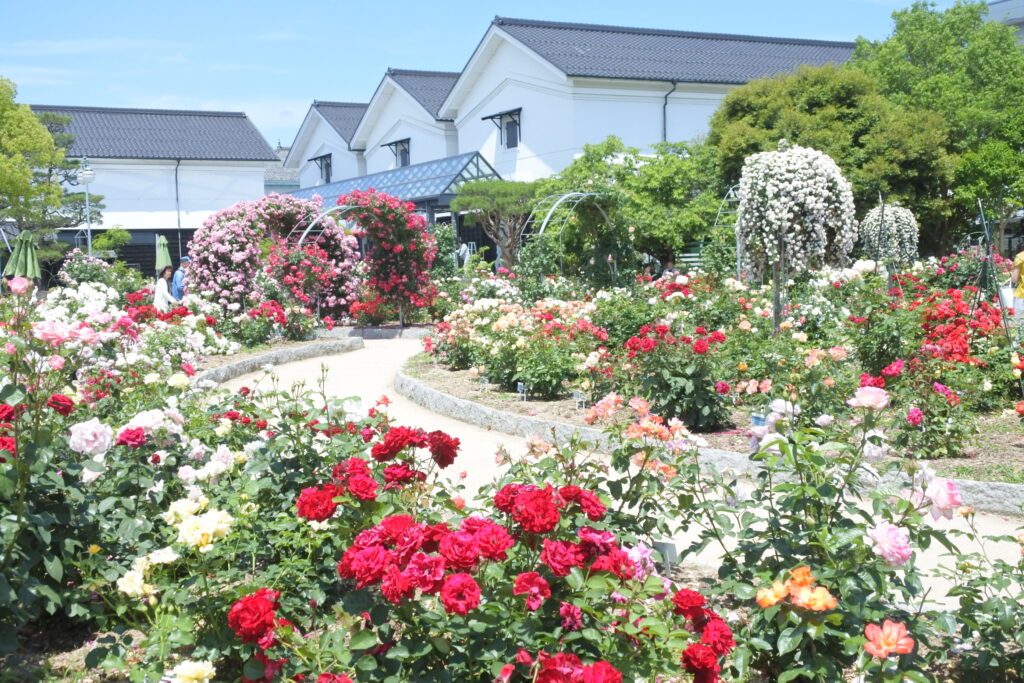
Roses (bara) are popular flowers all across the world, and Japan is no different. The Ayabe Rose Garden in Ayabe City was created by local volunteers, and has approximately 1,200 roses of an amazing 120 varieties blooming within its grounds. The most notable of these is the ‘Anne’s Rose’ variety, which grows in the central flowerbed. This was carefully cultivated from seedlings received from Anne Frank’s father, and lovingly tended ever since then as a symbol of peace.
The garden also has a system in which visitors can become partial “owners” of the garden. By paying 3,000 yen to sponsor a plant, visitors can leave a small signboard with their name and a message, which will stay in the garden for three years.
Access:
10-minute walk from the north exit of Ayabe Station (JR Sanin Line).
Ayabe Gunze Square
Ayabe Gunze Square consists of three facilities, Ayabe Specialty Store, Gunze Museums, and Ayabe Rose Garden. People who visit Ayabe’s Gunze Square will have plenty to do, from touring the flower gard …
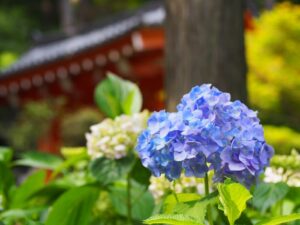
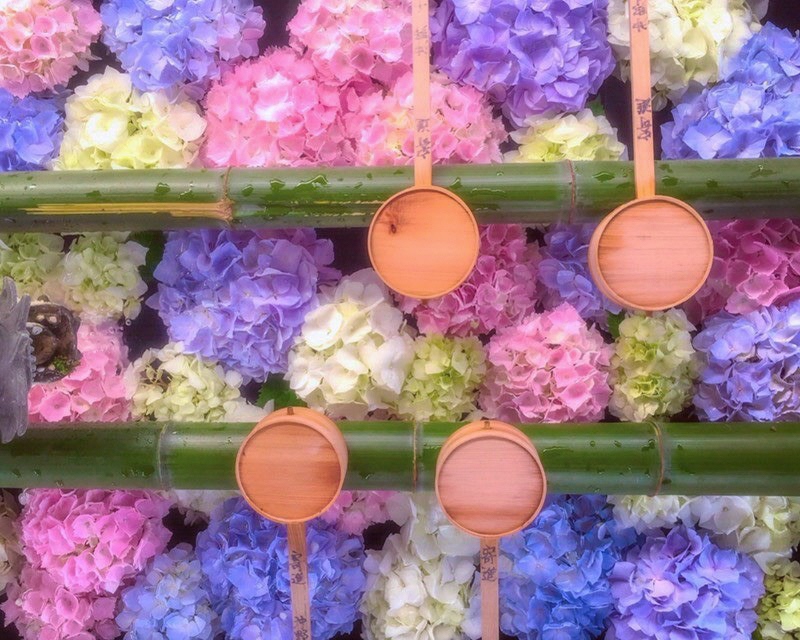
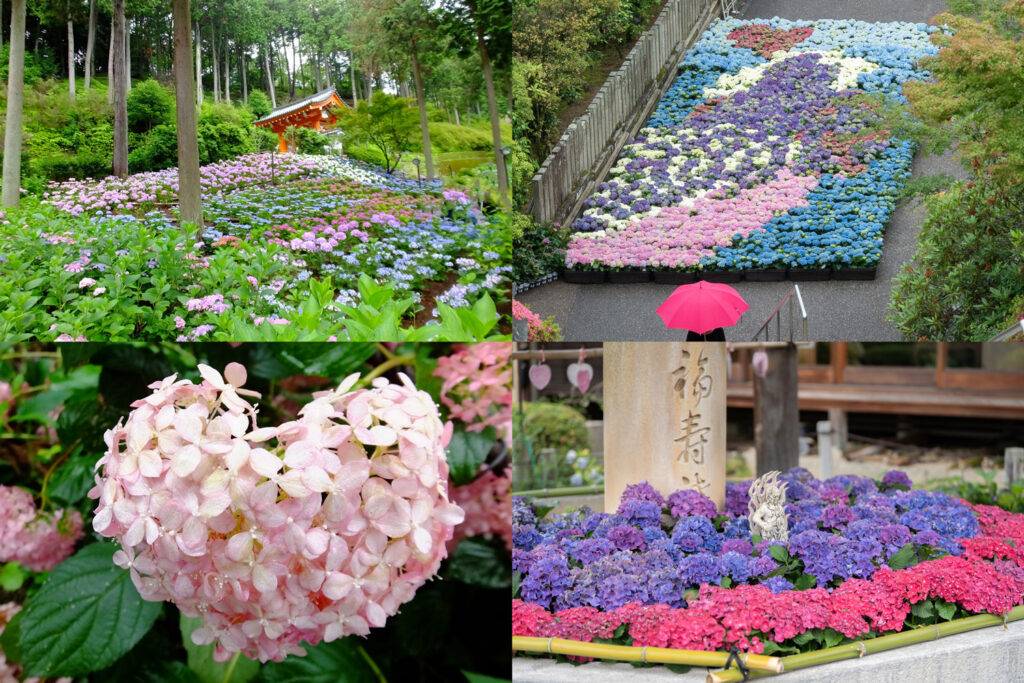
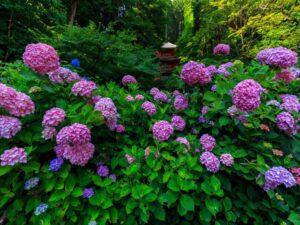
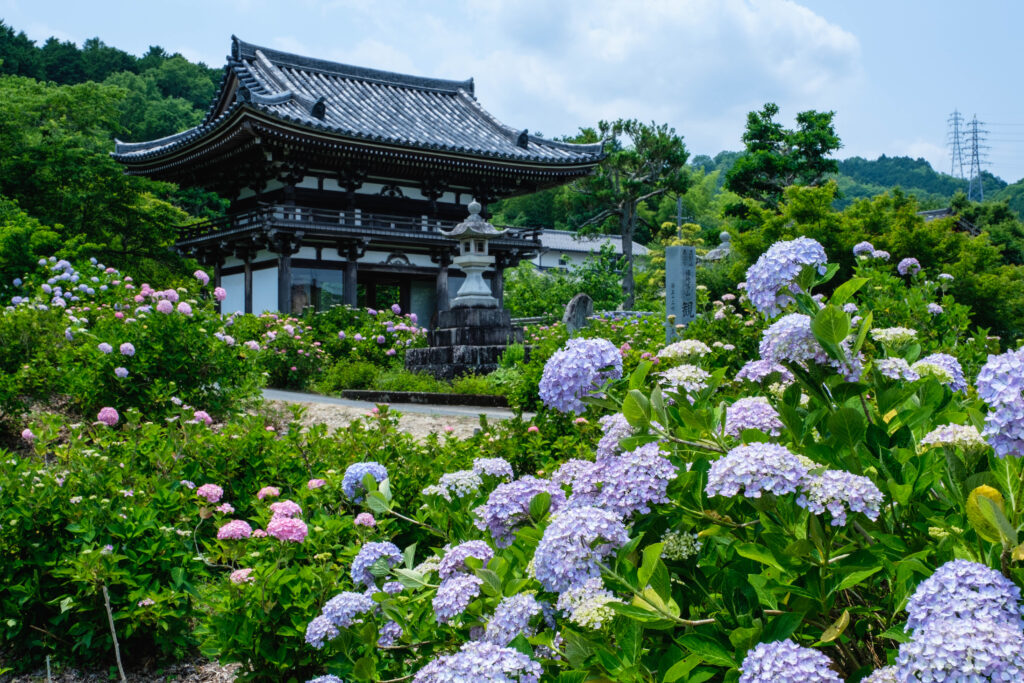
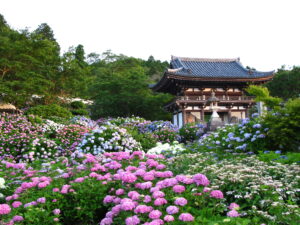
Around June, the hydrangea garden of the Mimurotoji temple in Uji City transforms into a sea of vibrant colors with about 20,000 hydrangea bushes among Japanese cedar trees. Stepping into this scene is like entering a wonderful world of a fairy tale, where you can immerse yourself in the beauty of nature. And if you’re lucky, you might stumble upon a naturally formed heart-shaped hydrangeas. This temple is famous for the heart-shaped hydrangeas, for there is even a rumor that if you find one, your love will come true. Also, the lit up hydrangeas create a magical atmosphere. (For the illumination, be sure to check the event dates in advance.)
Access:
Get off at Mimurodo Station (Keihan Uji Line), and walk for 15 minutes or take a taxi.
Yanagidani Kannon (Yokoku-ji Temple)
Yanagidani Kannon (Yokokuji Temple) is located in Nagaokakyo City, not far from Kyoto City and close to the famous Otokuni Bamboo Grove, where the main attraction is the eleven-faced, thousand-armed s …
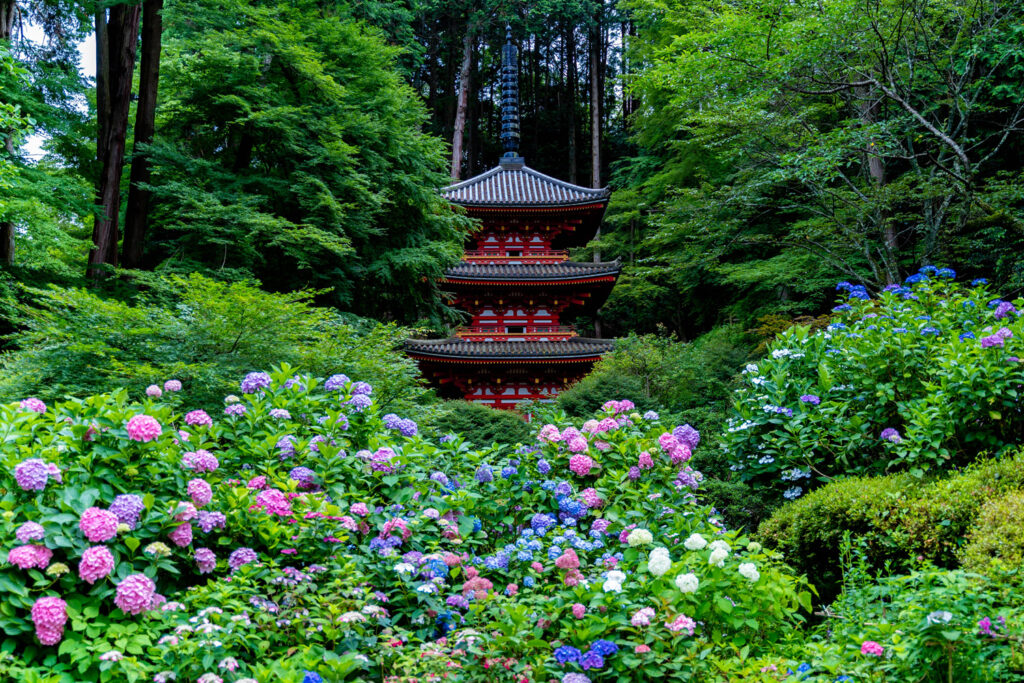
Another temple famous for its hydrangeas is Gansenji Temple in Kizugawa City, in the south part of Kyoto Prefecture, next to Nara. Here you can view around 5,000 hydrangea plants of 30 varieties, creating a stunning scene against a backdrop of the vermillion Three-storied Pagoda surrounded by the greenery.
Access:
From Kamo Station (JR Kansai Line, Yamatoji Line), take Kizugawa City Community Bus towards Kamoyamanoie for about 16 minutes, and get off at Gansen-ji Temple.
Gansenji Temple
Gansenji Temple is an ancient Buddhist temple in Kamo-cho, Kizugawa City, the southernmost part of Kyoto Prefecture. It’s located in the tea-producing region of Kyoto. The temple was founded in 729. T …
Tanshu Kannon-ji Temple in Fukuchiyama City is also much celebrated for its hydrangeas, with over 10,000 flowers of 100 varieties growing within its grounds. Wandering among the masses of blue, purple, white and pink blossoms surrounding the temple buildings is nothing short of magical.
Access:
15-minute walk from JR Isa Station on the San’in Line.
Tanshu Kannon-ji Temple
Located in Fukuchiyama, Tanshu Kannon-ji Temple was founded in 720 by the Indian monk Hodo. In 961 the monk Kuya built the seven temple buildings (a formation known as shichido garan), and it became t …
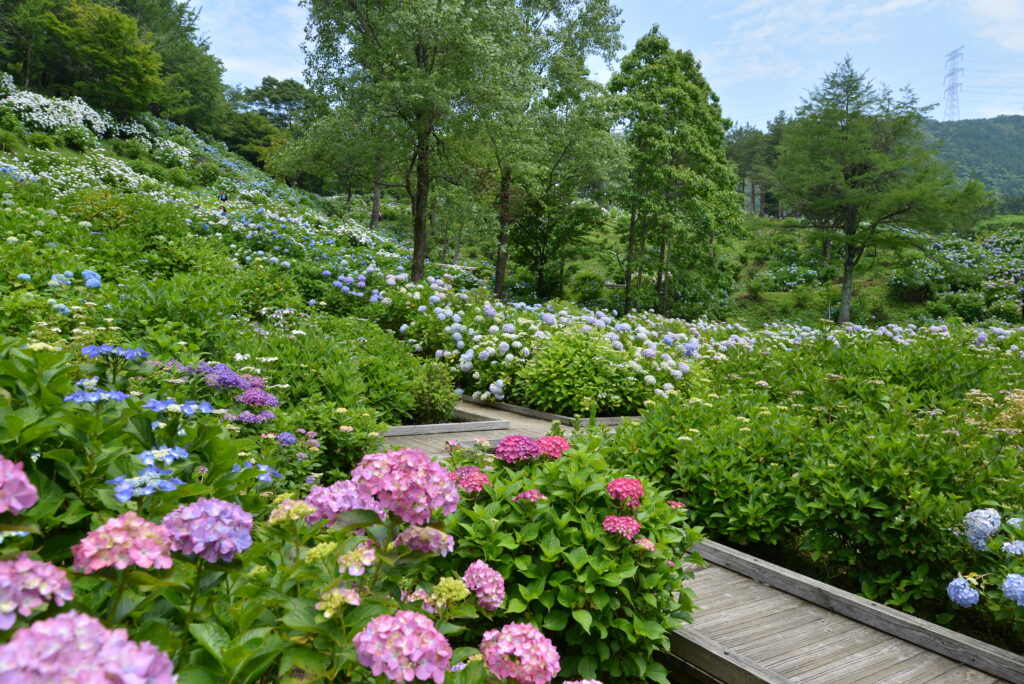
To really lose yourself among the blossoms, pay a visit to Maizuru Nature and Cultural Park in Maizuru City. The park’s hydrangea garden is bursting with a staggering 100,000 hydrangea flowers in 100 different varieties, and you can enjoy a pleasant afternoon strolling along the paths through the multicoloured blossoms.
Access:
From JR Higashi Maizuru Station on the Maizuru Line, take the Kyoto Kotsu Bus Mihama Line to the Natural Culture Garden bus stop.
Maizuru Nature and Cultural Park
Maizuru Nature and Cultural Park is a park blessed with the rich nature of the Oura Peninsula, in the northeastern part of Maizuru City. There is a camellia garden (approximately 30,000 camellia of 1, …
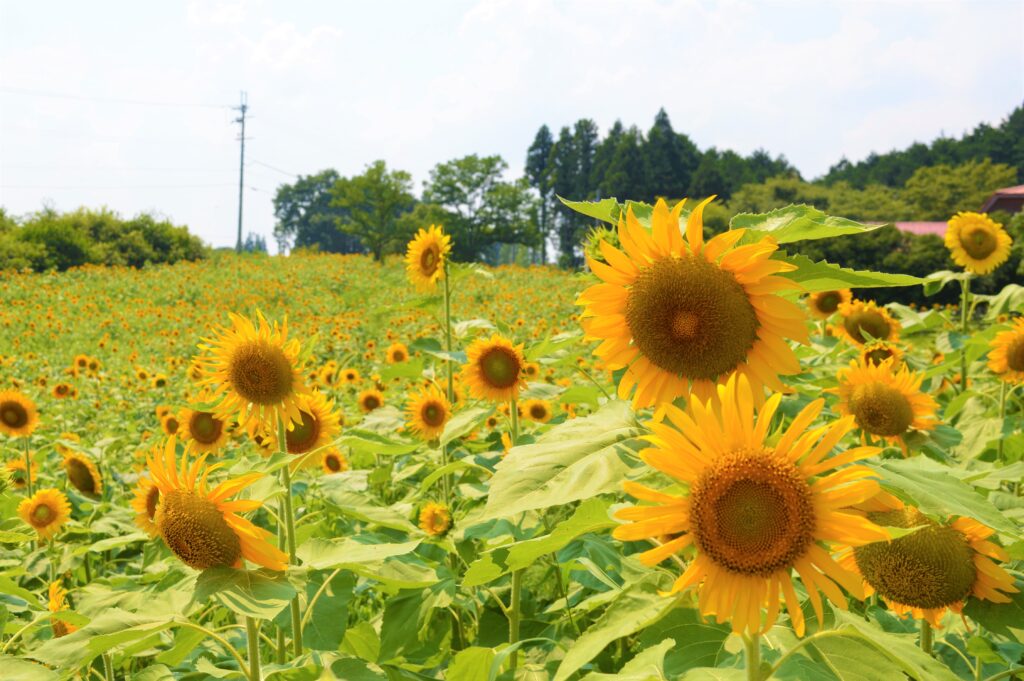
In Japan, sunflowers (himawari) are synonymous with summer – and it’s easy to see why when you catch a glimpse of their tall, bright yellow flowers outlined against a clear blue sky. The Ayabe Fureai Bokujo Ranch in Ayabe City is among the best locations to enjoy them in Kyoto. The farmland boasts fields of around 50,000 cheery sunflowers stretching out across the hillside, and as an added bonus you can interact with the ranch’s cats, rabbits, goats, sheep and other animals while you’re visiting!
Access:
45-minute walk from JR Ayabe Station on the San’in Line, or you can drive to 81 Hinokimae, Iden-cho, Ayabe City and use the free parking lot on site
Lotuses: mid-July to mid-August
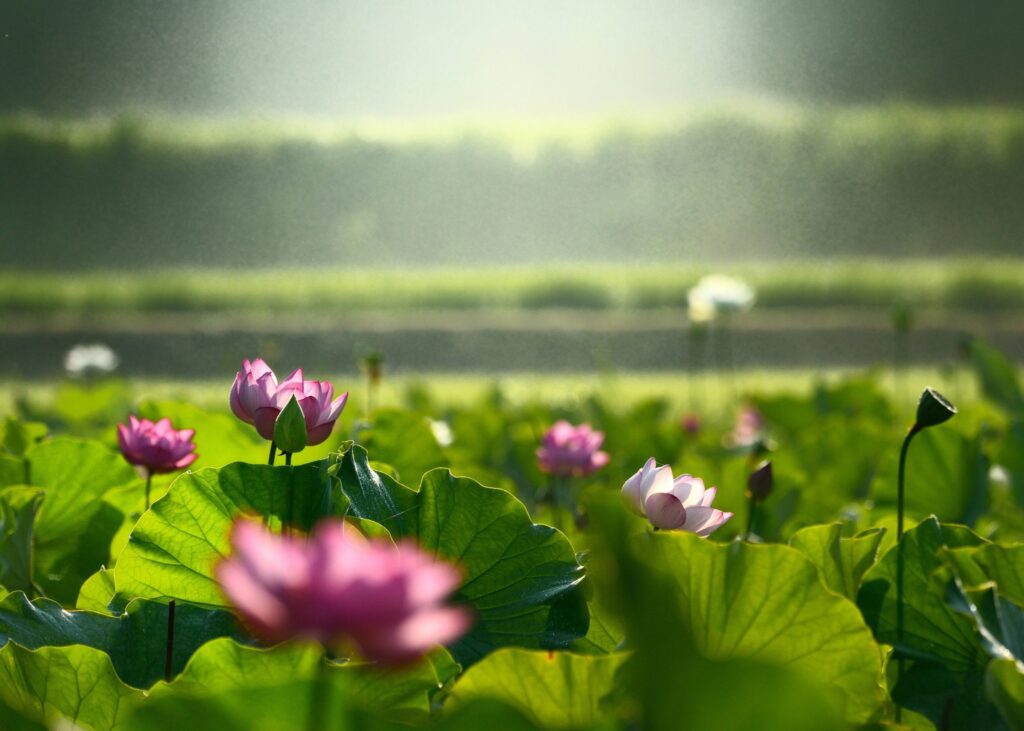
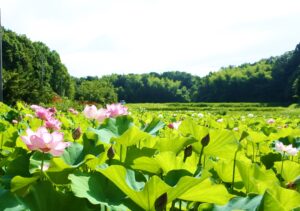
Famous as a symbol of enlightenment, lotuses can be viewed across Kyoto during the summer. A great place to see them is Ryogon-ji Temple in Ayabe City, which is also known as the Temple of Crows due to the paintings of the birds and the four seasons adorning its sliding paper doors. The sight of the soft pink and white flowers popping up on their sturdy stems at this temple, their petals unfolding amid a sea of green leaves, is sure to bring you some inner serenity.
Access:
From JR Ayabe Station on the San’in Line, take the Aya bus (Shigananboku line) to Tachi and walk east for 15 minutes.
Ryogon-ji Temple
Ryogon-ji Temple, in Ayabe City, Kyoto Prefecture, is famous for the thousands of azaleas that bloom in the spring, and lotuses in the summer. In fact, Ryogon-ji Temple is the second of the 25 Most F …
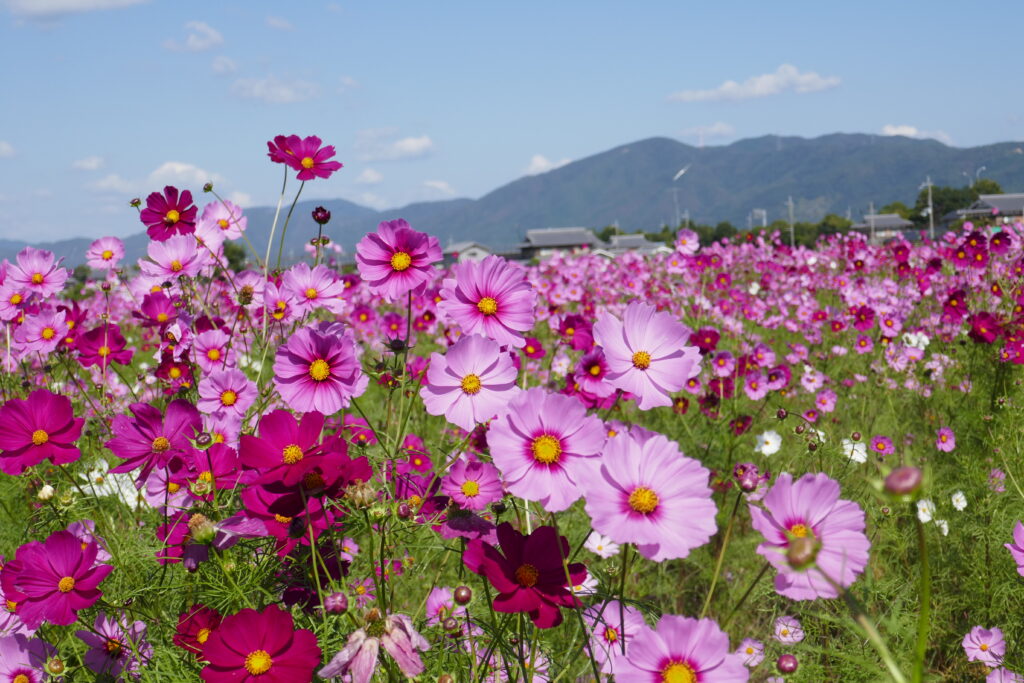
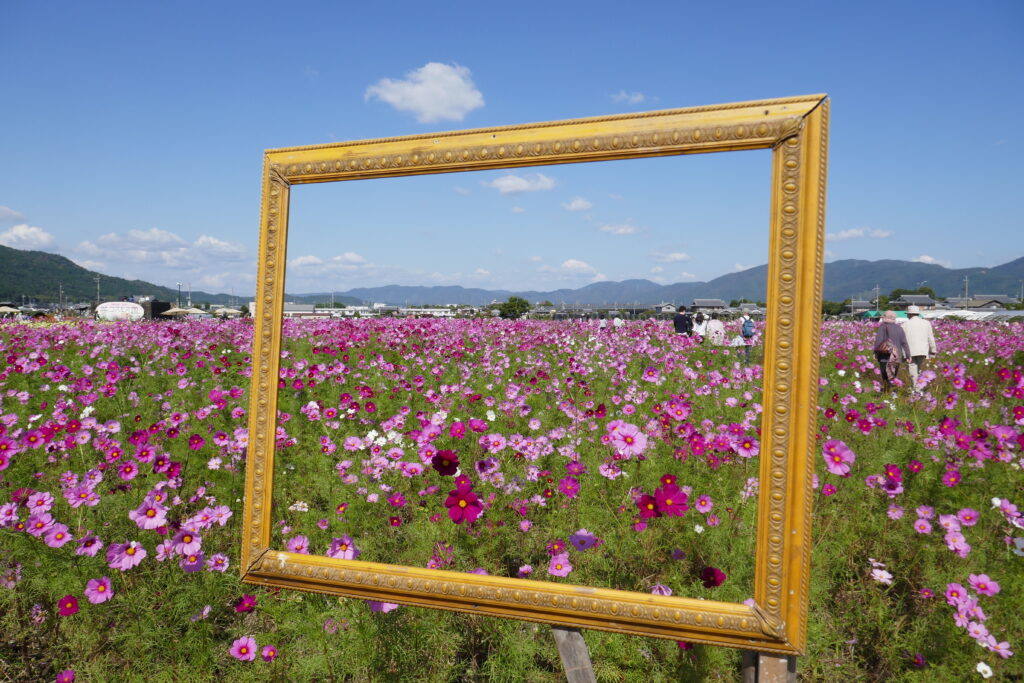
Autumn in Japan isn’t just about colourful leaves. One of the best known flowers which bloom exclusively at this time of year is cosmos, named akizakura (autumn cherry blossom) thanks to their popularity and stunning shades of pink. To see them in all their glory head to the Yume Cosmos Park in Kameoka City, where an astonishing 8 million flowers of different colors and species bloom. For adults, the fee to enter the garden is 600 yen on weekdays, and 800 yen on weekends (as of 2021).
Access:
From Kyoto City, get off at the Kameoka IC on the Kyoto Jukan Expressway, and head toward Route 372. The garden is in front of the Kameoka Sports Park Gymnasium. Free parking is available.
Autumn leaves: late November to early December
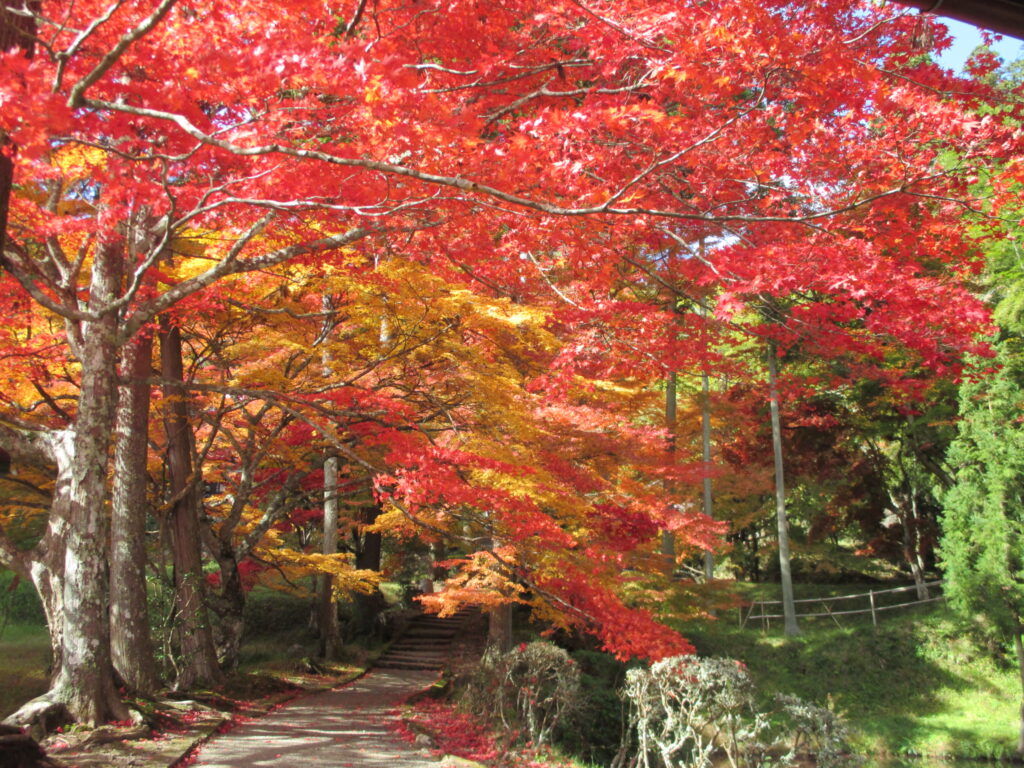
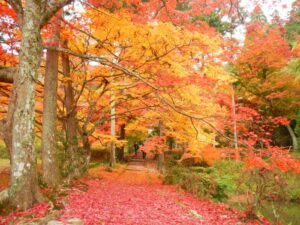
As the year draws to a close and the weather gets cooler and crisper, the leaves across Japan begin to change from lush green to vibrant shades of red, orange and yellow. This transforms the surrounding forests and mountainsides into fiery displays of autumnal colours (known as koyo), and is almost as popular as cherry blossom season. Some of the major tourist spots in Kyoto City can get very busy at this time, so exploring the wider prefecture gives you the perfect chance to admire the leaves away from the crowds.
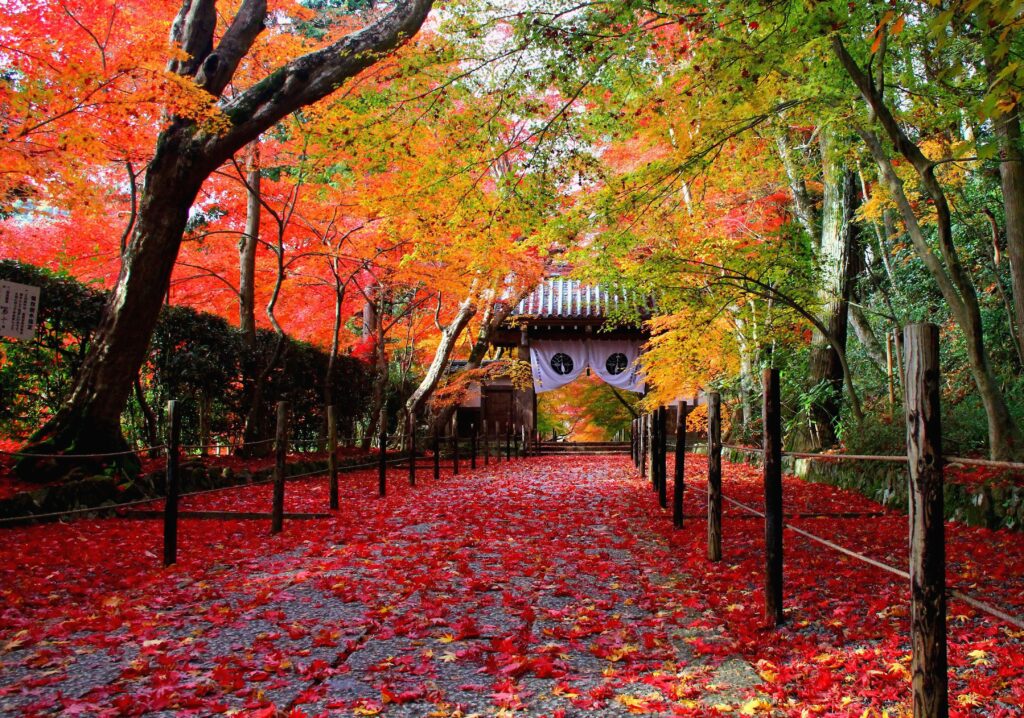
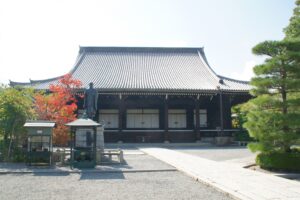
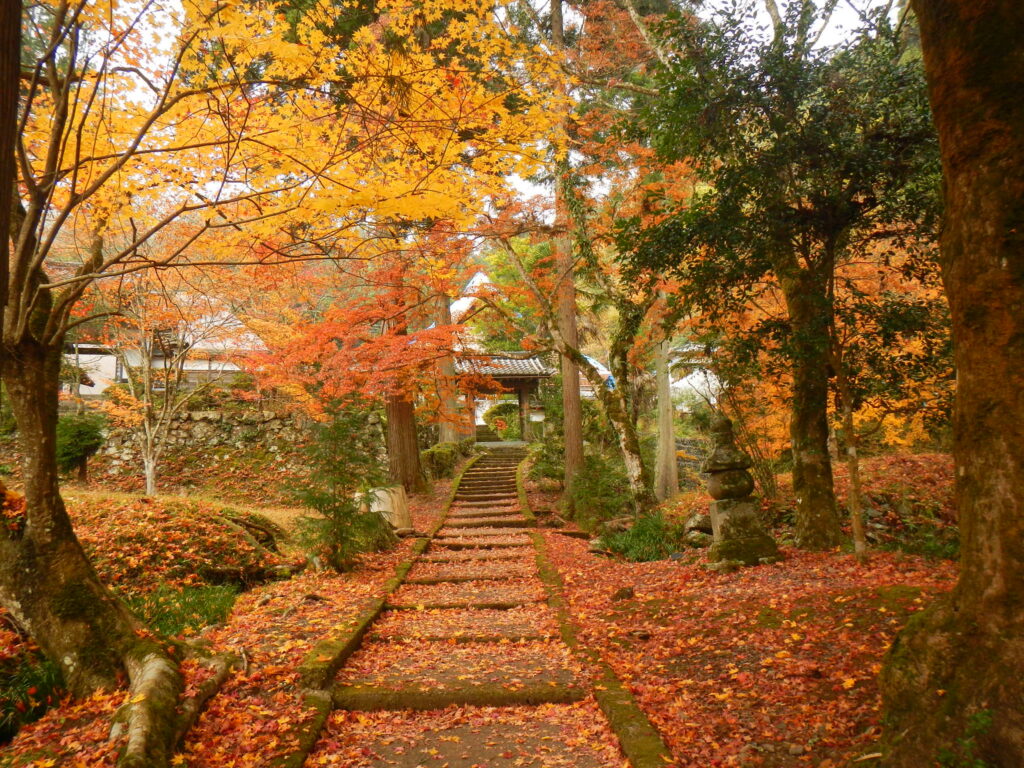
One excellent location is Komyo-ji Temple in Nagaokakyo City, where hundreds of maple trees line the path from the Somon gate into the grounds. This transforms it into a 200-metre tunnel of vivid red and amber, with the falling leaves carpeting the ground beneath your feet with the same bright colours.
Access:
Take the train to Nagaokakyo Station on the JR Kyoto Line, or Nagaoka Tenjin Station on the Hankyu Kyoto Line. Board the Hankyu Bus, and get off at Asahigaoka Home Mae.
Komyo-ji Temple
Komyo-ji Temple was first built in 1198 by the soldier Kumagai Naozane in an area favored by his master Honen. Today, it the head temple of the Seizan sect of Pure Land Buddhism. Visitors can tour the …
Meanwhile, the Ryuon-ji Zen temple in Nantan City has gingko trees as well as maples within its grounds, which add brilliant hues of yellow and gold to the mix.
Access:
Take the JR Sagano Line to Sonobe Station. Board the Keihan Kyoto Kotsu Bus and get off at Nie, then walk for 5 minutes.
Ryuon-ji Temple
Ryuon-ji Temple was constructed in 1509. This Zen temple was the family temple of the chief retainer of the Sonobe Clan. Reknowned for its autumn colors, the temple grounds and approach become beautif …
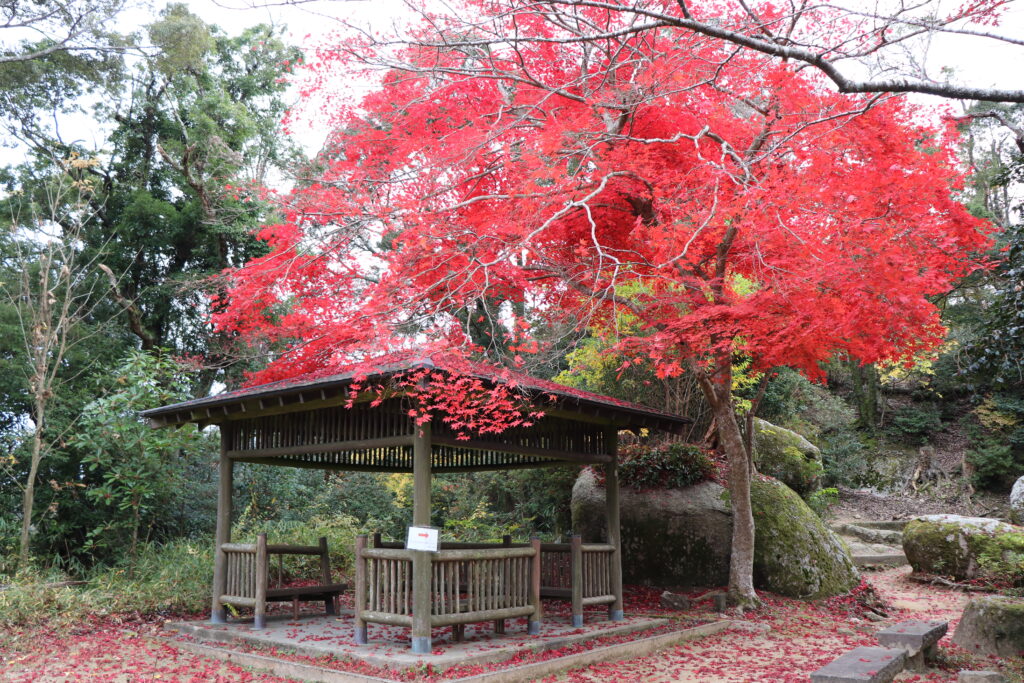
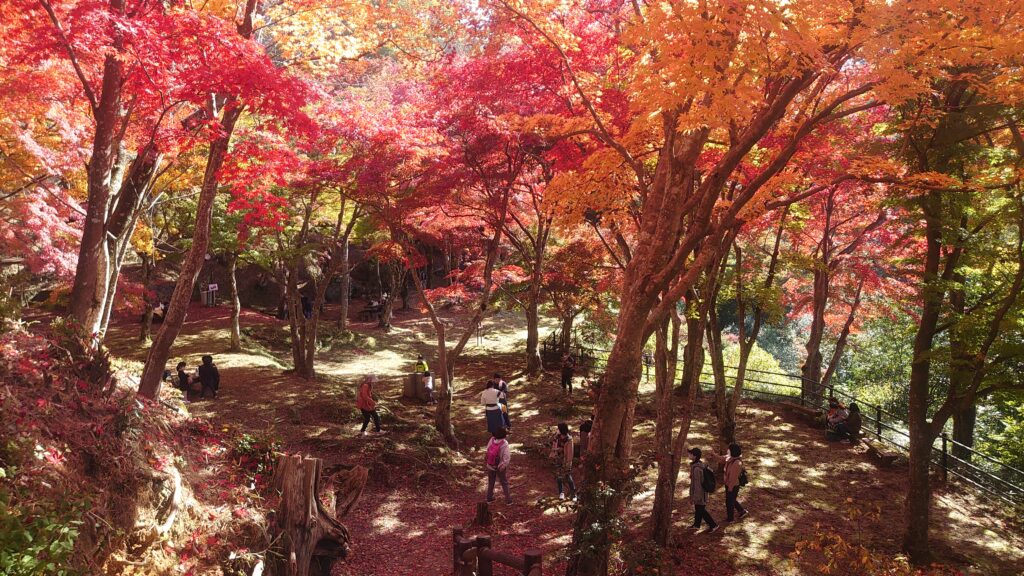
For a more active adventure, visit Kasagiyama Nature Park in Kasagi Town, which has exciting spots including Kasagi-yama Momiji Park and Kasagidera Temple. After enjoying a hike on Mt. Kasagi, marvel at the stunning fall foliage of the broad-leaved trees in Kasagi-yama Momiji Park. Then, you can explore and discover the wonders of the ancient Kasagidera Temple. In the evening, the vividly colored leaves in Kasagi-yama Momiji Park are lit up, and you can enjoy an enchanted ambiance. (For the illumination, be sure to check the event dates in advance.)
Access:
From Kasagi Station (JR Kansai Line), it’s about 400m to the trailhead, and about 2.1km (about 40 min. hike) to Kasagidera Temple on Mt. Kasagi. You can also drive almost to the temple; paid parking is available. Kasagi-yama Momiji Park is located in the temple.
Mt. Kasagi / Kasagiyama Nature Park
Kasagiyama Nature Park, located in Kasagi Town, is an area rich in nature, including Mt. Kasagi. The mountain, on the south bank of the Kizu River, is about 288 meters tall and known for its mystical, …
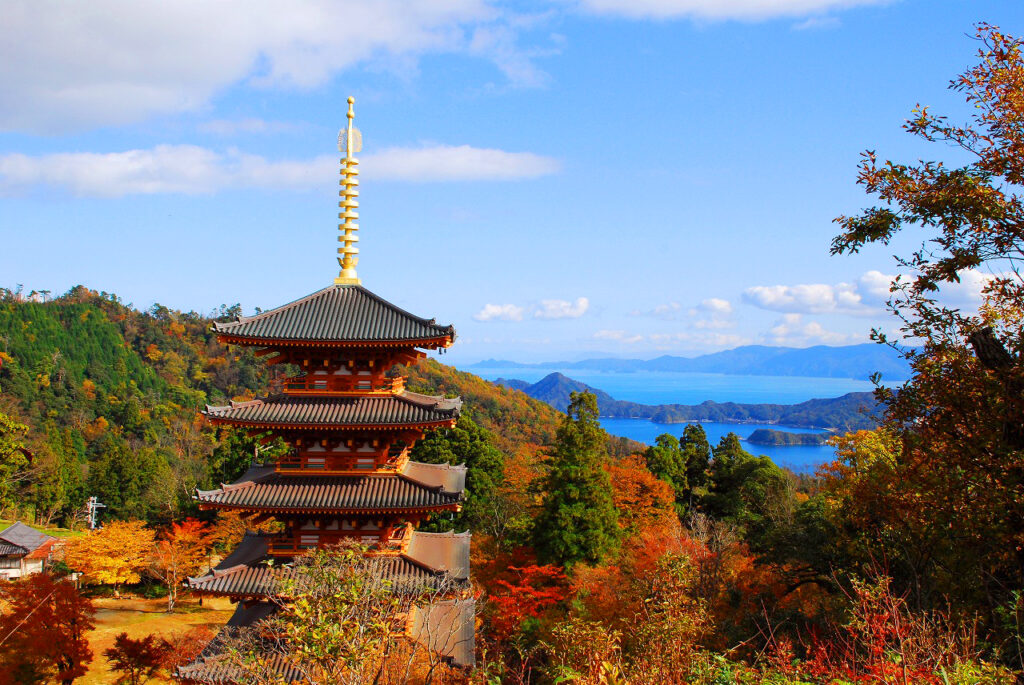
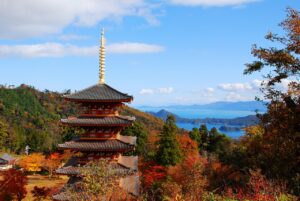
Miyazu City’s Nariai-ji Temple is another mountaintop location well worth a visit in autumn. The sight of the temple’s soaring five-storied pagoda surrounded by intense red and blazing orange leaves will take your breath away.
Access:
20 minutes by car from the Yosa Amanohashidate IC on the Kyoto Jukan Expressway Miyazu Yosa Road.
Nariai-ji Temple
Nariai-ji Temple is located on a mountainside overlooking Amanohashidate” which is considered one of the three most scenic spots in Japan. There is an endless line of visitors to the temple, as it is …
This is just an introduction to some of the many picturesque locations you’ll find to view seasonal flowers in Kyoto Prefecture. No matter what time of year you visit, there will be plenty of stunning natural scenery to explore and colourful blossoms to admire. Why not see what other hidden gems you can discover here?