Inspiration

[Rent a Car and Explore the Southern Part of Kyoto! 2] Find Hidden Kyoto Spots: a Temple, Shrine, Nature, and Delicious Food!

2022.11.04

A car on a road
Kyoto Tea Country

Did you know that within about an hour’s drive south from Kyoto City, there are many undiscovered scenic spots and delicious food? There you can find a valuable five-storied pagoda, beautiful places with fall foliage, a delicious pudding made with matcha green tea, which sells 700 a day, and more. Every encounter with something new is a unique thrill. What’s more, escaping the crowds allows for a more profound connection with the world around you. Come drive with us and explore some incredible places in the Kyoto Tea Country region!

Suggested Route for One-Day Road Trip Around “Kyoto Tea Country”

9:00am: Pick up a car from the car rental company, and depart from the central Kyoto
(For details, please refer to the small guide to renting a car at the end of this article)
→ Take the Daini-Keihan Expressway
→ Take the Keinawa Expressway
→ From Seika-Shimokoma Interchange, drive towards Kaijusenji Temple via the National Route 24
(About 1 hour in total)

1. Kaijusenji Temple (10:00am – 11:00am)
→ Drive to “Roadside Rest Area Ocha-no-Kyoto Minamiyamashiro Village” (about 35 min.)

2. Roadside Rest Area Ocha-no-Kyoto Minamiyamashiro Village (11:35am – 1:00pm)
→ Drive to Takayama Dam (about 10 min.)

3. Takayama Dam & Tayama Tsurugi Tea Plantation (1:10pm – 2:00pm)
→ Drive to Koishidani Shrine (about 10 min.)

4. Koishidani Shrine & Koiji Bridge (2:10pm – 2:40pm)
→ Drive to Keihanna Commemorative Park (about 40 min.)

5. Keihanna Commemorative Park (3:20pm – 5:00pm)
→ Drive back to Kyoto City via the Keinawa Expressway and Daini-Keihan Expressway, and return the car (about 40 min.)


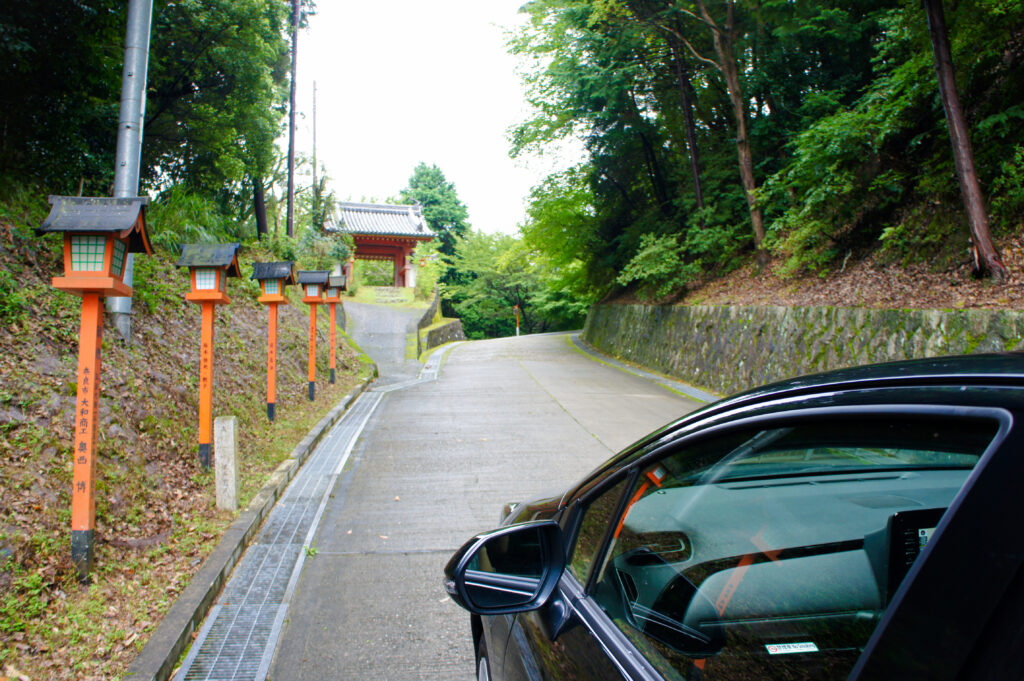
After picking up your car at Kyoto Station, head south towards the first destination, Kaijusenji Temple. After about an hour, you’ll be driving on National Route 163, and see a sign indicating a left turn for the temple. The roads from there are pretty narrow, and the mountain road just before the temple is steep and winding, so be sure to slow down and drive carefully. Upon arrival, you’ll find free parking available.
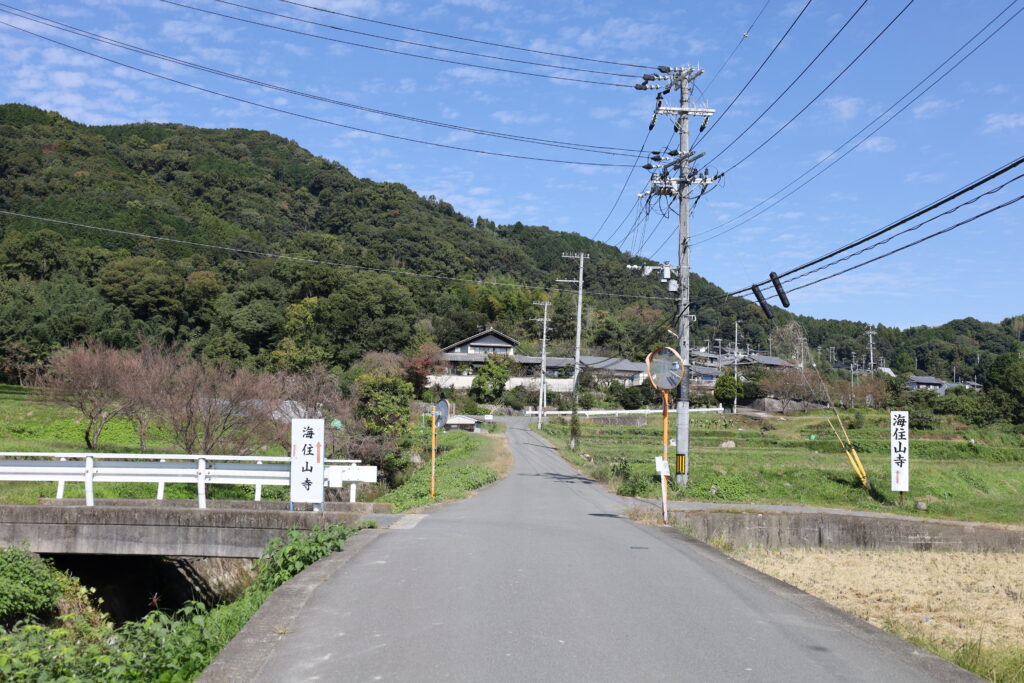
Long shot of a road
When you see these signs, go straight to the end of the road, and turn left. You’ll see tea plantations on your right, so turn right here, onto the road between them. Follow this road, and it will lead you to a mountain road that goes up to the temple.

First Stop: Kaijusenji Temple Steeped in History

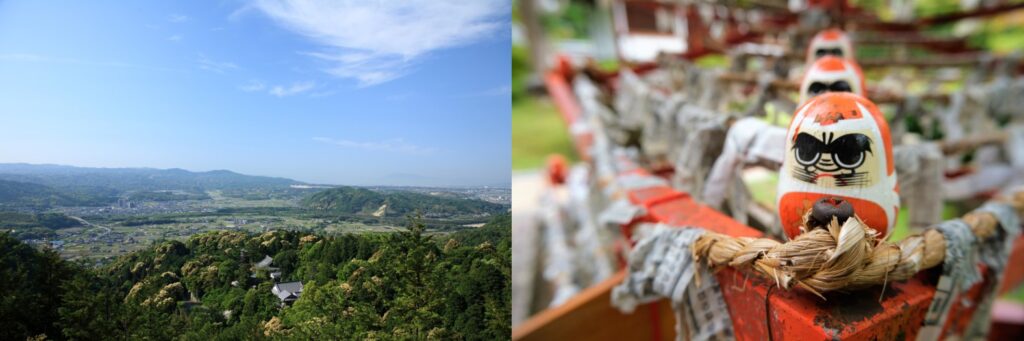
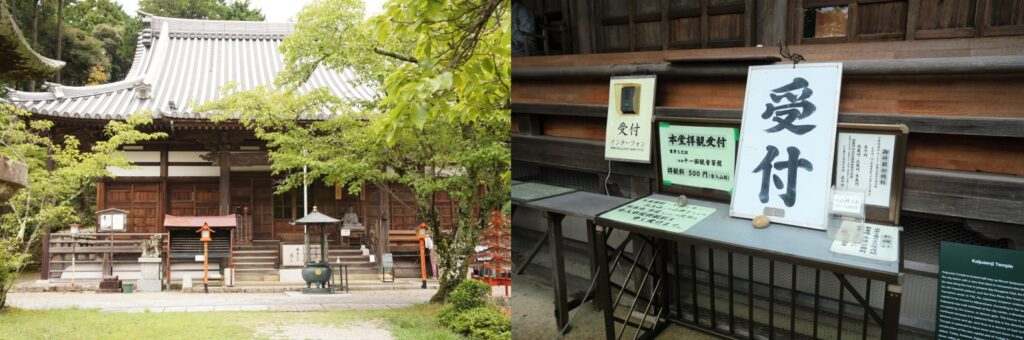
Kaijusenji Temple has a long history, and preserves buildings over 800 years old. To view the interior of the main hall, please take off your shoes, step inside, and offer 500 yen. (Photography is prohibited inside.)

A reception table outside a building
A collage of a landscape and daruma dolls


◆A Valuable Five-Storied Pagoda

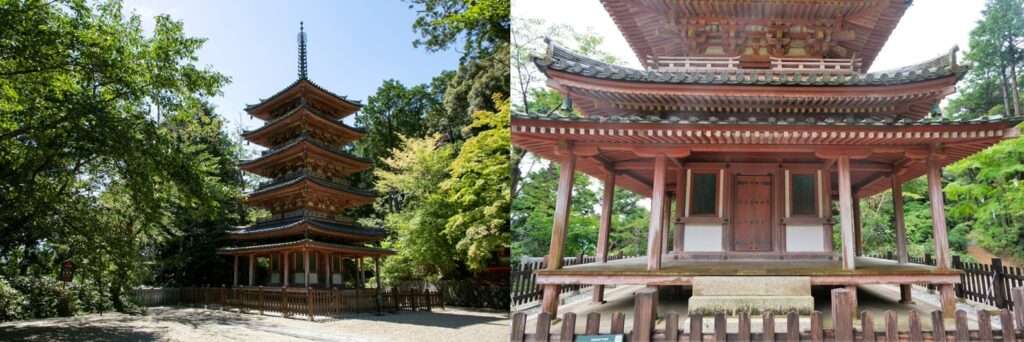
One of the sights you might want to see at this temple is a five-storied pagoda, completed in 1214. Standing at 17.7 meters, it is the second smallest among outdoor five-storied pagodas in Japan (while Japan has five-storied pagodas over 50 meters tall)! Kaijusenji Temple’s pagoda features mokoshi (small roof-like structures on the walls beneath the eaves) under the lowest eaves. Mokoshi can be seen in traditional Japanese temple architecture, protecting the building from weather, with design functions, such as making the appearance beautiful.

A collage of a pagoda building


◆A Special Exhibition and Beautiful Fall Foliage

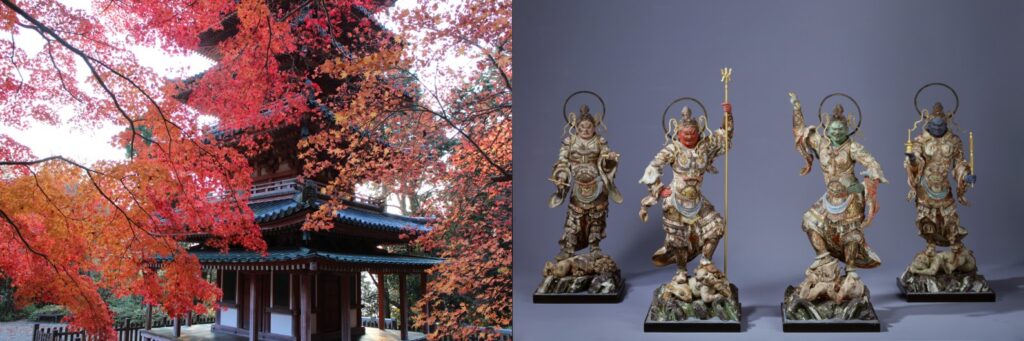
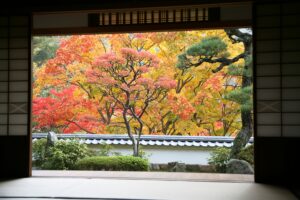
From mid-November to early December, the fall foliage is beautiful here (though the exact timing varies each year). Every fall, the temple hosts a special exhibition, offering a great opportunity to view the interior of the five-storied pagoda, normally closed to the public. In addition, you can admire temple treasures that are usually exhibited at the Nara National Museum.

Statues and a pagoda next to fall foliage
Kaijusenji Temple

Kaijusenji Temple

Legend has it that Fujioyama Kannonji Temple was founded in 735 when Emperor Shomu ordered the Buddhist monk Roben to build a hall and enshrined the Eleven-Headed Kannon Bodhisattva to pray for the sa …

Second Stop: “Roadside Rest Area Ocha-no-Kyoto Minamiyamashiro Village,” Full of Delicious Charm

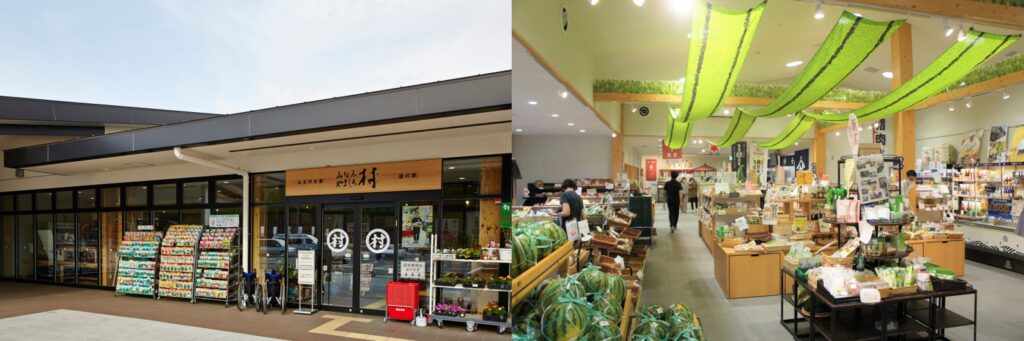
Next, drive east along the Kizu River for about 30 minutes, and then you’ll arrive at the facility called Roadside Rest Area Ocha-no-Kyoto Minamiyamashiro Village. As the name suggests, it is located in Minamiyamashiro Village, which is the only village in Kyoto. The charming village’s local specialties and rich culture are gathered here. It’s the perfect place to take a break, enjoy food and drink, and enjoy shopping.

A collage of a rest stop store


◆An Exciting Center for Sharing the Village’s Unique Attractions

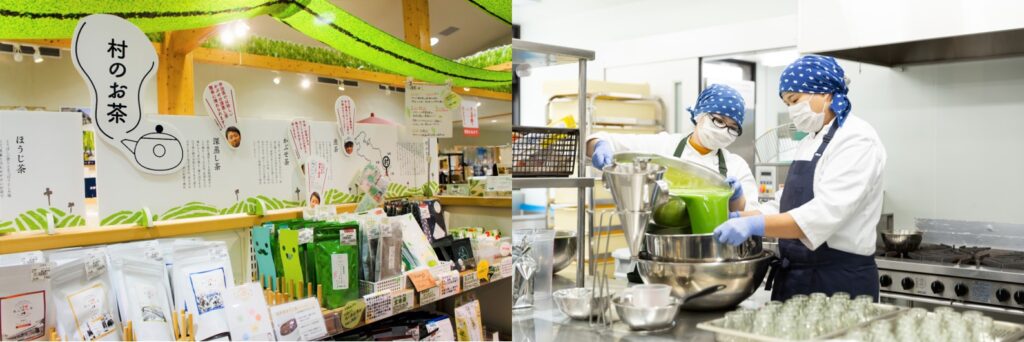
This facility opened with the involvement of villagers in April 2017. It was created to convey the village’s attractions to many people, and help villagers continue living there. It mainly sells a variety of food products using high-quality ingredients, in cooperation with farmers, other local heroes and heroines supporting this area. Delicious local specialties, especially teas, have attracted a lot of visitors since it opened.

A collage green tea goods


◆Popular Matcha Sweets You Can’t Miss!

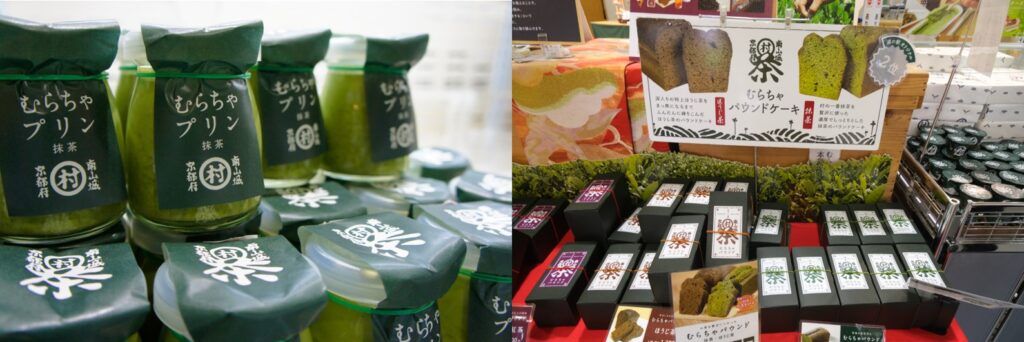
This facility, where the sweets made with the village’s high-quality matcha are a huge hit, offers an exciting shopping experience. From a gift-perfect pound cake to an easy-to-enjoy dorayaki (a traditional pancake sandwich with sweet bean filling), there are a variety of delightful treats. You can even find a delicious pudding that sells 700 daily! Every one of them is a celebration of authentic matcha, which is loved by many people. For those interested in exploring something a little different, the sweets featuring hojicha (roasted tea) are great options.

A close-up of a variety of green tea food items

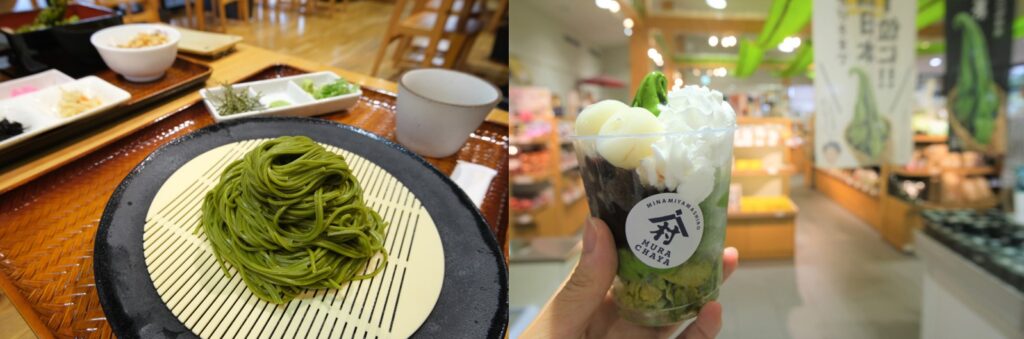
In addition to shopping, you can enjoy dining with a view of the tea plantation across the road. The tea-infused dishes like chasoba (green tea noodles) are delicious. What’s more, you can gain a deeper understanding of the local culture by savoring some dishes from the villagers’ everyday meals. And to complete your culinary journey, don’t forget to try a rich matcha parfait!

A collage of green tea noodles and a dessert

Roadside Rest Area Ocha-no-Kyoto Minamiyamashiro Village

This rest area encapsulates the wonderful everyday life of Minamiyamashiro Village. You can immerse yourself in the village life and discover their traditional wisdom through eating, drinking and so on.
They sell a wide variety of local specialties, including tea and fresh vegetables at the market called Nomon Ichiba. Delicious tea sweets would make great gifts for your loved ones.
You can savor genuine tea with ease on the spot, at the sweets and tea shop, Muracha-ya. Their soft serve made with the village’s high-quality matcha green tea is famous for its authentic flavor. The rich matcha syrup poured on it is amazing, too. You can enjoy the beautiful balance of sweetness and pleasurable bitterness. (430 yen, tax included.)
This rest area also has Murafudo Shokudo Tsuchi-no-Ubu, a cozy place where you can relax and enjoy a delicious meal. Savor their dishes incorporating tea. They have delicious ones modeled after the local villagers’ meals.

Third Stop: “Takayama Dam” and “Tayama Tsurugi Tea Plantation,” Rich in Nature and Culture

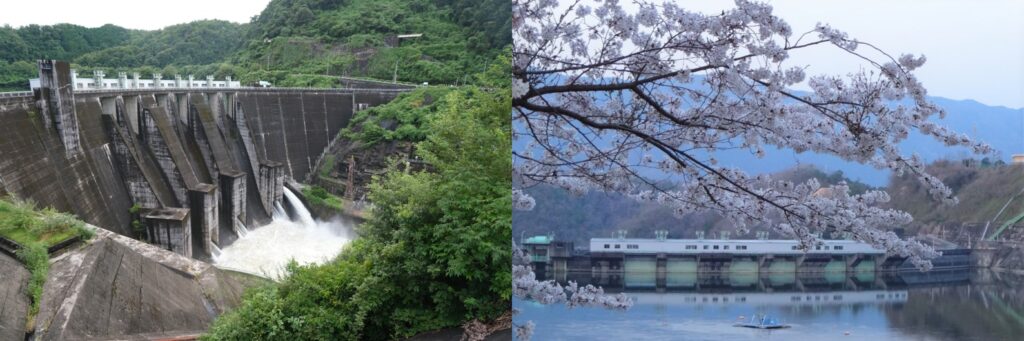
After parking your car at the large parking area of Takayama Dam, just a short walk will take you to one of the viewpoints. (There are other parking lots around the dam where you can enjoy scenery.) The dam is a concrete arch gravity dam that is unusual in Japan. For more than half a century, it has relieved flood damage, maintained the river environment, generated electricity, and supplied drinking water to various cities in Osaka and Hyogo. Also, this area is a hanami (cherry-blossom viewing) spot. In spring, cherry blossoms are beautiful around the dam, and following them, yae-zakura (double-flowered cherry blossoms) show another charm in April.

A collage of a dam and dam reservoir

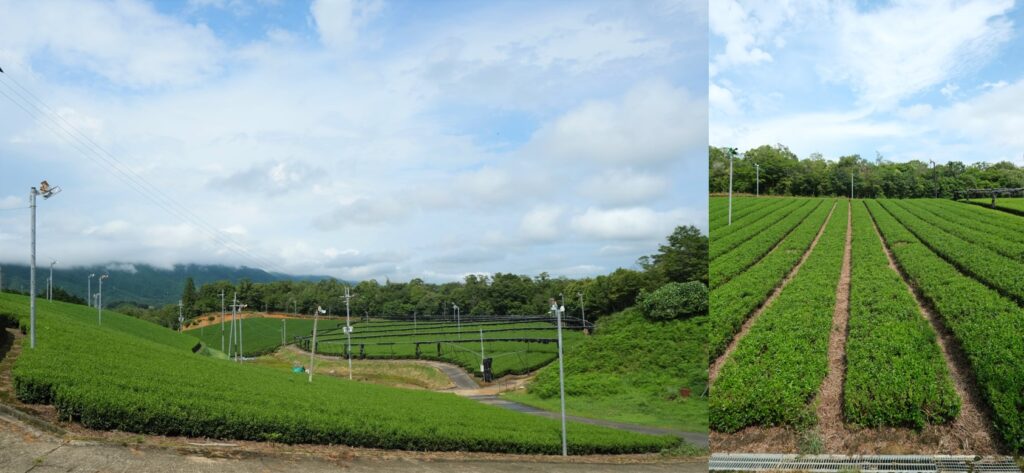
Now, let’s walk to the Tayama Tsurugi Tea Plantation. Recognized as a part of the Japan Heritage, it presents a culturally significant landscape. Unlike typical tea plantations following the contour lines, it shows a distinctive feature called tate-une (vertical ridges), creating the impression of tea rows soaring up into the sky. This makes tea leaf picking more efficient and facilitates better air circulation from frost prevention fans. Since the tea plantation is privately owned, please enjoy the scenery from outside, and be sure not to enter it.

Tea fields

Fourth Stop: “Koishidani Shrine” and “Koiji Bridge,” Where Love May Blossom

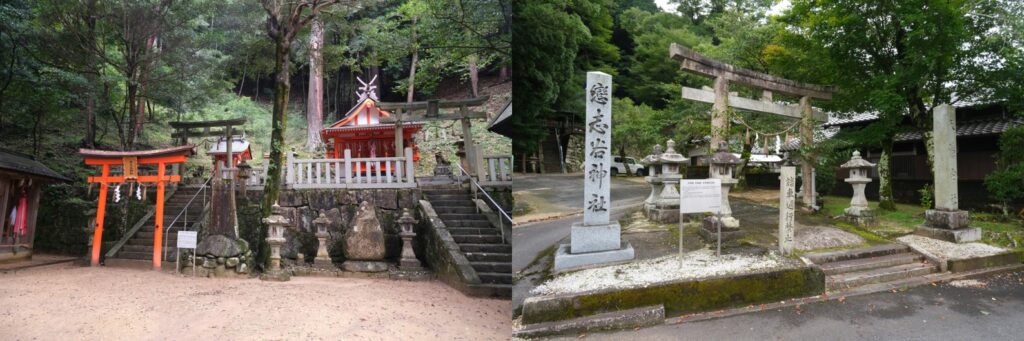
Drive over the dam and head northwest along the Kizu River, and you’ll arrive at Koishidani Shrine known as a local spiritual site. Dedicated to Koishidanihime, who is said to have been a sobame (spouse who is not the primary wife) of Emperor Go-Daigo, the shrine is believed to have a power to grant wishes for love, childbirth, safe delivery, and so on. What is interesting is that you can get this shrine’s amulets only on 3 days of the year: April 2nd and September 2nd (annual festival days), and October 21st (the annual festival day of Tenmangu Shrine). (Perhaps, you might get them on other days as well, if you are lucky enough to find someone at the shrine office.) They are called “phantom amulets,” and the pink one is especially popular, being believed to bring luck in love.

A collage of Japanese shrines

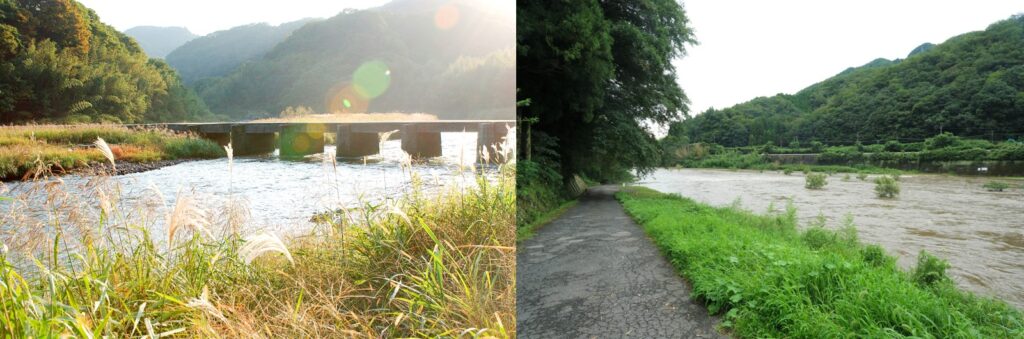
Walk from the shrine toward the Kizu River, and you’ll see Koiji Bridge. (“Koiji” means “path of love”). (You can pass over the bridge by car, as well as on foot.) It is sturdy and designed to be submerged when the water level rises. Without railings, it prevents itself from being swept away or destroyed. This style of bridge is called chinka-bashi. It is believed that if you walk across Koiji Bridge to Koishidani Shrine, your wish is more likely to come true.

A path next to a body of water
Right image: The bridge disappears from sight during periods of high water.
(Photographed with permission of the relevant organization)

Fifth Stop: Keihanna Commemorative Park Offering the Essence of Rural Japan

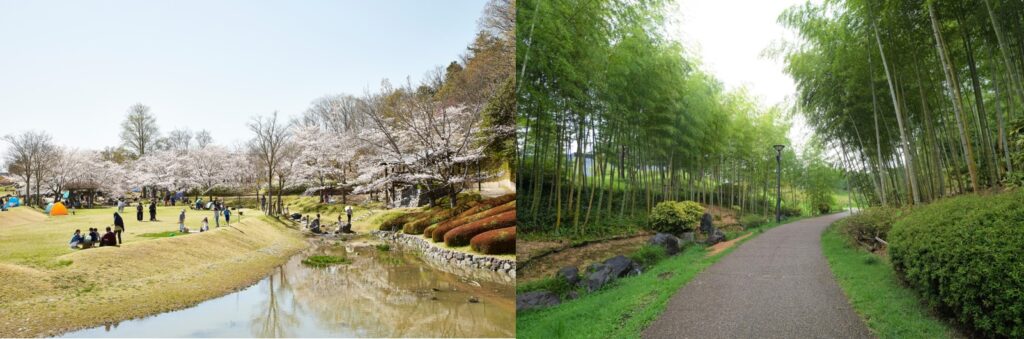
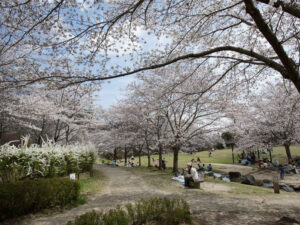
When you see a beautiful boulevard lined with metasequoia trees, it’s a signal that you’re approaching Keihanna Commemorative Park, which is 24.1 hectares in size. After parking your car in the paid parking lot, take some time to explore the free area that has Hiroba (Open Space) and the Taniai (Valley) area. Hiroba has a large, stepped lawn area resembling a tanada (rice terrace), and is beautiful from late March to early April, with about 300 cherry trees in bloom. The Taniai area has a small stream running alongside the path with lush bamboo lining both sides. It feels like something from an old Japanese folktale!

A park with cherry blossoms and a path lined with bamboo


◆Serene Landscapes Meticulously Composed

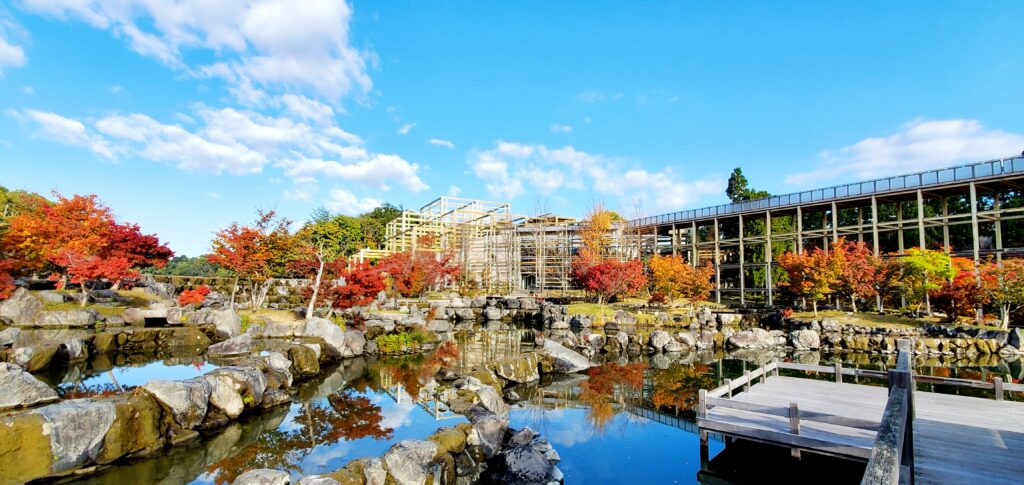
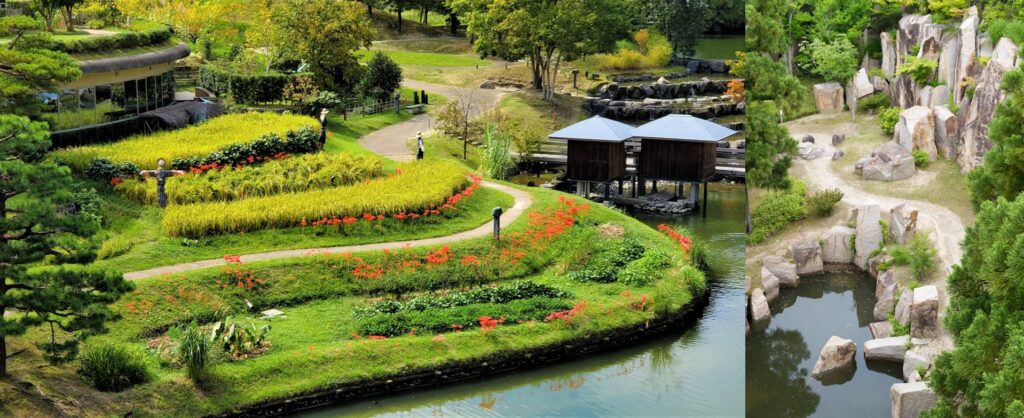
Our last destination is a Japanese strolling garden, Suikei-en in the park’s pay area. You can view relaxing satoyama (cultivated countryside) landscapes here. Though the scenery appears simple at first glance, it is meticulously created. For example, the perfect viewing points are subtly arranged, which are cleverly designed to invite you to pause unconsciously. The garden features many other thoughtful details with hidden brilliance, such as a large pond inspired by Lake Biwa.

A building next to a body of water


◆Admire the Bridge’s Design and the Scenery From Above

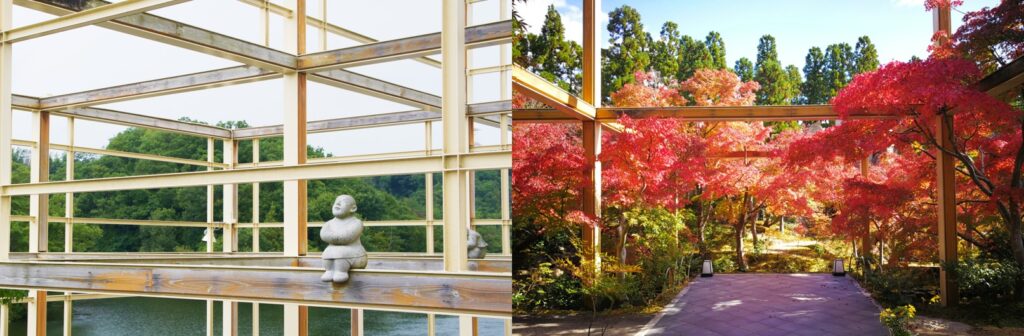
Kangetsukyo Bridge is designed with inspiration from latticework seen in Kyoto’s machiya (traditional townhouses). It’s 123 meters long and about 10 meters tall above the water, and the views from the bridge and of the bridge are quite different, each offering its own unique charm.

Latticework structure of the Kangetsukyo Bridge
A landscape with a pond and a path
Keihanna Commemorative Park

Keihanna Commemorative Park

The Keihanna Commemorative Park, officially called the Kyoto Prefectural Kansai Culture and Science City Commemorative Park, is 24.1 hectares in size. It was built to commemorate the establishment of …

Driving through Kyoto Tea Country is a delightful experience. As you explore the various spots, you’ll discover that Kyoto is full of hidden gems waiting to be unearthed. This day trip is just the beginning. Once you’ve enjoyed this journey, why not embark on your own adventure to uncover hidden treasures? Have a wonderful trip!
  
>> Read about another rental car adventure in Kyoto: Rent a Car and Explore the Southern Part of Kyoto! Go on a One-Day Road Trip Around “Kyoto Tea Country”! <<

Small guide to renting a car

A close-up of a person holding a steering wheel

Here is a brief introduction to the Japanese car-renting process (this article uses “Times Car Rental” and holders of the Republic of China, Taiwan passports for a model example)

Step 1. Enter the homepage of the car rental website, and select a booking time and store
Step 2. Check the car model, price and extra rental items (such as whether you need to rent a baby seat or other items as extra)
Step 3. Lastly, fill in your personal information such as your name and email address, along with your payment method
Step 4. Go to your inbox to receive the booking confirmation email (if you want to cancel the booking due to changes in your itinerary, please remember to cancel it six days before the booking time. If you cancel less than six days before, a handling fee will be charged)
This completes the online car rental booking!
For details, please refer to the official website of “Times Car Rental

★Friendly reminders:
1. Please prepare the relevant documents such as your passport and driver’s license when picking up the car. For details, please click here.
2. There are car rental companies near airports and train stations in major cities of Japan. Also, it is very convenient to rent a car when you arrive on site. However, since bookings fill up easily on weekends or consecutive holidays, we recommend you to make an advance online booking as early as possible!

*For more info on rental cars, see Rental Cars & Bicycles.

Japanese traffic rules

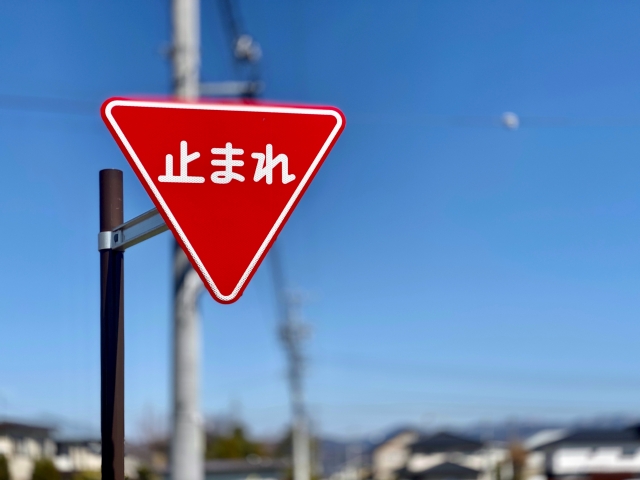
A close-up of a stop sign

Please read the relevant traffic rules in Japan before departing, and be a law-abiding traveler!

Another Kyoto Partners