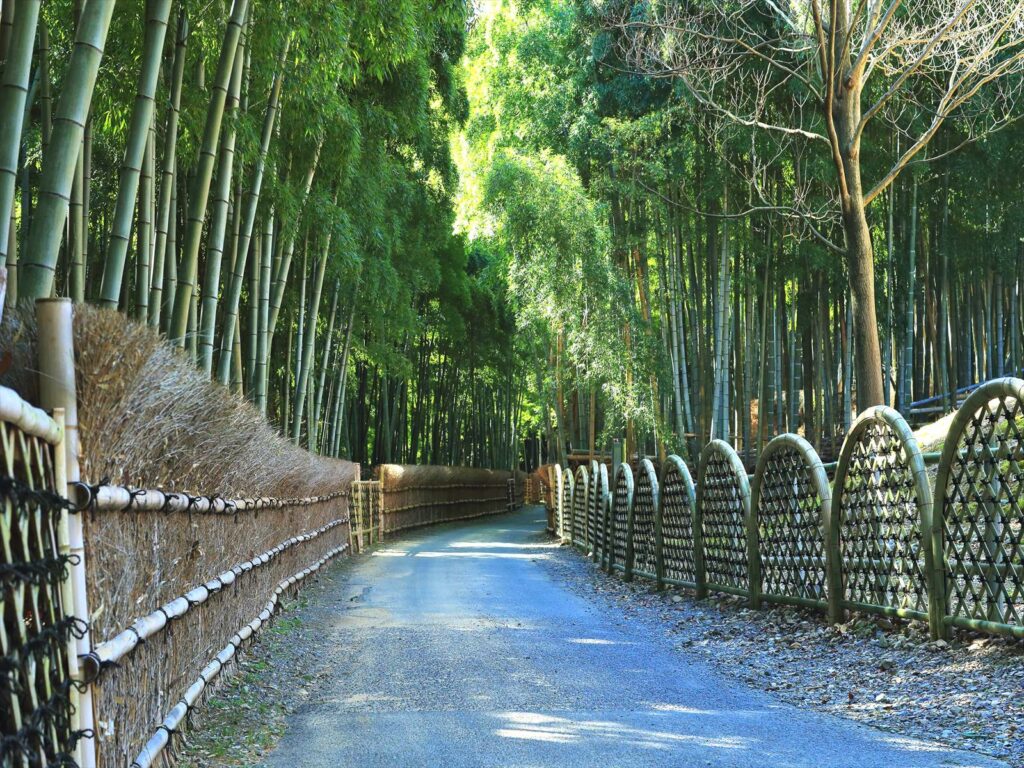

Otokuni Bamboo Grove: Japan’s Bamboo Heartland
Otokuni is the historic name for the area immediately southwest of Kyoto City: Muko, Nagaokakyo, and Oyamazaki. In the eighth century, the imperial court briefly moved to Nagaokakyo before relocating to Heian-kyo (Kyoto) in 794. Today, the region’s signature is bamboo, both as a working crop (Japan’s premium takenoko bamboo shoots, branded Kyo-takenoko) and as a designed landscape (the Take-no-Michi path and the Rakusai Bamboo Park).
The bamboo grown here is moso-chiku (Phyllostachys edulis), the large edible variety behind both the shoots and the structural cane used in baskets, fences, and chopsticks. Farmers have grown bamboo here since the Heian period (794–1185), renewing the grove floor each autumn with layers of rice straw and clay soil. This method gives Kyo-takenoko its pale, sweet, low-bitterness character.
The Muko hills have a literary side as well. The Tale of the Bamboo Cutter recounts the story of an old cutter who discovers the radiant infant Princess Kaguya inside a stalk, a tale often associated with these very hills. Strolling along Take-no-Michi feels like walking through the timeless scenery of Japan’s oldest novel.
Take-no-Michi: The Bamboo Path

Take-no-Michi is a 1.8-kilometer paved walking path in Muko City, developed from 2000 onward to preserve the bamboo landscape and draw visitors. Its defining feature is the eight different traditional bamboo-fence designs set along the trail, each with a sign explaining the pattern and its history.
- Takeho-gaki, bundles of slim bamboo branches
- Raikoji-gaki, the historic temple-style fence
- Kaguya-gaki, patterned after the kimono collars of Princess Kaguya from the Tale of the Bamboo Cutter
- Mozume-gaki and Terado-gaki, local Muko designs
- Kofun-gaki, round-shaped, evoking the keyhole burial mounds of the Otokuni region, including the nearby Terado Otsuka Kofun
- Fukada-gaki and Kaido-gaki, completing the eight
All eight are built from moso bamboo reclaimed from the bamboo-shoot cultivation cycle, so the by-product of the farming year becomes the path’s signature look. Take-no-Michi has been named one of Japan’s “500 Most Beautiful Walking Paths,” a Kyoto Scenic Asset, and a Kyoto Cultural Landscape.
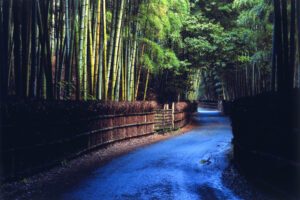
Take-no-Michi (The Muko Bamboo Path)
Bamboo shoots are one of Kyoto’s specialty products, but the “Otokuni” area around Muko City and Nagaokakyo City is known for producing some of the highest quality bamboo shoots in Kyoto. Take-no-Mich …
Kaguya’s Evening: The Autumn Lantern Festival
Each October, Take-no-Michi hosts Princess Kaguya Nights, when about 4,000 bamboo lanterns light the full 1.8-kilometer path. Candles float in water-filled bamboo tubes, and the wind drags their shadows through the rustling stalks. Recent editions have run on a mid-October weekend, so plan around the second weekend of October for 2026, and confirm the exact dates with the Kyoto-Nishiyama Tourism Association closer to the season.
The light-up runs from 5:30 PM to 8:00 PM, with food stalls opening at the adjacent Koyo Elementary School grounds from 4:00 PM. A free shuttle bus typically operates during the event, since the Bamboo Park parking lot closes for the festival. Otherwise, the path is a walk from Hankyu Rakusai-guchi (15 minutes) or Hankyu Higashi-Muko (25 minutes).
Rakusai Bamboo Park

Rakusai Bamboo Park is a municipal botanical garden devoted entirely to bamboo, opened in 1981 in Nishi-Kyo Ward. Around 110 bamboo and bamboo-grass species grow here, among them the rare shiho-chiku (square bamboo) and kikko-chiku (tortoise-shell bamboo). The indoor museum covers the biology, ecology, and craftsmanship of bamboo, with some exhibits explained in English, and the strolling garden features a covered bamboo bridge past stone Jizo (guardian Buddhist figures) statues.
The park is tucked away from the busy international tourist spots, making weekday visits feel almost like visiting a quiet neighborhood garden. It’s a peaceful and private little gem for those who seek a more relaxed experience.
Admission to Rakusai Bamboo Park is free, and Hotel Discover Kyoto Nagaokakyo makes an ideal base for travelers combining Otokuni bamboo, Yokoku-ji, and Komyo-ji into a paired half-day.
Free admission, open 9:00 AM – 5:00 PM with last entry at 4:00 PM, closed Wednesdays and December 29 to January 3.
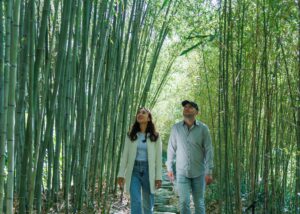
Kyoto City Rakusai Bamboo Park
This is an establishment that primarily deals with bamboo, which is rarely done even on a global level. Here, you can find a bamboo museum, a children’s plaza, and an ecological garden where various …

Hotel Discover Kyoto Nagaokakyo
Hotel Discover Nagaokakyo opened in September 2019. This concept hotel offers a new way to enjoy a trip that connects people and towns through experiences and local connections. Located conveniently r …
A Real Half-Day Plan From Kyoto Station
Morning: Take the train from Kyoto Station to Hankyu Higashi-Muko (around 25 minutes, including the Karasuma-line transfer). Walk Take-no-Michi south to north, about an hour at an easy pace, longer with photo stops at the eight fence designs.
Late morning: Rakusai Bamboo Park and the Bamboo Museum, 1 to 1.5 hours, free admission.
Lunch: Kinsuitei in Nagaokakyo for takenoko kaiseki (a multi-course traditional meal) in season (March to May), or Machi Terrace MUKO at Mukomachi Station for a casual bamboo-shoot dish the rest of the year.
Early afternoon: head back to Kyoto Station (around 30 minutes total), or extend with the Yokoku-ji “Yanagidani Kannon” temple loop and the Komyo-ji Maple Path in Nagaokakyo, both a short bus ride from the bamboo park. (See our Autumn in Rural Kyoto guide.)
Total: 4 to 5 hours, easily woven into any Kyoto itinerary.
Bamboo Basket Weaving

At the Nagaoka Meichiku workshop in Kameoka, you can join a basket-weaving session in their Chikuyu-kan Hall. This long-established bamboo fence maker has been in business for over sixty years and is the fence maker behind Katsura Imperial Villa, Kinkaku-ji, the Kyoto State Guest House, and Heian Jingu. The Shikai-nami-kago (“four-ocean-wave” basket) comes with the bottom pre-prepared, and you weave the walls yourself, resulting in a usable basket in half a day.
Hours: 9:00 AM – 3:00 PM, closed Mondays.
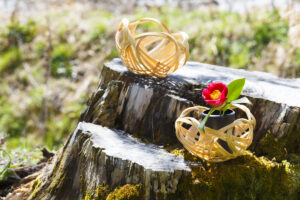
Bamboo Basket Weaving: Experience the skills of a certified Kyoto craftsman!
Take this chance to re-experience the wonder and high quality of bamboo in this workshop that has fashioned bamboo fences for 60 years. The work here is easy to perform, regardless of gender. You can …
Arashiyama vs Otokuni: What to Know Before You Go
Compared to Arashiyama’s iconic dense tunnel of bamboo, Take-no-Michi varies along its length: some stretches grow dense, while the main production areas are kept highly pruned (deliberately, so farmers can pass with umbrellas), and the whole path is lined with elaborate fences. If you came to Japan especially hoping for that classic Arashiyama bamboo photo, it’s still worth going to capture it. If you’ve visited or want to see bamboo as part of the landscape, Otokuni is where Kyoto’s bamboo heartland truly comes alive.
Trade the Arashiyama crowds for the quieter Otokuni canopy, and you’ll find the working bamboo landscape most visitors never reach.
Related in this series: Day Trips from Kyoto, Hidden Gems, and Autumn in Rural Kyoto. For the deeper bamboo-region narratives, see the existing bamboo columns on the site (and here).