
When to Come, by Region
Kyoto Prefecture’s autumn moves from north to south over roughly two weeks. Peak Kyoto fall foliage windows by area:
- Kyoto by the Sea (Nariai-ji, Maizuru Kongo-in, Tango Railway corridor): late October to mid-November
- Woodland Kyoto (Miyama, Ayabe Komyo-ji, Hozukyo Gorge): early to mid-November
- Kyoto Tea Country (Wazuka, Kasagiyama, Joruri-ji, Shoujuin): late November to early December
- Kyoto Otokuni Bamboo Grove (Komyo-ji Nagaokakyo, Yokoku-ji, Nagaoka Tenmangu): late November to early December
As your trip approaches, check these against the Kyoto Prefecture Autumn Foliage Calendar. If you’re traveling on fixed dates and plan to include Kyoto City, aim for the second half of November. That’s when the colors in the city and in the southern part of the prefecture tend to line up, even if the Sea of Japan and the Tango Coast have already slipped past their peak.
Twelve Spots Worth the Train Ride
Kyoto by the Sea (3 spots)
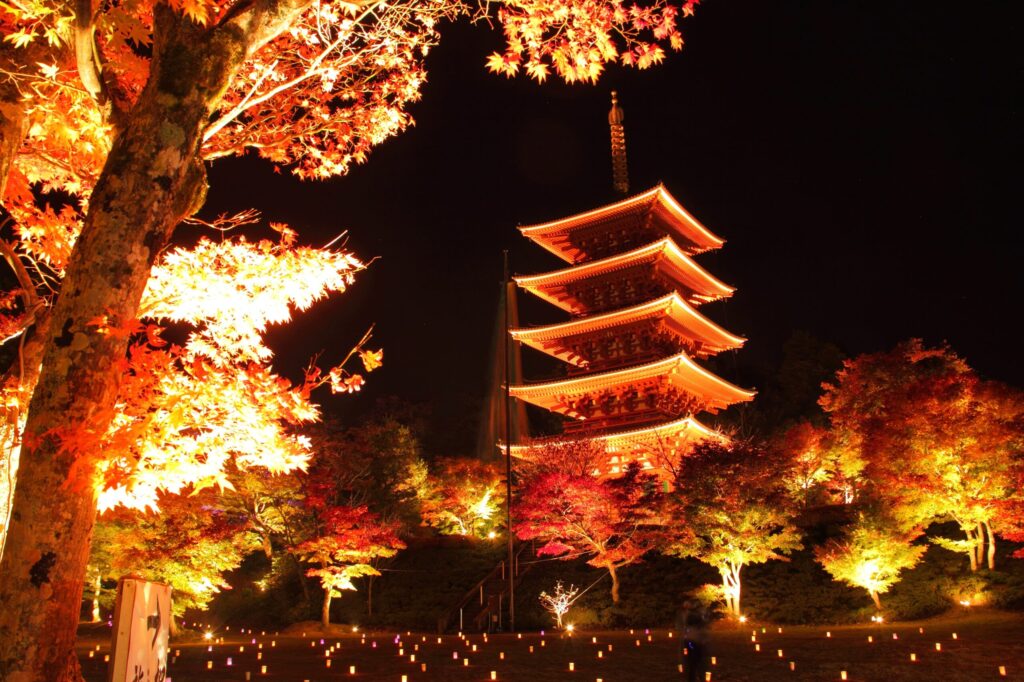
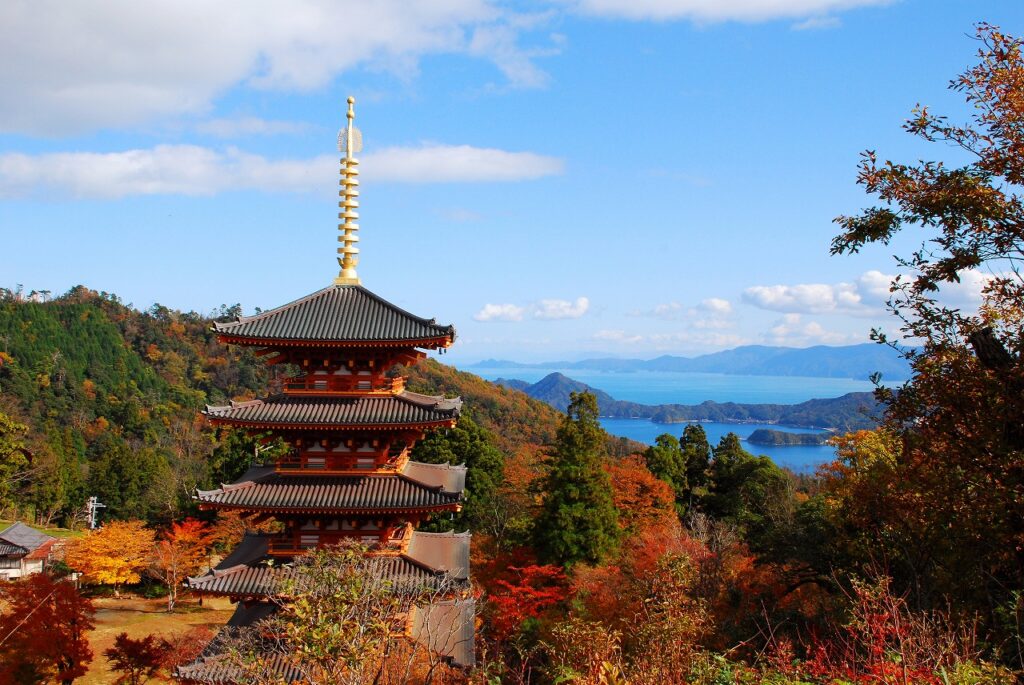
Nariai-ji Temple, perched on the mountainside above Amanohashidate, features a red-glowing five-story pagoda set against the pine-covered sandbar. Visit during a mid-November weekend to see the maples illuminated at night with goma (Buddhist ritual flame), enjoy live piano and flute performances, and experience the new star-gazing platform that has replaced the old Bentenyama Observatory.
Pair with: an overnight stay at Monjusou to enjoy the autumn Sea of Japan crab kaiseki menu.
Nariai-ji Temple
Nariai-ji Temple is located on a mountainside overlooking Amanohashidate” which is considered one of the three most scenic spots in Japan. There is an endless line of visitors to the temple, as it is …
Kongo-in Temple in Maizuru is a ninth-century Toji-school Shingon temple at the foot of Mt. Kahara. Its three-story pagoda, an Important Cultural Property, stands wrapped in maples that Hosokawa Yusai planted in the early 1600s, a four-century cycle now at full color. It appears in Mishima’s The Temple of the Golden Pavilion and runs an illumination at its peak.
Pair with: a coastal autumn ryokan stay at Kasyouen Bettei Fuka in Yuhigaura.
The Tango Railway autumn corridor. Ride the Akamatsu, Aomatsu, or the dining Kuromatsu trains between Nishi-Maizuru and Amanohashidate, with the Yura River Bridge set against early-colored hillsides. The mid-bridge pause on the Yura crossing lets you experience a brief, unusually quiet moment suspended between river and hills.

Tango Railway
The Kyoto Tango Railway, which operates in the Kyoto by the Sea area, is loved by the locals as a form of public transportation and is also popular as a sightseeing train. We highly recommend enjoying …
Woodland Kyoto (3 spots)

Miyama’s thatched village, where the surrounding mountains turn crimson and gold around the roofs in mid to late November. This is the quintessential high-elevation first stop. Mist hangs over the Yura River in the morning.
Pair with: the Thatched Village Guided Walk, then an overnight at NIPPONIA Miyama Tsurugaoka, a cluster of renovated old farmhouses rented whole in the Tsurugaoka area, about 20 minutes by car from Kayabuki no Sato.

Miyama’s thatched village
The Miyama area is well known for its farmhouses that still use traditional thatched roofs. Kita is an area with a particularly large number of such houses, all positioned together in a village. The t …

Komyo-ji Temple in Ayabe, whose Niomon Gate is a National Treasure and one of the oldest surviving temple gates in Japan. The surrounding forest bursts into color in mid-to-late November, and the trails between the gate and the precincts frame the kind of quiet autumn most travelers cross the world to find. The temple sits in the Kanbayashi area of Ayabe, with Ayabe Onsen nearby for a day-end soak.
Pair with: a day-use bath at Ayabe Onsen Nio-no-yu and a lunch made with local ingredients at Nio-kan.

Niomon Gate and Komyo-ji Temple
You’ll find Komyo-ji Temple on a mountain slope in the forests of Ayabe City. It was said to have been founded by the legendary Prince Shotoku (572-622). The temple’s main Niomon Gate was constructed …

The Hozukyo Gorge, by Sagano Romantic Train and Hozugawa River Boat Ride: a 3-hour autumn loop in a wooden-seat carriage along the gorge, then a 16-kilometer return by boat under Japanese maple-lined cliffs. The “Illuminated Fantasy Train” runs from 4:30 p.m. through the peak autumn weeks.
Pair with: an overnight stay at Yunohana Onsen, Syoenso Hozugawatei, whose riverside bath frames the gorge in red.
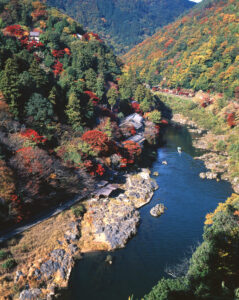
Hozukyo Gorge
The Hozukyo Gorge, which stretches from the Hozu Bridge area in Kameoka City to Arashiyama’s Togetsu-kyo Bridge, is known as one of the most beautiful such gorges in Kyoto. The boat ride down the Hozu …
Kyoto Tea Country (3 spots)

Kasagiyama Nature Park, about 100 maples coloring in mid- to late November on Mt. Kasagi, above the giant Buddhist rock carvings of Kasagi-dera, with annual maple illuminations. Cool valley mornings sometimes bring unkai (a sea of clouds) across the Kizu River, and in autumn 2026, a separate illumination project by Kansai Electric Power will highlight the granite rock Buddhas.
Pair with: an end-of-harvest Tea Farm Tour at Obubu in nearby Wazuka, about a 30-minute drive away.
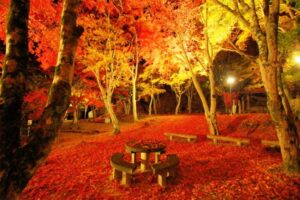
Mt. Kasagi / Kasagiyama Nature Park
Kasagiyama Nature Park, located in Kasagi Town, is an area rich in nature, including Mt. Kasagi. The mountain, on the south bank of the Kizu River, is about 288 meters tall and known for its mystical, …

Joruri-ji Temple in Kizugawa is one of the few surviving Heian-period Pure Land “paradise gardens” in Japan, and home to the country’s only surviving Nine-Amida Hall. The hall and its nine Heian-period Amida Nyorai statues are National Treasures, as is the three-story pagoda across the pond. Late-afternoon western light crosses the water and reaches into the Amida Hondo.
Pair with: a guided Tea Farm Tour & Tasting in Wazuka the same day.
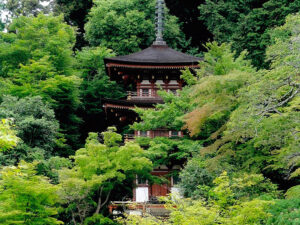
Joruriji Temple
Joruriji Temple, located in the southern part of the Kyoto Tea Country region, is a temple of the Shingon Risshu sect of Buddhism. Though the early history of the temple is shrouded in mystery, histor …

Shoujuin (Wind Chime Temple) in Ujitawara offers a breathtaking view, where the inome heart-window, seen from the kyakuden (guest hall), beautifully frames a late-November maple, creating a stunning stained-glass effect. The 160 ceiling panels overhead, painted by ninety artists, add a different kind of richness. Best reached by car or via the seasonal Uji Tea Bus.
Pair with: a delightful tea farm tour at Obubu in Wazuka, just a 20-minute drive away.
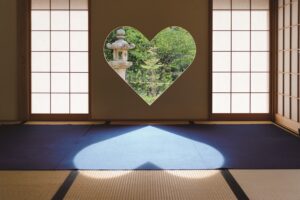
Shoujuin
Shoujuin, a Buddhist temple of the Koyasan Shingon sect, is located in Ujitawara Town in southern Kyoto. It was founded in 1200, more than 800 years ago. Two fires between the 15th and 19th centuries …
Kyoto Otokuni Bamboo Grove (2 spots)
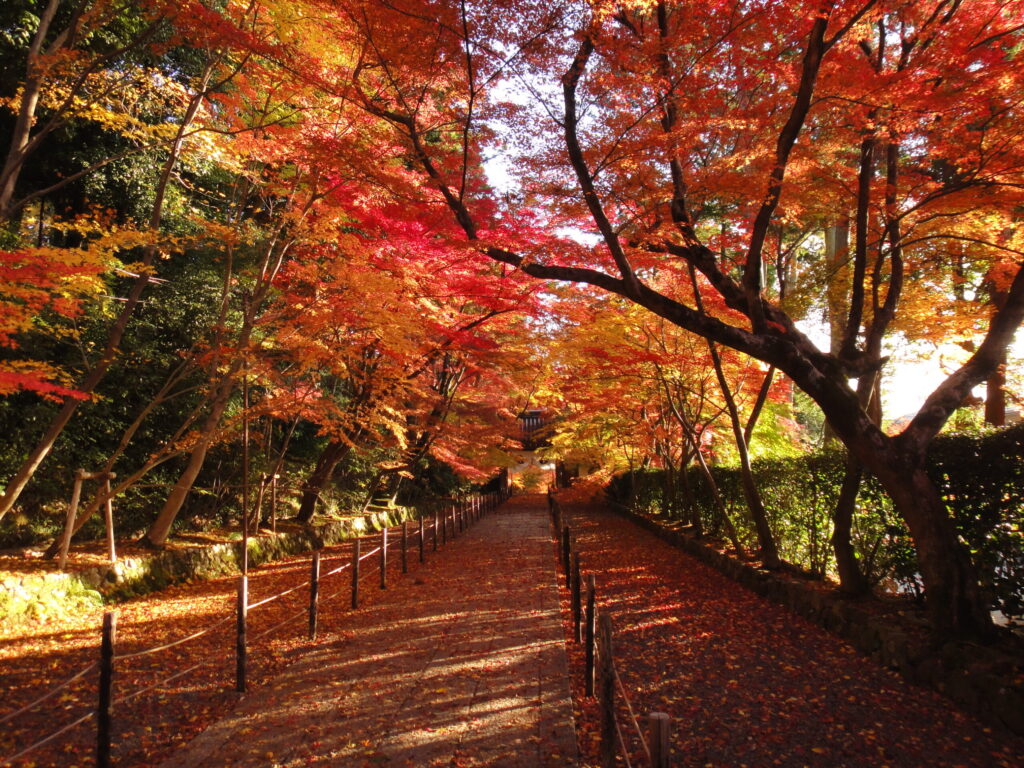
Komyo-ji Temple in Nagaokakyo (Maple Path). The Momiji-sando tunnel, lined with around 250 maples along the 200-meter path between the Chokushi-mon and Somon gates, is one of the most photographed autumn walks in Kansai. The late-morning carpet effect, when the path lies thick with fallen leaves, is the shot travelers come for. Free outside the special-viewing window; aim for a midweek morning.
Pair with: a Bamboo Basket Weaving Workshop at Nagaoka Meichiku.

Yanagidani Kannon (Yokoku-ji Temple) in Nagaokakyo. The Jodo-en garden is a designated scenic garden in Kyoto Prefecture. The annual Autumn Leaves Week runs from mid-November into early December, typically with a lit-up garden and the special opening of the upper Kamishoin study room. The temple’s flower chozubachi (water basins), which originated here, fill with autumn leaves. A free shuttle runs from JR Nagaokakyo Station.
Pair with: a takenoko bamboo-shoot lunch at Kinsuitei.
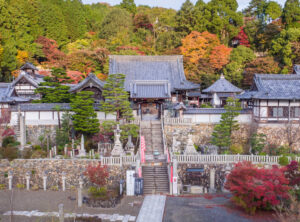
Yanagidani Kannon (Yokoku-ji Temple)
Yanagidani Kannon (Yokokuji Temple) is located in Nagaokakyo City, not far from Kyoto City and close to the famous Otokuni Bamboo Grove, where the main attraction is the eleven-faced, thousand-armed s …
Southern Kyoto City edge (1 spot)
Bishamon-do in Yamashina. A Tendai monzeki (imperially connected) temple founded in 703, whose Chokushi-mon approach famously becomes a “red carpet” of fallen maple leaves in late autumn. It’s a 20-minute walk from JR or Keihan Yamashina Station. Groundskeepers sweep by mid-morning, so the iconic photograph is a sunrise affair.
Pair with: an Otsu cable-car ascent for Lake Biwa autumn views.
A Note on the Two Komyo-ji Temples
Two Komyo-ji temples appear in this guide, in two different areas:
- Komyo-ji Temple in Nagaokakyo (Otokuni Bamboo Grove): famous for the Maple Path
- Komyo-ji Temple in Ayabe (Woodland Kyoto): famous for the Niomon Gate, a National Treasure
They’re unrelated and sit roughly 90 kilometers apart, so be sure to use the full place name when you’re planning trains, buses, or driving routes.
Whichever spot you choose, Kyoto Prefecture’s countryside delivers an autumn of color and quiet that the city temples rarely offer.
Check the Kyoto Prefecture Autumn Foliage Calendar two to three weeks before your trip for real-time color status across all the spots in this guide. For more quiet corners, see the existing eight secluded autumn spots column on the site.
Related in this series: Wazuka Tea Plantation, Amanohashidate, Hiking Near Kyoto, Hot Spring Day Trips from Kyoto (the Ayabe Komyo-ji day-trip), Otokuni Bamboo Grove, and Hidden Gems. For the bamboo-region narratives, see the existing bamboo columns on the site (and here).