Inspiration

8 Spectacular and Secluded Spots to see Autumn Leaves in Kyoto

2023.10.10

Autumn leaves
Kyoto by the Sea Woodland Kyoto Kyoto Tea Country Kyoto Otokuni Bamboo Grove

Autumn is undoubtedly one of the most beautiful times to visit Kyoto. As the leaves change colour, they transform the landscape into an enchanting patchwork of crimson, orange, and gold that will take your breath away.

Our Kyoto Autumn Foliage Calendar shows you the best dates to view fall leaves in different places in the prefecture. To make your experience extra special, we recommend choosing a lesser-known location outside of Kyoto City. That way, you can avoid the crowds and immerse yourself in the region’s stunning natural beauty.

Here are eight of the most peaceful and photogenic spots to enjoy Kyoto’s fall foliage.

Kyoto by the Sea Area

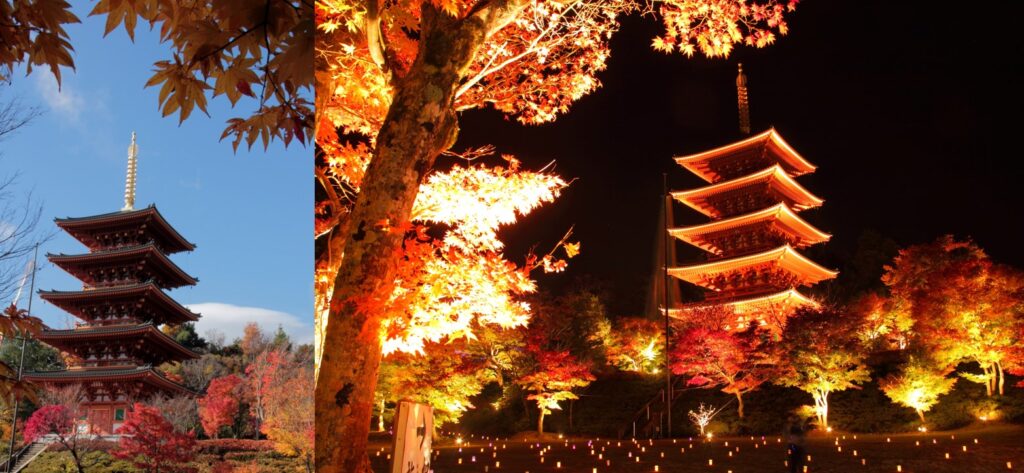
Autumn leaves lit up at night by a pagoda

Located high on the mountainside, Nariai-ji Temple overlooks the Amanohashidate sandbar. A thin strip of green pine trees and white sand, it ranks among the three most scenic places in all of Japan. In addition to this gorgeous view, the temple has expansive grounds to explore, including a pond and bell tower. Perhaps its most striking feature is the soaring five-story pagoda. The sight of it surrounded by blazing red and yellow autumn leaves with the blue water of Miyazu Bay in the background is a quintessential image of Kyoto in the fall.

Nariai-ji Temple

Nariai-ji Temple

Nariai-ji Temple is located on a mountainside overlooking Amanohashidate” which is considered one of the three most scenic spots in Japan. There is an endless line of visitors to the temple, as it is …


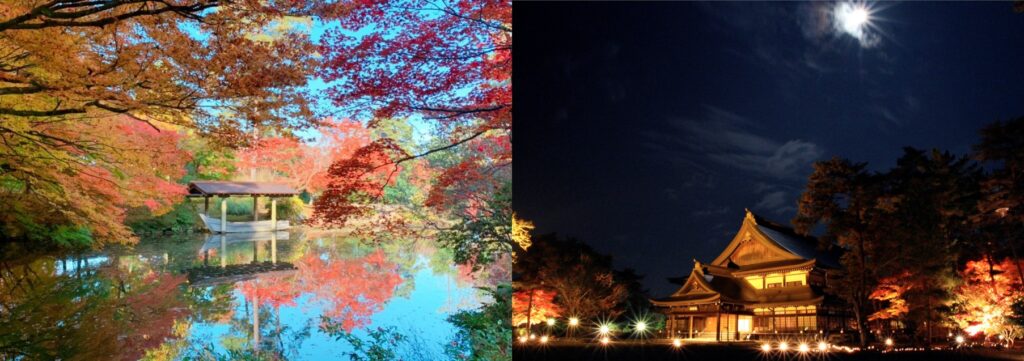
Bright red maple leaves in the day and night

You’ll find the Omoto Headquarters on the banks of the tranquil Yura River, just a 15-minute walk from Ayabe Station. Also known as Baisho-en, the grounds contain several beautiful halls with space dedicated to traditional Japanese arts such as aikido and Noh theatre. What’s more, the surrounding Kinryukai garden is one of the best spots to enjoy Kyoto fall foliage. It’s filled with maple trees that turn vibrant shades of fiery scarlet and rich maroon, carpeting the ground with their distinctive palmate leaves.

Omoto Headquarters (Ayabe/Baishoen)

Omoto Headquarters (Ayabe/Baishoen)

Oomoto Baisho-en is located along the banks of the Yura River that runs through Ayabe City in the Woodland Kyoto. It is the home of the religious organization “Omoto Baisho-en” and was opened in 1892. …

Woodland Kyoto Area

Mountain sides covered in shades of red and yellow maple leaves

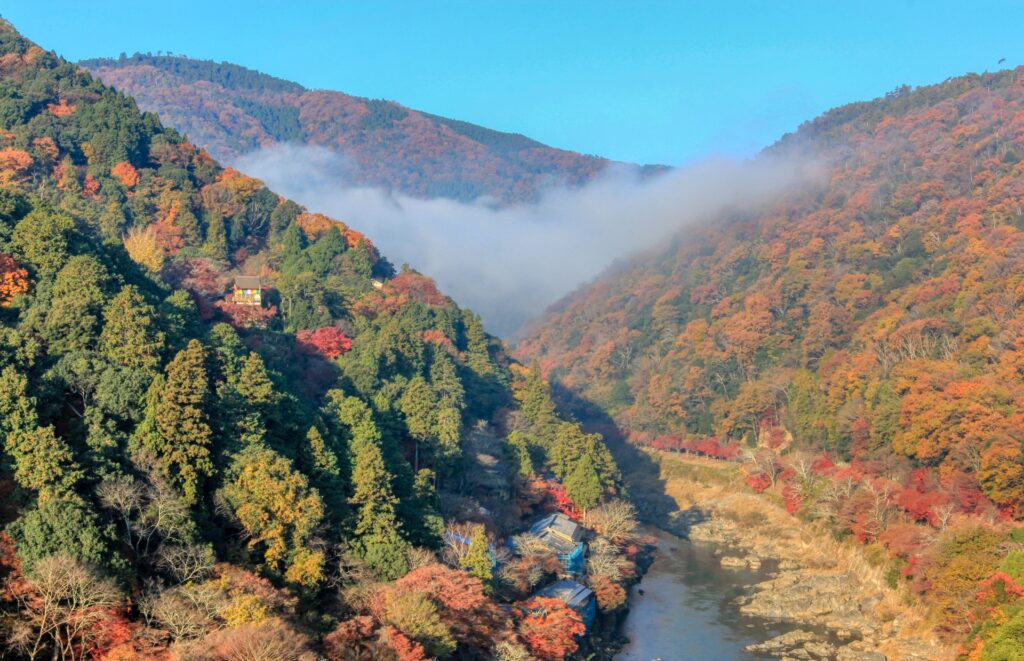
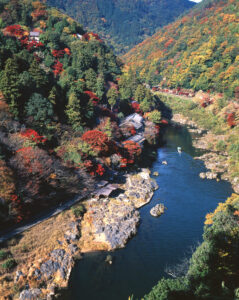
Hiking is an unbeatable Kyoto autumn activity, and the Hozukyo Gorge is one of the most pleasant locations for a fall stroll. It stretches from the Hozu Bridge in Kameoka City to Arashiyama’s iconic Togetsu-kyo Bridge, following the Hozugawa River as it carves a narrow channel between the mountains. For a truly unforgettable experience, take a thrilling two-hour boat ride along the rapids. As the boatsmen navigate the rocks and pools, you can admire the fabulous collage of red, orange, and yellow trees dotting the hillsides.

Hozukyo Gorge

Hozukyo Gorge

The Hozukyo Gorge, which stretches from the Hozu Bridge area in Kameoka City to Arashiyama’s Togetsu-kyo Bridge, is known as one of the most beautiful such gorges in Kyoto. The boat ride down the Hozu …


Autumn leaves lining the entrance to a shrine

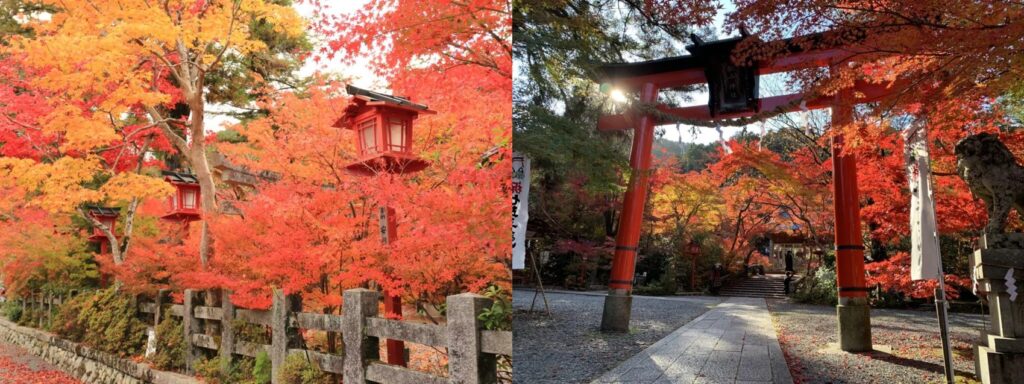
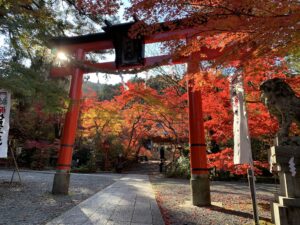
Tucked away in the former castle town of Kameoka, Kuwayama Shrine dates back to 709. It sits in a basin that’s said to have been a lake long ago, which is why the surrounding land is so fertile. Today, there are over 1,000 maple trees growing in the shrine grounds. When fall arrives, the autumn leaves ignite in a magnificent canopy of red to match the vermillion torii gates and lanterns they surround.

Kuwayama-jinja Shrine

Kuwayama-jinja Shrine

Kuwayama Shrine in Kameoka City, located in the Woodland Kyoto area, was built in 709. The temple sits in the Kameoka basin which is said to have been a lake long ago leading to the region being perfe …

Kyoto Tea Country Area

Autumn leaves lining the entrance to a temple in Kyoto

Zenporitsuji Temple in Yawata City is a serene fall foliage spot even though it’s just a 15-minute walk from Keihan Iwashimizu-hachimangu Station. Ki no Yoshiko is a great-granddaughter of Zenpoji Kyusei who donated his residence to establish the temple. She donated many momiji (Japanese maple) trees to the temple, and even today, about 100 momiji trees adorn the precincts including its stone paved pathway and quaint gate. The dazzling display of the vivid orange and ruby red fall leaves earned the temple the nickname Momijidera (the maple tree temple). No wonder it deserves a place on this list!

Zenporitsuji Temple (The Maple Tree Temple)

Zenporitsuji Temple (The Maple Tree Temple)

Zenporitsuji Temple, located in the southeast of Iwashimizu Hachimangu, was founded in the mid-thirteenth century, as Zenpoji Kyusei, the top administrative official of Iwashimizu Hachimangu at that t …


Fall foliage by a pagoda in Kyoto

Kaijusenji Temple, a hidden gem in Kizugawa City, was founded in 735. Though it was burnt down in 1137, Jokei, a monk of Kasagidera Temple, moved to the ruins and built a hermitage for Buddhist practice in 1208. The place was renamed Fudarakusan Kaijusenji Temple and revived. Its ancient five-storied pagoda (a National Treasure), 17.7 meters tall, is the second smallest among all outdoor five-storied pagodas in Japan. Every fall, the temple hosts a special exhibition, offering a great opportunity to view the interior of the five-storied pagoda. From mid-November to early December, the fall foliage is also beautiful here (though the exact timing varies each year). From the temple, you can view the area where the “phantom capital” of Kunikyo was located. On a clear day, you can see the ruins of Heijo Palace in Nara, as well. Enjoy the view with the colored leaves!

Kaijusenji Temple

Kaijusenji Temple

Legend has it that Fujioyama Kannonji Temple was founded in 735 when Emperor Shomu ordered the Buddhist monk Roben to build a hall and enshrined the Eleven-Headed Kannon Bodhisattva to pray for the sa …
Kyoto Otokuni Bamboo Grove Area

Bright red fall foliage at Komyo-ji Temple in Kyoto

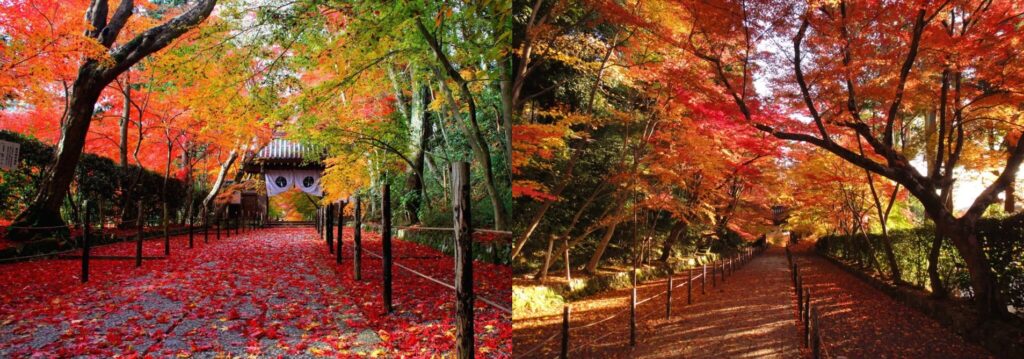
For those who want to truly immerse themselves in Kyoto’s fall foliage, Komyo-ji Temple is a fantastic spot. After passing through the main gate, turn left to enter Momiji-sando, or the Maple Path. It’s lined with maple trees on both sides, the branches of which meet above your head to form a 200-metre tunnel of amber and scarlet. The fallen leaves blanket the ground beneath your feet in red and yellow to complete the ethereal atmosphere.

Komyo-ji Temple

Komyo-ji Temple

Komyo-ji Temple was first built in 1198 by the soldier Kumagai Naozane in an area favored by his master Honen. Today, it the head temple of the Seizan sect of Pure Land Buddhism. Visitors can tour the …


Colorful fall leaves at Yanagidani Kannon in Kyoto

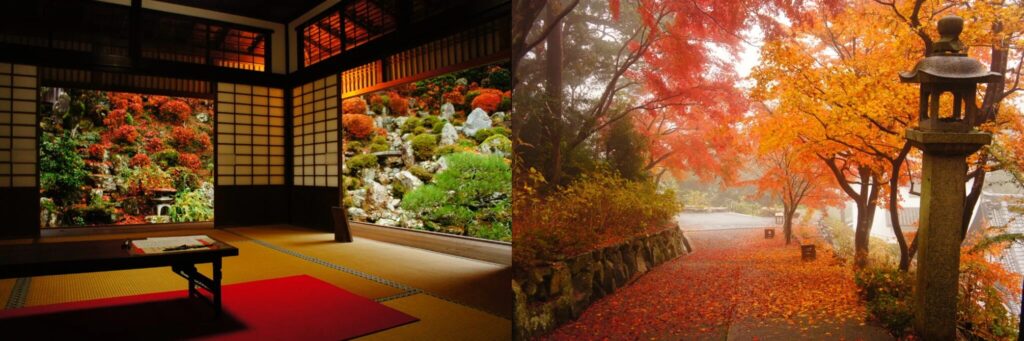
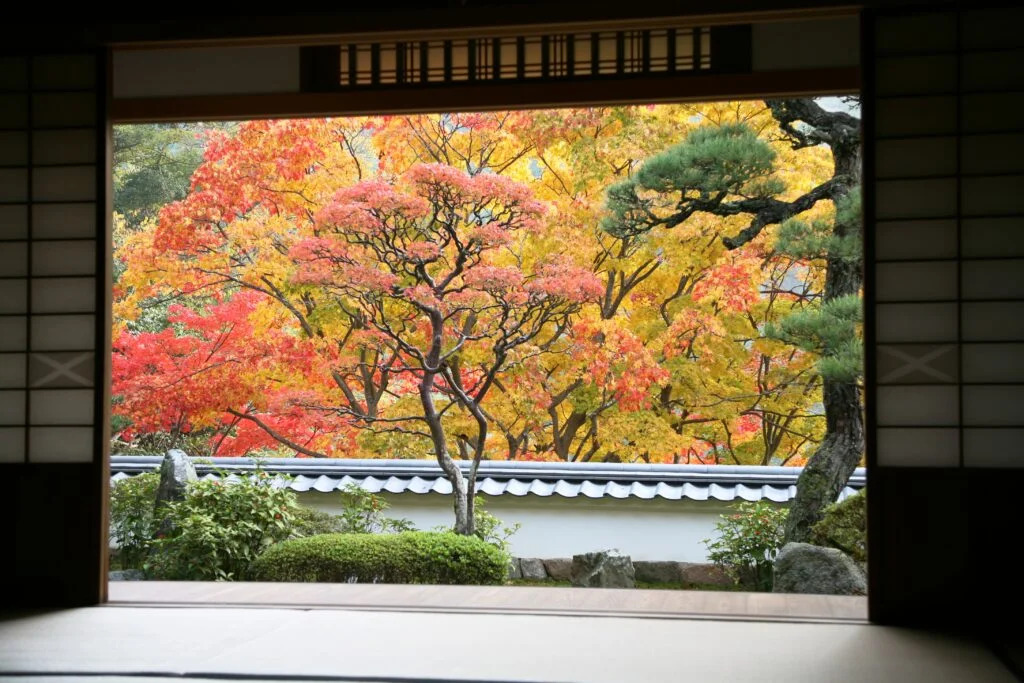
Famous for its eleven-faced, thousand-armed statue of the Kannon Boddhisatva, Yanagidani Kannon (Yokokuji Temple) also boasts unbelievably picturesque grounds. You’ll find different blooms to admire in every season, including – of course – captivating autumn leaves. The bright crimson and gold foliage makes a wonderful contrast against the grey stone lanterns and intricate wooden buildings. If you can, visit on the 17th of the month, when the Kamishoin study is open to the public. The view of the autumnal garden from within is particularly mesmerising.

Yanagidani Kannon (Yokoku-ji Temple)

Yanagidani Kannon (Yokoku-ji Temple)

Yanagidani Kannon (Yokokuji Temple) is located in Nagaokakyo City, not far from Kyoto City and close to the famous Otokuni Bamboo Grove, where the main attraction is the eleven-faced, thousand-armed s …


See our Autumn Foliage Calendar to get to these Kyoto spots at their most beautiful!

Tags

Another Kyoto Partners